While the Mubarak proceedings continue, albeit chaotically, Joshua Hammer looks at another sort of court case:
Since February 11, when President Hosni Mubarak ceded power to the Supreme Council of the Armed Forces, between seven and ten thousand civilians have been brought before closed military tribunals inside this fortresslike building. The civilian courts that normally would have tried them were not functioning in the first weeks after the revolution, but now, according to human rights officials, that’s no longer the case. Those arrested have been charged with a variety of offenses, including “thuggery,” assault, and threatening the security of the Egyptian state—a catch-all phrase once employed by Mubarak’s despised ancien regime.
Those accused include pro-democracy demonstrators, bloggers, and other prominent activists swept up in the chaos that preceded and followed Mubarak’s fall, as well as common criminals and bystanders. Thousands have been convicted and sentenced to terms of between several months and five years in prison. The procedures tend to be swift and are conducted before single judges in military uniform who are not known for scrupulous attention to the evidence. In late June, Amnesty International said that trying civilians in military courts violates “fundamental requirements of due process and fair trials.”
Michael Totten dispatches from a recent protest demanding more democratic rule from the SCAF. Reza Aslan thinks the promise of democracy is already taming Islamist groups, but Courtney Messerschmidt worries the lack of a strong government in Egypt might increase the chances of another Gaza war.
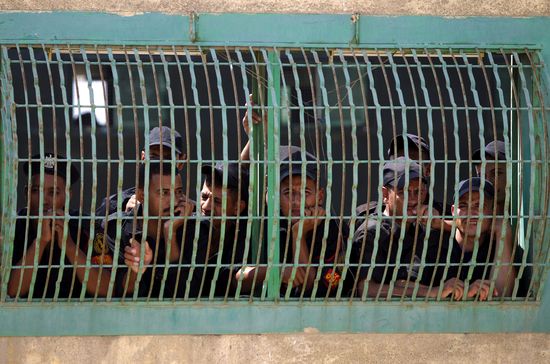
(Photo: Egyptian riot police follow the trial of former interior minister Habib al-Adly on a screen erected outside the Cairo Criminal Court at the Police Academy on August 4, 2011 during his trial along with six senior police officers over deaths in the uprising that unseated Hosni Mubarak. By Marwan Naamani/AFP/Getty Images)
 The Dish