Syrian Christians are afraid of being persecuted (as Egypt's were) if Assad is toppled. Molly Worthen tracks the evangelical response in America:
Evangelical concern for persecution overseas is completely genuine — though too often lumped together with more dubious causes. "Religious freedom" has become a kind of shorthand in American political rhetoric, useful for prescribing some domestic policies (prayer meetings in public schools, intelligent design in the curriculum), decrying others (same-sex marriage, the repeal of "don't ask, don't tell"), and contributing to an ambivalent view of democracy — whether in the United States, or in the Muslim world — if the principle of "one voice, one vote" happens to threaten evangelical priorities.
Every time evangelicals indulge in hysterics about the persecution of American evangelicals and "how liberals are waging war against Christians," they weaken their own case against the tyranny of the majority in the Middle East and insult those congregations huddling behind drawn curtains in Egypt and Libya. But then, scholars of evangelicalism have long observed that cultivating a persecution complex — even one that is mostly a self-perpetuating fiction — is not a bad way to maintain authority and stoke followers' sense of divine purpose. The trouble is that this mindset may make evangelicals look less like their oppressed brethren and more like the very despots they hate.
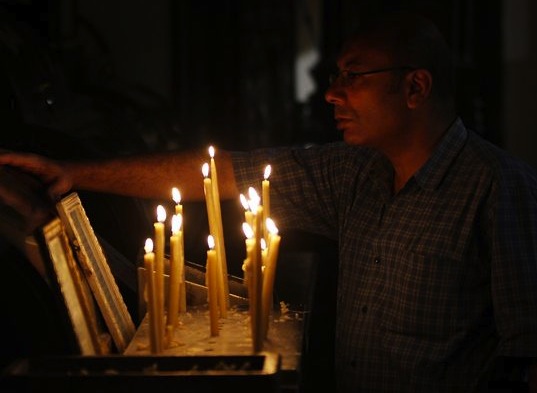
(Photo: A Coptic Christian stands near candles in The Hanging Church on May 27, 2011 in Coptic Cairo, Egypt. By Peter Macdiarmid/Getty Images.)
 The Dish