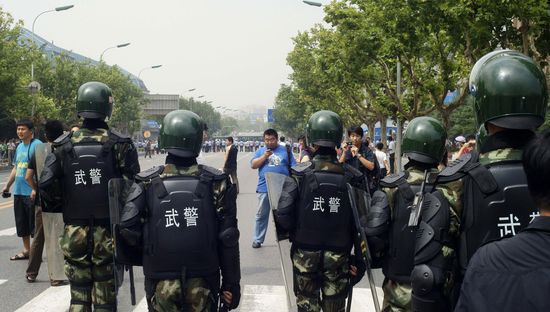
Paul Bonicelli is buoyed by the apparent success of mass protests in Dailan in forcing the government to close a polluting chemical plant:
The plant in question is not one that exploded or suffered a massive leak, though citizens fear such because it is close to a seawall that is unsound. More importantly, this massive plant that represents a significant part of the country's petrochemical production and therefore significant investment, was built a few years ago with the public kept in the dark and with disregard of environmental concerns. It would appear, then, that what happened with this protest was the boiling over of public resentment at be treated as subjects rather than as citizens.
We have been seeing more and more of this in the last few years; a quick web search will reveal scores of incidents of protest and public opposition to government policy. With citizens readily choosing non-Communists for elected posts in municipal governments, physically attacking local officials for enforcing the one-child policy, and rioting over environmental and safety concerns, the public is showing that an increasingly connected and prospering people are growing restive with tyranny. We have been used to the "stoic Chinese" enduring repression. Maybe that is changing.
Walter Russell Mead is cautiously optimistic. Elsewhere, Ian Johnson has a chilling interview with Chinese dissident Liao Yiwu about the history of the Communist Party's repression.
(Photo: Chinese paramilitary police stand guard as hundreds of people protest against the building of the Fujia chemical plant in Dalian, in northeast China's Liaoning province on August 14, 2011. Authorities in the Chinese city ordered the immediate shutdown of a chemical plant as thousands of protesters took to the streets demanding the factory be moved over pollution fears. By STR/AFP/Getty Images)
 The Dish