The Carnegie Council For Ethics And International Affairs has just published a roundtable assessing the Libyan intervention and its impact on the Responsibility to Protect (RToP) doctrine. From James Pattison's contribution:
The dangers of regime change are generally greater than that of humanitarian intervention: a larger number of innocent individuals are likely to be killed; the potential for instability in neighboring regions is greater; and the costs of intervening in terms of the intervening soldiers' lives may be much higher, given the likely need for a significant deployment of ground troops. Given these harms, the bar for permissible regime change should be much higher than that for humanitarian intervention. This is because an exceptionally grave situation—more serious than that is required for humanitarian intervention to be permissible—is necessary to allow room for sufficient good to be done to outweigh these harms. I would argue that this bar is unlikely to have been met in Libya. Although the Qaddafi regime is brutal and oppressive, forcible regime change can all too often do more harm than good, as the war in Iraq has shown.
And it would have been nice if the American people had even been informed about this illegal war beforehand or consulted immediately thereafter. Jennifer Welsh worries about the disjunction between rhetoric and means:
At the time of writing, NATO's Operation Unified Protector has flown more than 8,000 air raids over Libya. Increasingly, the judgment that the current military strategy may not do the job is gaining strength, leading individual members of the coalition to send military advisors to Benghazi (in the case of the United Kingdom) or hold talks with rebel leaders about the possibility of financial and military assistance (in the case of the United States). In the near term, these concerns will likely lead to a widening of targets to include infrastructure that is believed to be crucial to the regime's survival—a move already favored by the head of the British armed forces. But as time goes on, the debate may become reminiscent of a particular phase in the Kosovo campaign of 1999, when commentators began to argue that only troops on the ground could achieve NATO's objectives.
Full roundtable here.
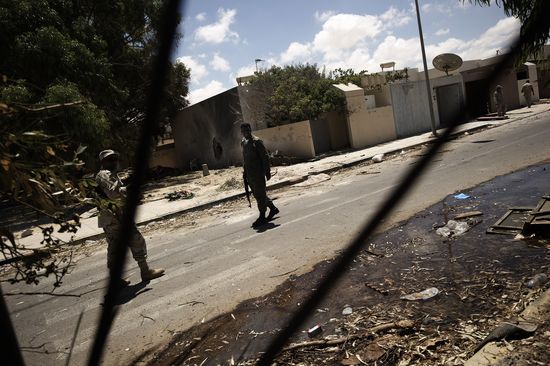
(Photo: Libyan rebel fighters patrol the streets of the residential area of the oil rich port of Brega on August 15, 2011, as battles between rebel forces and those loyal to Libyan leader Moamer Kadhafi continue west of the town. By Gianluigi Guercia/AFP/Getty Images)
 The Dish