by Zack Beauchamp
Simon Rippon of at Practical Ethics makes a good point about the outcry against the Times' story on "twin reduction:"
If we think that a fetus is not just a clump of any old cells, and that it deserves some degree of respect and deference in virtue of being a potential human person (even if not the full rights of an actual person), we will probably conclude that Jenny’s mistaken assessment of the reasons that she has leads her to do something positively morally wrong in having an abortion. We may then worry that twin reduction can never be justified. Yet we need not conclude from this that abortion is always and everywhere wrong, nor that it should be banned, nor even that the procedure of twin reduction specifically should be banned.
To take an analogy: In standing up for the principle of freedom of expression, we endorse the principle that everyone should have a legal right to say what they will; in doing so we need not, of course, morally endorse the saying of everthing that is in fact said. We stand up for free expression not because we believe that every act of expression it permits is good or valuable or morally permissible, but because every alternative to that legal principle would be worse. Similarly, in the case of abortion, we can remain stalwart in our endorsement (perhaps limited by stage of pregnancy) of a woman’s legal right to choose and a doctor’s right to assist based on whichever reasons she sees fit, because we may reasonably think that every alternative principle would be worse. On those grounds we need not, and should not, morally endorse every woman’s decision, for whatever reasons, to have an abortion. The questions of which abortions are right and of which principles for regulating abortions are right are separate questions, and neither pro-choice nor anti-abortion partisans should confuse them.
Full disclosure: I used to blog at Practical Ethics.
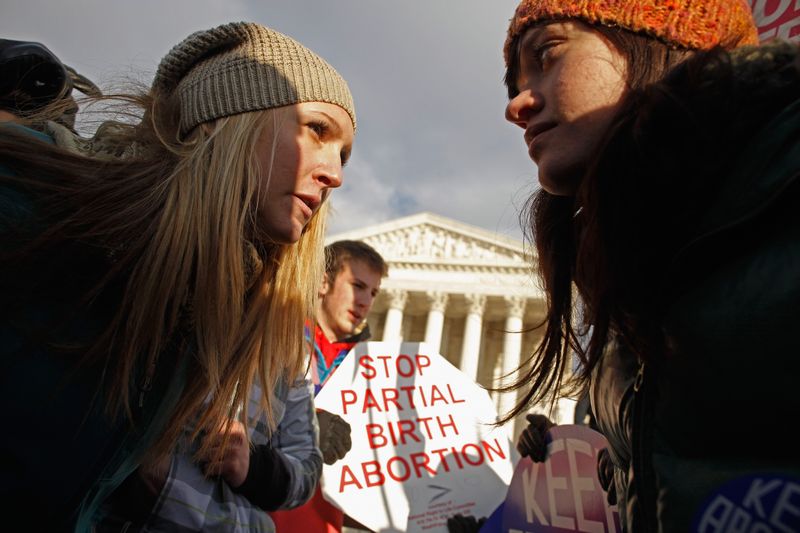
(Photo: Anti-abortion and pro-choice demonstrators argue in front of the Supreme Court during the March for Life January 24, 2011 in Washington, DC. The annual march marks the anniversary of the landmark Roe v. Wade decision by the court that made abortion legal in the United States. By Chip Somodevilla/Getty Images)
 The Dish