by Zack Beauchamp
Fred Kaplan, in a timely review of Rory Stewart and Gerald Knaus' new book Can Intervention Work? last week, defends our role in Libya:
While many criticized Obama and NATO for doing too little, too late, I suspect that, in the end (which now seems imminent), the effort will seem about right: assisting the rebels with air support (and probably more "training and equipping" by special-operations forces than is acknowledged) but not taking the lead—and, therefore, not getting lassoed with responsibility for determining, or fully funding, the new Libyan order afterward. It's an approach that the authors of Can Intervention Work? probably appreciate.
Shadi Hamid differs:
That said, we should be careful not to overstate the strategic benefits of President Obama's chosen course of action the past six months. Foreign Policy's Blake Hounshell argues that the administration's strategy of "leading from behind" now "seems utterly vindicated." It is unclear why this would be so. If anything, it could be argued, as I did in March, that Obama's excessive caution made a bad situation even worse. If the U.S. and the international community had intervened sooner — rather than at the very last moment when rebels were making their final stand — Qaddafi would have fallen sooner and without such loss of life and destruction.
Steve Kornacki sides with Kaplan.
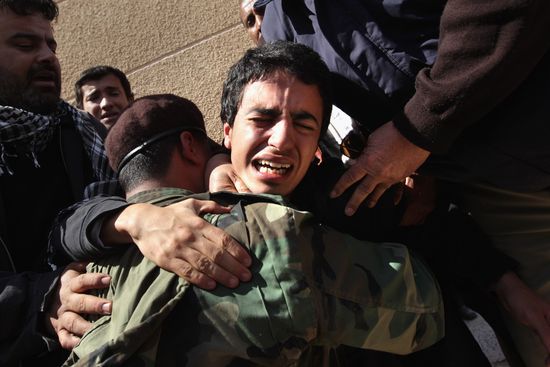
(Photo: Family members grieve at the funeral of rebel fighter Emad al-Giryani a day after he was killed in frontline fighting with government troops on March 12, 2011 in Abdajiya, Libya. Al-Giryani, a petroleum engineer, was was of many rebel volunteers killed in early days of fighting government forces. Rebels had been losing ground as government troops loyal to Libyan leader Moammar Gaddafi pressed a counteroffensive to the east. By John Moore/Getty Images)
 The Dish