by Zoë Pollock
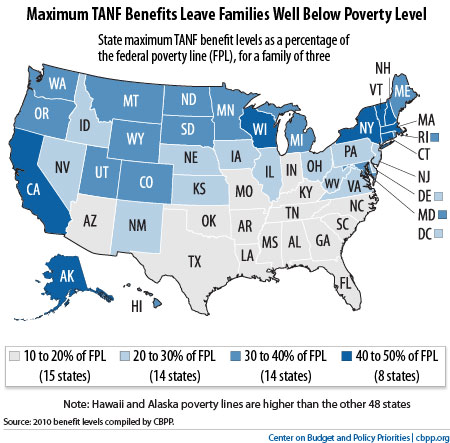
It's fifteen years since Clinton signed welfare reform, also known as Temporary Assistance for Needy Families (TANF). Ezra Klein tries to gauge whether it's been a success:
In the late-1990s, when the labor market was very tight, there’s strong evidence that welfare reform was helpful in pushing people into the job market. In the Aughts and, in particular, since the recession has hit, it’s a lot less clear that welfare reform is increasing employment rather than simply limiting support for the unemployed.
LaDonna Pavetti runs the numbers on the poverty rate since the recession:
While the poverty rate among families declined in the early years of welfare reform, when the economy was booming and unemployment was extremely low, it started increasing in 2000 and now exceeds its 1996 level. The increase in deep poverty has been especially large. The number of families in deep poverty rose by 13 percent between 1996 and 2009, from 2.7 million to 3 million.
Jake Blumgart has more.
 The Dish