by Maisie Allison
In light of Tuesday's "incident," longform.org points to this 2005 article from Smithsonian magazine on paleoseismology and the maddening, endless quest to predict earthquakes. Meanwhile, Simon van Zuylen-Wood highlights a recent discovery about the extraordinary seismic instincts of toads:
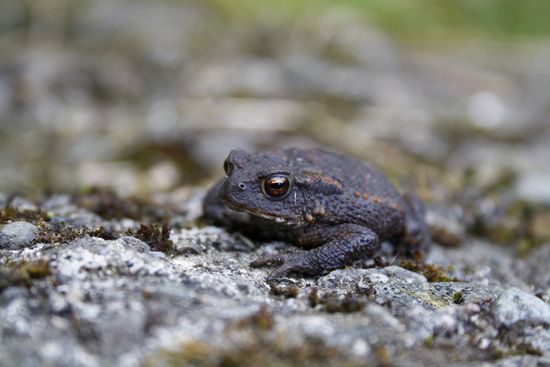
Despite studying fault lines and poring over historical trends, most scientists are as clueless as the general public at predicting when they might occur. But it turns out there is someone on earth that can predict earthquakes: bufo bufo, the common toad. According to a 2010 study in the Journal of Zoology, an entire population of toads in the throes of mating season abandoned their breeding site five days before an earthquake. The toads were 74 km from the L’Aquila, Italy earthquake when they smelled something funny and scurried away. Picking up on “pre-seismic cues such as the release of gases and charged particles,” the toads were nowhere to be found at a time in the lunar cycle when their site is traditionally packed.
Along the same lines, the National Zoo has catalogued the particular reactions of animals before the quake:
About five to ten seconds before the quake, many of the apes, including Kyle (an orangutan) and Kojo (a Western lowland gorilla), abandoned their food and climbed to the top of the tree-like structure in the exhibit. About three seconds before the quake, Mandara (a gorilla) let out a shriek and collected her baby, Kibibi, and moved to the top of the tree structure as well…The red ruffed lemurs sounded an alarm call about 15 minutes before the quake and then again just after it occurred…The Zoo has a flock of 64 flamingos. Just before the quake, the birds rushed about and grouped themselves together. They remained huddled during the quake.
Ben Greenman has more. (Photo by Flickr user erikpaterson.)
 The Dish