Of Gods And Tech

In an interview with Christianity Today, Kevin Kelly connects God and religion to technology:

Can you imagine a world where Mozart did not have access to a piano? I want to promote the invention of things that have not been invented yet, with a sense of urgency, because there are young people born today who are waiting upon us to invent their aids. There are Mozarts of this generation whose genius will be hidden until we invent their equivalent of a piano — maybe a holodeck or something. Just as you and I have benefited from the people who invented the alphabet, books, printing, and the Internet, we are obligated to materialize as many inventions as possible, to hurry, so that every person born and to-be-born will have a great chance of discovering and sharing their godly gifts.

Nicholas Carr disagrees:

Progress does not simply expand options. It changes options, and along the way options are lost as well as gained. Homer lived in a world that we would call technologically primitive, yet he created immortal epic poems. If Homer were born today, he would not be able to compose those poems in his head. That possibility has been foreclosed by progress. … If, at the individual level, new technology may actual prevent people from discovering and sharing their "godly gifts," then technology is not itself godly.

Oy. Is there nothing innovative that Carr doesn't immediately associate with loss?  They went a couple more rounds. But on a broader point, it's hard not to see the value of Alan Jacobs' point:

As far as I can tell, in [Kevin Kelly's] theology the life of Francis of Assisi was deficient in potential, in choices, was impoverished in a deep sense — and yet Francis believed that by embracing Lady Poverty, by casting aside his wealth and intentionally limiting his choices, he found riches he could not have found in any other way. This is, I hope, not to romanticize material poverty, or to say that we would all be better off if we lived in the Middle Ages. I disagree strongly with such nostalgia. But I think the example of Francis suggests that we cannot simply equate choices and riches in the material realm with human flourishing. The divine economy is far more complicated than that, and any serious theology of technology has to begin, I think, by acknowledging that point.

So much of religious life is about being free of material possessions, even instruments of understanding, in order to reduce the white noise that disguises the divine. But our civilization at times seems like nothing but white noise. Which is why more and more are seeking periods of silence, of meditation, of yoga, or prayer. You need no technology for prayer.

A Poem For Saturday

Denevan-1-600x768

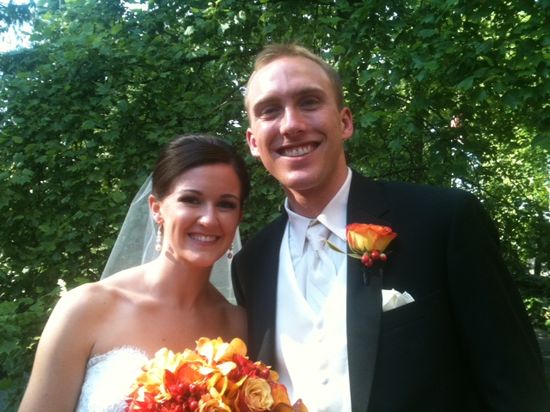
[love is more thicker than forget] by e.e. cummings, for Patrick on his wedding:

love is more thicker than forget
more thinner than recall
more seldom than a wave is wet
more frequent than to fail

it is more mad and moonly
and less it shall unbe
than all the sea which only
is deeper than the sea …

it is most sane and sunly
and more it cannot die
than all the sky which only
is higher than the sky

The full poem is here.

(Geometric sand sculptures by Jim Denevan via Colossal)

Masturbation’s Paradox

Noah Brand attacks the stigma that surrounds onanism:

As with all forms of male gender-policing, though, there’s this impossibly narrow target you have to hit: you’re weird if you don’t jerk off, but if you get too into it, if you start really enjoying yourself and having a good time… that’s even weirder. … This notion is absurd, of course. As someone once said, “A wank is a poor substitute when what you really want is a fuck, but when all you want is a wank, it’s perfect.”

My settled views on fluids and solids: fucking is usually over-rated in the reality compared with the fantasy; wanking is vastly under-rated; but not so under-rated as pissing after a bloated bladder and a fiber-enhanced Morgenscheisse.

Searching For Sex In The Young Adult Section

Tracy Clark-Flory has trouble finding it:

By the time they turn 19, 70 percent of teens will have had sex. More than half of American teens 15 to 19 years old have had oral sex. As Pam B. Cole, author of "Young Adult Literature in the 21st Century," has written, "Sexuality is a huge part of adolescence and drives a great deal of adolescent behavior, any realistic novel about adolescent development that does not include sexuality is incomplete." Popular YA novels will reflect the world that teens are living in, and that world is undoubtedly imperfect. I wish I had found books as a teen that fully celebrated healthy sexuality — but, well, I also wish I lived in a culture without massive sex guilt. (I suppose there's the sci-fi/fantasy aisle for that.) But I doubt that unease over the sexiness of the genre has to do with the way sex is presented, as opposed to the fact that it is presented at all.

Can Citizens Stop Gang Violence Themselves?

Andrew O'Hehir reviews The Interrupters, a new documentary from director Steve James of Hoop Dreams fame:

If law-and-order conservatives seek to address crime with stiffer sentences and ever more prison cells, which cosmetically reduce crime statistics at the cost of long-term social devastation, liberals often insist that nothing can be done about crime unless something else — unemployment or inequality of education or the fractured African-American family — gets fixed first. CeaseFire essentially takes the position that violence is both a cause and a symptom of social dysfunction, and that every time Matthews or Williams or Bocanegra gets in somebody's face and stops a shooting, it's another step toward a more normal society.

PBS's "Art Beat" interviews Steve James and interrupter Ameena Matthews.

“Sure Hope You Become A Writer”

Those simple words of praise written by a high school teacher on a paper by Dave Eggers changed his life forever; "just like that, it was as if he'd ripped off the ceiling and shown me the sky." Eggers considers what made Mr. Criche so good:

Nationwide, almost half of our teachers quit before their fifth year, driven away by poor conditions and low pay, but in Lake Forest, the teachers were and are able to make careers and lives out of the profession. Most of my other English teachers from 1984 to 1988 — Mr. Ferry, Mr. Hawkins, Ms. Pese, Mrs. Silber, Mrs. Lowey — taught there for decades, most of them in the same classrooms, all of them master educators. Imagine the benefit the students there received, from getting pretty much a college-level education in high school from educators who have honed their craft for decades. Every kid in this country deserves the same thing.

Reading Between The Lines

David Micah Greenberg analyzes rhetorical flourishes in poetry and politics. Here he addresses Glenn Beck's comparisons as if they were a poetic device:

Progressives are socialists, who are also fascists. Opposites of the political spectrum are identical. Nazi medical experimentation on humans is equivalent to modest health-care reforms. Beck’s repeated lie that “In God We Trust,” and not E Pluribus Unum, was the founders’ motto for this country is emblematic of the underpinnings of this rhetorical strategy. Whereas the founders’ motto suggests distinctions that need be acknowledged in order to achieve unity, the Eisenhower-era motto is a blanketing call to one faith. Beck’s is not simply a strategy of developing false comparison, designed to inflame supporters and shift the terms of debate. The agenda is to take the complexity of historical and political experiences of the twentieth century and bind them together in a totalizing gesture—an apocalyptic gesture. It is apocalyptic because it purports to uncover (from apokálypsis, “revelation”) the hidden similarities among seemingly dissimilar things—black nationalists, the Council on Foreign Relations, Woodrow Wilson, the Federal Reserve—while also eliminating any distinction among them that would appear through consideration of their practice or substance ….