A Tyrant On Trial

Bassem Sabry articulates what the criminal proceedings against Mubarak mean to the Arab world:

The moment Mubarak received his legal summons yesterday, officially accusing him of [corruption and complicity in the killing of protesters], the most important nail in the coffin of Middle-Eastern cult-of-personality and leader-worship was finally hammered, and would only be hammered further by the live telecast of the trial.

Leaders are human beings, just like the rest of us, and the same laws that apply to us apply to them as well. If they do break them, they will suffer like any of us would. And just because of that, almost regardless of how the trials proceed, many of us here feel more even empowered and more dignified as citizens than as we did even on February 11th as well. And it's a watershed moment for an entire region struggling with corrupt, bloodthirsty and oppressive regimes, many of which are starting to believe they managed their way out of the Arab Spring. As the leading figures of those regimes received the news that Mubarak, one of the most powerful, oldest reigning, and once untouchable among them, was officially served his legal summons, all those men knew that the end of life as they were used to it has finally come, forever.

Jackson Diehl worries that Mubarak will not receive a fair trial, while Elliot Abrams argues against executing the deposed leader. Juan Cole grumbles that Abrams' old boss, G.W., should also be on trial.


Why Are We Getting Smarter?

Jonah Lehrer mulls the Flynn Effect, or the "the widespread increase in IQ scores over time."  One theory:

One frequently cited factor is the increasing complexity of entertainment, which might enhance abstract problem solving skills. (As Flynn himself noted, “The very fact that children are better and better at IQ test problems logically entails that they have learned at least that kind of problem-solving skill better, and it must have been learned somewhere.”) This suggests that, because people are now forced to make sense ofLost or the Harry Potter series or World of Warcraft, they’re also better able to handle hard logic puzzles. (The effect is probably indirect, with the difficult forms of culture enhancing working memory and the allocation of attention.) As Steven Johnson argued, everything bad is good for us, especially when the bad stuff has lots of minor characters and subplots. HBO is a cognitive workout.

Reihan chimes in.

The Emotional Life Of A Bee

Jason Castro contemplates it:

While there’s a good deal known about invertebrate neurobiology, these facts alone haven’t settled questions of their sentience. On the one hand, invertebrates lack a cortex, amygdala, as well as many of the other major brain structures routinely implicated in human emotion. And unsurprisingly, their nervous systems are quite minimalist compared to ours: we have roughly a hundred thousand bee brains worth of neurons in our heads. On the other hand, some invertebrates, including insects, do posses the rudiments of our stress response system. So the question is still on the table: do they experience emotion in a way that we would recognize, or just react to the world with a set of glorified reflexes?

Living Exhibits

Victimless_Leather

Olivia Solon examines the ethics of bioart, which involves putting living tissue on display:

One area of ethical concern is how to dispose of the living tissue at the end of an exhibition. Once the pieces have been removed from the lab, they cannot be put back in because they are contaminated, Zurr explains. “So they need to be culled. We have a symbolic device to raise discussion — the killing ritual — where we invite audiences and curators to expose the tissue to the external environment and touch it and contaminate it.”  The idea is to engage with people, involve them in the ethical decision-making and encourage them to understand some of the scientific pursuits being illustrated by the artworks, be it bioengineering or stem cell research.

(Photo from the Tissue Culture and Art Project's Victimless Leather project.)

Tired Of Being A Symbol

Nikki Stern wrestles with being defined as a 9/11 widow:

Last May, Osama bin Laden's death prompted a new round of calls and requests for interviews. Along with a group of other family members, I met with the president of the United States at ground zero. Talking to Barack Obama was thrilling. But that day — the crowds and the checkpoints, the heightened security and the helicopters, the microphones and megaphones and construction cranes hanging over a still-incomplete building where my husband worked and died, even the identification badges bearing my name along with the words "family member" — dumped me back to 2001: a jumble of sights and sounds, exhaustion and exhilaration, highs and lows made up of fear, pride, confusion and the sense of being different or "special" on account of a loss so severe we hadn't even had time to process it. I came home and cried like I hadn't for years.

The View From Your Airplane Window

Landing at Denver Airport - 745pm

Landing at Denver Airport, 7.45 pm

Zanzibar-920am

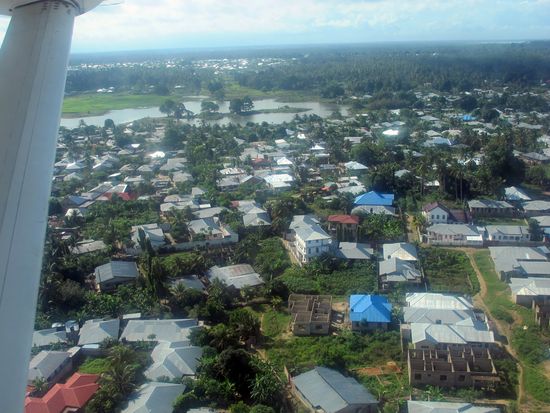
Zanzibar, Tanzania, 9.20 am

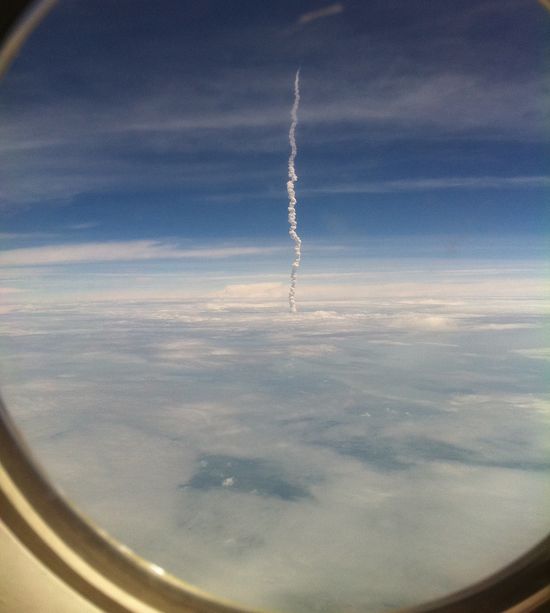
Shuttle (1)

Our reader writes:

This is from Delta flight 1134 from Palm Beach to Atlanta a couple of hours ago [on July 8].  A buddy of mine is trying to get it out there. It’s yours to post if you want it.

LAX

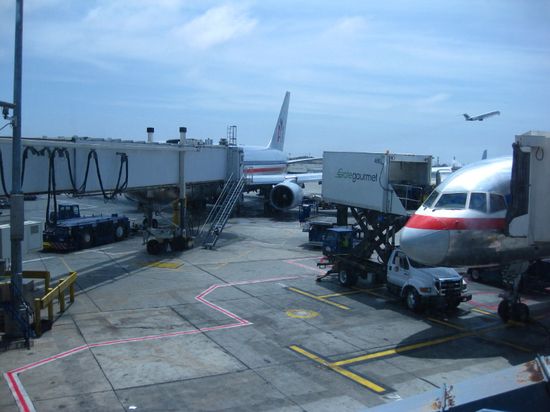
LAX

IMG_0394

“From Orlando to Detroit, probably somewhere over Ohio”

Did Turkey’s Military Really Lose?

Steven Cook cautions against the emerging narrative that Erdogan has won:

[Odds are] that last week's resignations were the dying gasp of the Turkish general staff's autonomy. Yet just as Friday's events surprised everyone, there may be more surprises in store from the officers. The military is much diminished, but Turkey's civilians have not won this battle yet. For instance, despite the fact that there is a civilian minister of national defense, Turkish officers do not answer to him. Changes to the military's internal service codes, which enjoin the commanders to intervene in the political system if they perceive a threat to it, have been under discussion, but have yet to be implemented. Nor have the curricula of the military academies and staff colleges been changed to emphasize the supremacy of civilian leadership.

Stephen Kinzer worries that Erdogan's aggressive approach to the military may not be good for Turkish democracy.

Where Are The Greens?

Michelle Moghtader lists seven reasons why Iranian democrats haven't reemerged in 2011.  Gary Sick largely agrees, but adds that events in Syria could change the dynamic:

Syria may be the key for Iran. Not only is it the channel for Iran to maintain its strategic political and military relationship with Hezbollah in Lebanon, but it is also a possible template for Iranian domestic turmoil. If mass popular demonstrations eventually prove able to overthrow a crypto-Shiite (Allawi) political-military dictatorship in Syria, that will inevitably play back into Iranian internal politics.

Horses As Relics

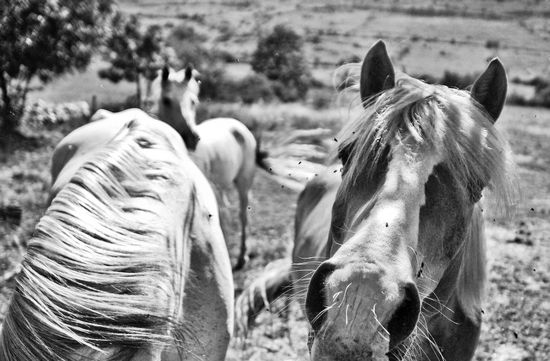
3923896437_4052db6222_o

Stefany Anne Golberg puts horses in historical context:

For 500 years, horses have been integral to our fight for civilization. What would the modern city be without the horse? Or modern agriculture, or warfare, or exploration? We made the horse our tool. And somehow, they slipped from our grasp. We cannot use the wild horses, and we see how little they need us. So we try to protect them or we try to destroy them—whatever it takes to bring the horses back under our control. As much as they narrate our adventurous past, America’s wild horses embody the fragile barrier between civilization built and civilization gone. If an American “Ozymandias” were written, it would need, above all, the image of a riderless horse, that ubiquitous metaphor for glory, and for loss.

(Photo by Chris Willis)