What About Jobs?

Now that the debt ceiling bill is passed, Jonathan Cohn begs politicians to focus on employment:

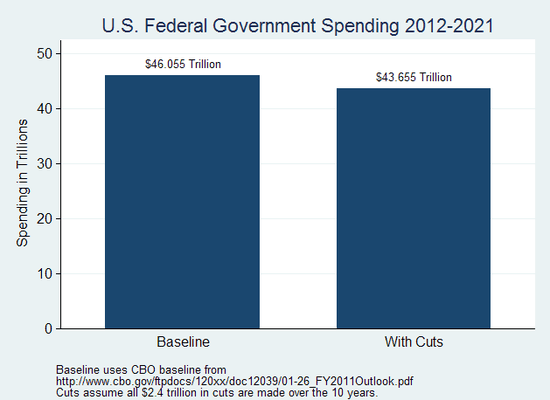
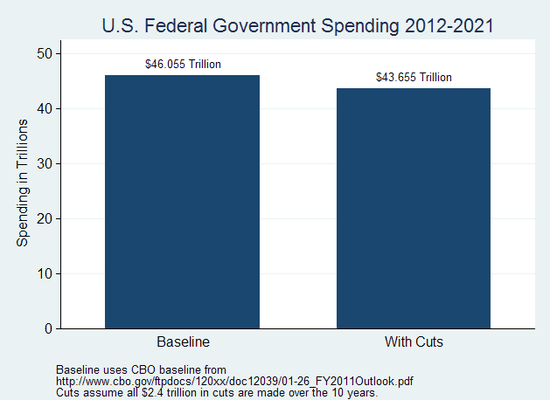
[T]he White House announced that Obama would be taking a Midwestern bus tour in August, focusing on jobs and the economy. Talking about jobs isn’t the same thing as doing something about jobs, of course. And doing something on jobs will not be easy. While extensions of unemployment insurance and the payroll tax holiday likely have enough to support, anything beyond that will be difficult to pass. Republicans and their allies will keep insisting that the best way to help the economy is to cut spending, which is the very opposite of what, according to almost every mainstream economist, we should be doing.

Ezra Klein isn't expecting much. The Atlantic debated job creation ideas a couple weeks ago.

The Daily Wrap

Chart

Today on the Dish, Andrew assessed the trauma the GOP left in its wake of all the debt ceiling drama but realized that the American people recognize Obama's stable character. He caught George Will trying to make Obama into a commie when he's really a Tory, and readers saw an out for Obama in all the election game-playing. We feared emergency spending could cut through any defense cuts anyways, Bradford Plumer still had high hopes, but Benjamin H. Friedman feared the defense cuts may be imaginary. Palin sunk to all new lows with charges of Obama still pallin' around with terrorists, we may have solved her "food baby" mystery, Palin's hairdresser was rewarded with a reality show, and a reader expanded on Andrew's claim Palin could eat Romney for breakfast.

In international affairs, Andrew demanded a war crimes trial for John Yoo's "enhanced interrogation" so we could let history be his judge. Assad's forces aimed and fired tanks directly at civilians, we wondered what the international community does if the violence continues through Ramadan, and we parsed why Damascus and Aleppo remain quiet. Larison wanted us to cut the crap with Libya, Goldblog predicted what terrorist attacks scare him most, Muslims most disapprove of violence targeting civilians, Frank Gaffney went off the deep end about Breivik's "false flag Sharia" operation, and Chris Christie stood by his appointment of a Muslim-American judge. 

In national news, Native Americans displayed the democratic process in action better than we could for marriage equality, and capital punishment isn't effective in drawing down murder rates. James Poulos pulled for practical libertarianism as a new GOP foundation, Rick Perry kept pandering, and Douthat singled out liberals' adherence to protecting entitlements at any cost. The Dish's new and improved Twitter feeds and Facebook page went live, a DSK lover didn't think he was too violent with sex, and American politicians were forced to resign over a consensual nudie pic, but not abandoning their children. Doctors navigated American parents selecting the sex of their children, Rebekah Brooks was exposed as the bully she is, and our fantasies may one day outgrow our budget. Elle Herman confronted the limitations of teachers, readers expanded our bilingual vocabularies, and online dating doesn't always match our political proclivities. TNC pondered the deification of civil rights leaders, and Rod Dreher reminded us of our disastrous failure of prudence.

Chart of the day here, FOTD here, MHB here, VFYW here, and VFYW contest winner news here.

–Z.P.

Squandering Paradise

Enhanced-buzz-25550-1311769883-2

Rod Dreher ties the government's fiscal recklessness to our myopic mismanagement of natural resources:

This is not just an economic crisis. At bottom, it is a moral and spiritual crisis. We Americans have been living as if the historically extraordinary bounty of material wealth and personal freedom are the natural state of mankind. We — and in a democracy, the government is "we" — have been living far beyond our fiscal means for far too long, and punishing any politician who failed to lie to us about the free lunch.

But our disastrous failure of prudence is not only financial. Take the indulgent stewardship of our natural resources.

While we are (rightly) consumed by the perils of climate change, for example, few people are paying attention to the growing topsoil crisis. The world is losing vast amounts of precious, hard-to-replace topsoil each year, much of it disappearing because of wasteful agricultural techniques. Have we become so accustomed to full supermarket shelves that we think they will continue to replenish themselves infinitely, no matter what we do, or fail to do?

John Judis covered similar ground following the earthquake in Japan.

(Photo by Catherine Chalmers via Buzzfeed)

The Moral Complexity Of Worthy Causes

Ta-Nehisi rejects the deification of civil rights leaders:

[M]y point is that the narrative of black super-morality never connected with me. The people just never really seemed human, so much as they seemed like rather divinely  passive reactions to white racism. The Montgomery boycott is the perfect example. The way it was told to us, sheer magic and Christian spirit made the boycott work. Castigation and intimidation surely would have doomed it. Except any deep study of activist and activism always reveals moments like this, moments that cut against the narrative of victory through pure moral force.

How Much Defense Can We Cut?

If the super committee fails, defense spending will be cut by near $1 trillion over the next decade. Bradford Plumer says this would "put us squarely in the historical norm":

[Gordon Adams, a senior White House budget official for national security in the Clinton administration] provides some context. The United States has had three military “build-downs” since World War II — after Korea, after Vietnam and after the Cold War. “With Iraq and Afghanistan winding down, we’re in another build-down,” he says. He notes that between 1985 and 1996, with the end of the Cold War, military spending declined 36 percent. By comparison, a $1 trillion cut in the next decade would represent a 15 percent decline. “Compared with a $350 billion cut, that’s harder labor, definitely,” Adams says. “Is it impossible? No.”

Syria’s Cities

5225536437_2973bb0a26_z

Sami Moubayed provides a primer on the two largest, Damascus and Aleppo, and their role in the current crisis:

To date, [both cities] have tried to look the other way vis-à-vis the uprising that has broken out in every town and city across the country since mid-March. In these two cities, the markets are still open, banks are still in operation, merchants are still trading, entire families are dining at restaurants, young couples are getting married and, in many cases, enjoying the summer in complete denial of what is happening throughout the rest of Syria. So long as Damascus and Aleppo remain quiet, or neutral at best, the Syrian authorities believe the situation will be under control.

A closer look, however, shows that this argument — although applicable four months ago — is now nothing more than wishful thinking.

First, it is wrong to compare Damascus to Aleppo because sympathy with the Syrian uprising is high in the Syrian capital, but low and close to non-existent in Aleppo because of the city’s distance, its relative immunity from the economic crisis (thanks to flourishing business relations with Turkey), and the unique relationship the city has had with President Bashar Al Assad, who has paid it plenty of attention since coming to power in 2000. Additionally, Aleppo paid a terrible price for its support of the Muslim Brotherhood uprising of 1982, and sees how the state is retaliating in other cities today, like Hama and Deir Ezzor. It does not want to suffer a similar fate.

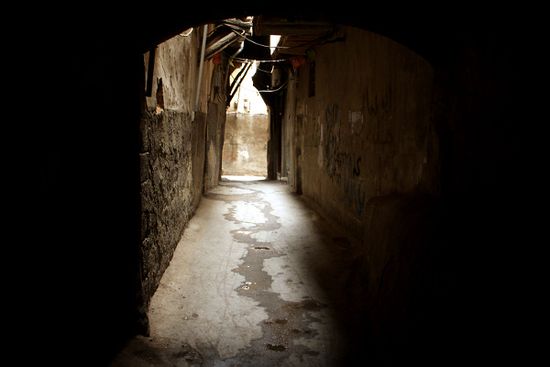
(Photo of a street in old Damascus by Flickr user hern42).

Have We Hit Peak Fantasy?

E.D. asks whether the genre will continue to make inroads into television and film:

Dragons, spells, and fantastical worlds are expensive, even in the age of digital animation that has made this all possible. It's one thing to adapt A Game of Thrones, which is as much medieval adventure as it is high fantasy. Martin's work has little overt magic, and few magical creatures. Compare this to the work of Jordan, Erikson, or Bakker and you begin to see how studios such as HBO might be leery of the investment.

Protecting Entitlements At What Cost?

Douthat outlines a liberal dilemma:

American liberalism risks becoming a victim of its own longstanding strategy’s success. Because yesterday’s liberals insisted on making universal programs the costly core of the modern welfare state, on the famous theory that “programs for the poor become poor programs,” today’s liberals find themselves defending those universal (and therefore universally-popular) programs at the expense of every other kind of government spending — including, yes, programs for the poor.

Face Of The Day

GT_MUBARAK_110803

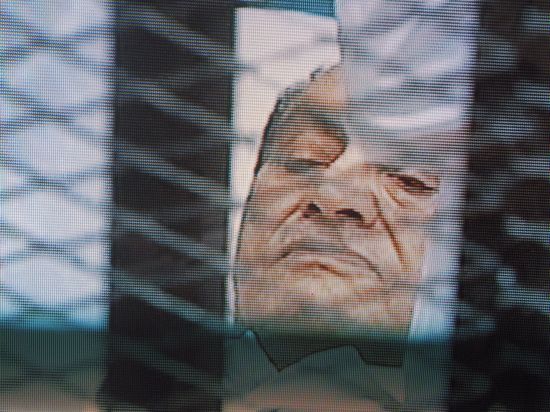
Former Egyptian President Hosni Mubarak was flown from a hospital in Sharm el-Sheikh to Cairo by medical helicopter and appeared in court in a hospital bed, behind a specially built iron cage, on August 3, 2011. Mubarak is charged with corruption and complicity in the killing of protesters. Journalist access to the trial was restricted, and the images broadcast by Egyptian state television are some of the only images available of Mubarak's first public appearance since his final defiant speech on February 10. By Themba Lewis/MCT via Getty Images.