by Zoë Pollock
BON IVER "Holocene" from nabil elderkin on Vimeo.
by Zoë Pollock
BON IVER "Holocene" from nabil elderkin on Vimeo.
by Zoë Pollock
Paul Connerton singles out coerced forgetting as "one of the most malign features of the twentieth century":
For example, think of Germany after Hitler, or Spain after Franco, or Greece after the colonels, or Argentina after the generals, or Chile after Pinochet: in all these cases, there had been a process of coerced forgetting during the dictatorships. And if, on the other hand, you think of some the distinguished writers of the second half of the twentieth century—Primo Levi or Alexander Solzhenitsyn or Nadezhda Mandelstam—the interesting thing about them is that they took up their pens in order to combat this process of coerced forgetting. As a result of this, I think that you could say that at the end of the twentieth century there was such a thing as an ethics of memory. Memory and remembrance had acquired the quality of an ethical value.
Run Gutman explains the power of smiling:
by Zoë Pollock
Experimental psychologist Marianne LaFrance highlights the key element in a sincere smile:
It's a muscle, called the orbicularis oculi, that encircles the eye socket. Most people don't pay very close attention to and it's very hard to deliberately adopt. So when people genuinely smile, in a true burst of positive emotion, not only to the corners of the mouth, controlled by the zygomaticus major, but this muscle around the eye also contracts. This causes the crows feet wrinkles that fan out from the outer corners of the eyes and its also responsible for folds in the upper eyelid. Most people can't do that deliberately. … [O]f course your garden variety psychopath or Machiavellian personality tends to be better at it.
by Zoë Pollock
Brook Wilensky-Lanford went searching for Eden as a real place:
The best guess of modern archaeologists is that the Eden story in the Bible developed from an ancient Sumerian myth about the loss of fertile farmlands as sea levels rose, which in turn developed from actual pre-history. The Sumerians then settled in Iraq’s southern marshlands. Since then, those lands and the people who’ve lived on them have gone through countless Eden cycles: fertility, civilization, peace, followed by drought, invasion, and war.
by Zoë Pollock
After her mother died, Janna Malamud Smith went through her belongings:
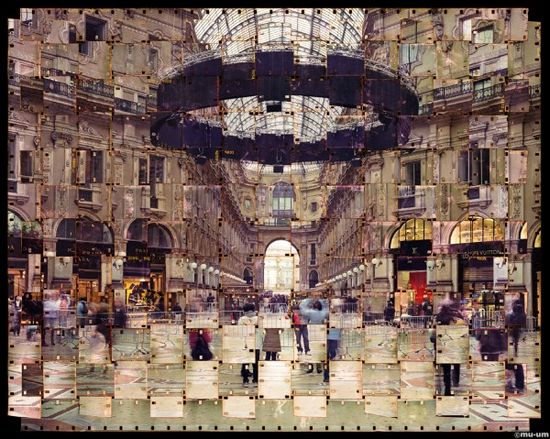
She had worked hard to sift and order while she still had strength. What she left was so condensed as to hold emotional weight disproportionate to its apparent mass. In four small rooms, her life, remnants of my father’s, my brother’s, my own; time past, piled, pressed dry, gathered into photo albums, into stacks of old pages recording earnings, debts paid, celebrations, bitter exchanges; mementos whose history became the sediment of hers; photographs everywhere of my children, of Italian forebears unmet, of friends now dead. I had to disassemble a universe.
(Photo: by South Korean photographer Seung Hoon Park as part of his series TEXTUS.)
by Zack Beauchamp
In response to my post on epistemic humility, Leah Libresco sent over an experiment she conducted to test the above. It's Bryan Caplan's Ideological Turing test as applied to religion. "Atheist" answers here. "Christian" answers here. Key to which respondents believe what here. Much more info here.

by Maisie Allison
Lewis McCrary counters Drew Faust, who warned in her Jefferson Lecture in the Humanities (pdf) that reenactments perpetuate false narratives about war, and are "less about remembrance than forgetting":
For Faust, the reenactments are a simulacrum, an image that bears no relation to what it purports to represent. Whatever meaning it gives must be false. But for the reenactors, replaying these battles provides a reminder that conflict is always with us, and that some instinct, perhaps original sin, always leads men to do violence to one another. In Faust’s interpretation, the Civil War was a tragic but necessary component of national progress. But the more provincial reenactors intuitively understand a more fundamental story, that war is a result of the fallen human condition. Their reenactment, like the carnivals of old, is liturgical; it restrains rather than rekindles violence.
Andy Hall reflected on a reenactment of the "last slave sale" this year for TNC's blog. In May, Glenn LaFantasie echoed Faust and debunked the notion of "living history" in the context of the Civil War's sesquicentennial. Previous discussion on whether the Civil War was tragic here.
(Photo: A young Civil War reenactor walks though the camp of the Army of Nothern Virginia in Gettysburg, Pennsylvania. Photo by Mark Wilson/Getty Images)
by Zoë Pollock
Mark Goldblatt elaborates on infinity with the ideas of Nicholas of Cusa (1401-1464). To understand the "infinite nature of God" Cusa uses a geometric metaphor. Imagine a square inside a circle. While it doesn't quite fit, the more sides you add to the square (from pentagon to octagon to dodecagon), the more it resembles the circle:
The act of adding sides to a plane figure brings you closer to both an infinite number of sides and to zero sides. Infinity, therefore, is the unachievable, inconceivable moment at which contradictory extremes are unified. The moment at which the greatest number and the least number become one and the same. That’s also, according to Cusa, how the finite human mind glimpses, but does not grasp, the infinite nature of God. Rational thought and language fail at infinity because contradictories become identities.

by Zoë Pollock
Fred Clark draws a distinction between a witnessing tool, a gimmick evangelicals use to convert strangers, and one used as an instrument of contempt:
The Jesus-fish on a car is not an invitation, but a declaration of tribal allegiance. It’s a signal that the driver of this car is an “Us” rather than a “Them.” And that Us-Them symbolism has far more to do with conflict than with any attempt at conversion. This is true as well of many of the other things we tell ourselves are “witnessing tools.” One one level, they may be intended as conversation-starters, but on another level they’re also intended as conversation-stoppers — as attempts to win some implied argument. They’re not really designed for evangelism. They’re just the graffiti and propaganda of the culture wars.
(Photo by Flickr user Jasoneppink)
by Zoë Pollock
How Hume accepted his own mortality:
Hume cited the reference by the poet Lucretius to what Epicurus said about the fear of death. According to Epicurus there is a symmetrical relation between our non-existence before we were born and our non-existence after death. We don’t consider our not having existed for an eternity before birth as a terrible thing. So why should our not existing for an eternity after death be considered an evil?
 The Dish