Why Intervention And Not Aid?

by Zack Beauchamp

Steve Hynd distills one of the strongest anti-intervention arguments to its core:

[Responsibility] to Protect interventionism is essentially a utilitarian argument – that by using violence in reply to violence the greater good of the greater number can be achieved – specifically, that fewer people will die if there is an armed intervention than if the state or non-state actor is allowed to continue killing unopposed by external forces. But it largely ignores a wider utilitarian argument to do so – that the resources required to intervene could be put to better use saving more lives elsewhere…I doubt the dead care whether they are killed by a bullet or starvation – they're still just as dead. Utillitarian ethics, such as those used to justify R2P interventionism, dictate that resources should first go to missions which would help the greatest number – yet the budget for Somalian aid is a measly $105 million.

Previous discussion of this line of argument here. I can think of fourth responses at the moment. First, one could make non-consequentialist arguments justifying intervention based on the particular moral heinousness of mass slaughter as compared to other lethal ills. I'm not compelled by the underlying moral reasoning here, but I could see how one might be. Second, one could say it's an argument for more aid AND intervention. That'd be fair enough, except for the fact that states do lots of things to save lives other than aid and intervention that draw from the same finite resource/tax base. So that argument might work depending on the resource constraints at play, but it also might not. Third, an intervention might be politically possible whereas aid increases might not. Again, that might be true in a given case, but it doesn't answer Hynd's more fundamental moral challenge.

There's a fourth, though, that's more compelling: humanitarian intervention is often necessary to create the conditions under which aid can be effective in saving lives.

Consider Steve's example, Somalia. Two of the causes of the famine, and two reasons why aid can only have limited success in causing it, are Somalia's civil war and the al-Shabaab terrorist organization. The Ken Menkhaus article I looked at earlier this week made this point clearly:

The conditions that led to Somalia's famine were already apparent late last year. The country had been beset by corruption, political instability, and an insurgency pitting 9,000 African Union peacekeepers, protecting a weak transitional government, against al Shabab, an Islamist group with ties to al Qaeda that controls southern Somalia. The armed violence, which has raged for four and a half years, has crippled the economy and, according to the United Nations, displaced an estimated 1.4 million people. Then, in 2010, Somalia began to suffer its worst drought in 60 years, just as food and fuel prices spiked worldwide. The crisis fully erupted in July, when the worsening humanitarian crisis reached a tipping point and the UN announced famine conditions across parts of southern Somalia. Hundreds of thousands of Somalis in famine-stricken areas fled to the capital, Mogadishu, and Kenya in search of aid.

At first, the international community could do little to aid the victims of the famine. Most relief agencies had suspended operations in Somalia two years earlier, due to attacks on their aid workers by a variety of armed groups, including al Shabab. When the famine was announced in July, those agencies no longer possessed the networks and infrastructure necessary to operate in the country and distribute aid effectively.

Now, neither Menkhaus nor I support an intervention in Somalia right now for a host of reasons, in part because it's not clear how, given the specific contours of the Somali conflict, one could hope to succeed in making the situation better. But Somalia illustrates the point I'm getting at well enough: humanitarian crises are often caused and prolonged by wars and bad governance. Food and medicine can't very well get passed out in war zones, and evil or corrupt governments will limit the ability of aid organizations to operate. Either way, aid doesn't get to the people who desperately need it.

That's why it's so critical to either end the fighting or, as the case may be, topple the government slaughtering its population. Civil wars and awful governments have tremendous long term consequences beyond the already-awful casualties caused by the fighting itself. They are, in some cases, the root causes of the spread of disease, famine, poverty, and other horrors. Further, both civil wars and bad governance prevent the international community from taking effective action to ameliorate the humanitarian crises they create. Somalia is one example. North Korea is another.

Steve's talking about Libya, a comparatively better off country. However, Qaddafi was directly responsible for dire poverty despite the country's wealth, and one can only imagine that conditions would have gotten worse as a result of a) the government diverting resources from economic development/basic subsistance aid to power consolidation after the likely slaughter in Benghazi  and b) growing international isolation. The intervention in Libya likely headed off long-term humanitarian problems as well as a short-term catastrophe.

As I've been examining in the past few days, we aren't certain that the consequences of intervention will be comparatively better yet, though there are reasons for optimism. That's an important constraint on intervention: that the outcome be better than the consequences of doing nothing. Indeed, humanitarian intervention, like any other war, is subject to just war constraints. Intervention isn't always a possible option morally or practically.

But aid isn't a panacea either. Sometimes, our best reading of the evidence suggests that a humanitarian intervention is one of the best available options to help the world's worst off. I desperately hope, and very cautiously believe, that Libya will turn out to be one of those cases.
Shrugging Off The Storm, Ctd

by Patrick Appel

New Yorkers may exceed John Seabrook's expectations. Matthew Philips checks the shelves in his neighborhood:

I live on the Upper West Side of Manhattan, and there are four drugstores, one  hardware store, and a RadioShack within a three block radius of my apartment. As of 2:30 this afternoon, there were no full-size flashlights left, a scant amount of duct tape available ($8 for 60 yards), and zero D or C batteries. At the hardware store, a scrum broke out among a few elderly ladies over a box of headlamps that were left. Yes, headlamps. The best we could do was a set of mini candles for $1.99, and a key chain flashlight for $9.99.

A reader makes a related points:

I work on the 47th floor and 80% of my colleagues were evacuated from the World Trade Towers in 2001, and when the floors shook this week, many of those people headed for the exits and never looked back. Sure, there are those who won’t or cannot take precautions – perhaps more here than in places that see more hurricanes. But the fact that the city’s own ordinances, in response to 9/11, now require extensive evacuation/rescue procedures for big buildings and the Bloomberg administration’s efforts to anticipate Irene means we are all better prepared. I dare John Seabrook to go out and try to buy batteries in midtown Manhattan. There are none.

What Can Romney Do?

by Maisie Allison

Contra Douthat, Ed Kilgore wants Romney to start taking some risks:

Mitt Romney is going to have to begin making not only a more positive case for his candidacy but a comparative case by way of attacking his rivals…Mitt cannot safely continue to just raise money and lie in the weeds hoping the 2012 nomination will be delivered to him. He’ll have to get out there and expose his personal shortcomings as a retail politician to mockery, and expose his positioning as a generic Republican above the fray to the ideological demands of a conservative base that wants the most right-bent nominee that can possibly win next November. 

Ryan Lizza has his eyes on GOP elites:

Assuming New Jersey Governor Chris Christie does not get in the race (a safe bet), watch to see whether the intellectuals, donors, and Beltway class reluctantly start to coalesce around Mitt Romney in an effort to stop Perry, as the New York Times’s resident conservatives David Brooks and Ross Douthat have.

Meanwhile, Stephen Stromberg parses Romney's shaky views on climate science.

(Video: A heated Romney at a townhall in New Hampshire on Wednesday, via AmSpecBlog. Christian Heinze accuses Romney of trying to "reproduce some Chris Christie magic." Elspeth Reeve adds: "Romney tried his hand at being belittling and sarcastic. It doesn't really suit him.")

How Much Harm Could 20 Calories Cause?

by Zack Beauchamp

A lot, says Sarah Kliff (reviewing this Lancet study):

The Lancet researchers gamed out what would happen if the average weight in the United States decreased by about 1 percent, which works out to an average weight loss of 2.2 pounds per person. We would avoid up to 2.4 million cases of diabetes. We would see up to 1.7 fewer cases of cardiovascular disease. As a population, we’d add 16 million more “quality life years,” a scientific measurement of both lifespan and quality of life. How do we get there?

20 calories a day less, apparently. On the other hand, Kevin Outterson reads the same Lancet research and concludes that "very significant reductions in US caloric intake will save 0.6% of health care costs by 2020."

How Bad Could Irene Be? Ctd

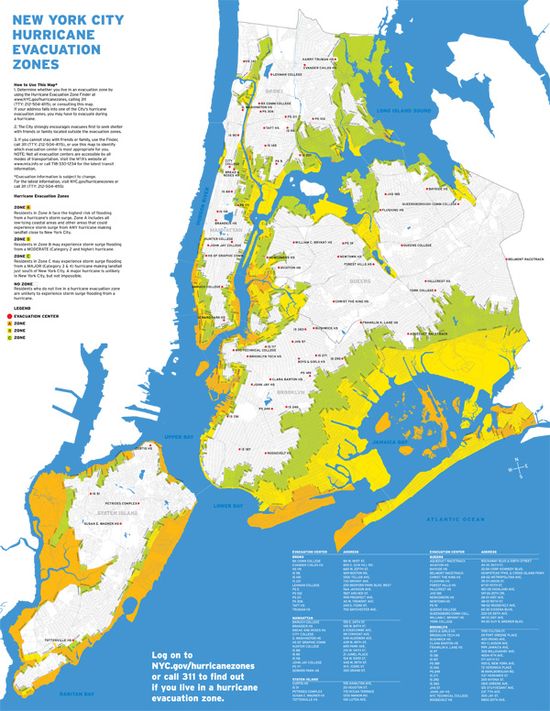
Nyc-hurricane-evac-map

by Chris Bodenner

A crucial tip from a reader:

If nobody has told you this, you need to fill your bathtub with water.  It is not for drinking; it is for flushing the toilets if you lose water after the storm.   You don’t want to be without a flush toilet.

More advice here. More advice from a reader in NYC:

Having gone through a few hurricanes myself, a couple things I've been telling people here at work to have on hand, beyond the usual batteries/food/water: A lighter or two. The standard Bic never fails. Get it in the bright orange color and it'll be easier to find wherever you set it down. Bandaids and bacitracin. The actual Band-Aid brand "Tough Strips" – the fabric kind, not the plastic – are miles more durable than any other kind I've used. I keep a box or two at all times because I slash myself in the kitchen on a weekly basis, but where there's broken glass, there's cuts, no matter how careful you are. Tough garbage bags (contractor-grade, if you have a local hardware store) and duct tape. Clean laundry, especially socks, underwear, and t-shirts.

Map of NYC evacuation zones from NYC.gov. Larger version of the map here (pdf). Go herehere and here for earlier coverage of the hurricanapocalypse.

Adventures In Conceding The Premise

by Zack Beauchamp

I find Matt Yglesias' case that Ron Paul isn't really a libertarian quite compelling, but his follow-up contains a mistaken argument about libertarianism and abortion:

Some people want to tell me that if you accept the erroneous metaphysics of the anti-abortion movement, that then treating women who terminate pregnancies as criminals makes perfect libertarian sense. For one thing, I don’t accept the erroneous metaphysics of the anti-abortion movement. But even if you do, this doesn’t make sense. The “pro-life” position amounts to a conjunction of the proposition that a fetus is a moral person and that a pregnant woman has a strong legally enforceable rescue duty. But Paul doesn’t believe the state should tax people to feed the poor, or impose rescue duties in any other context. Rather, he simply seems to feel that pregnant women aren’t really people.

First, I agree that the "fetus is a person" position rests on some demonstrably weak metaphysical grounds. But Matt's second argument against anti-choice libertarians, which attempts to move internally from said weak metaphysical premises, doesn't fly. Though he's a little unclear about what "rescue duties" are, I understand his argument to be something like "carrying a child is an extraordinary burden on a woman, so legally requiring her to continue the pregnancy constitutes requiring she take significant effort at high cost to herself to take care of a vulnerable person. Since libertarians don't generally believe in imposing duties on individuals to take care of the vulnerable using state power, they can't consistently impose such a duty in the case of abortion."

But the fetus isn't just "x random vulnerable person" if we're accepting the metaphysical premise; it's the woman's child. If that's the case, the proper analogy isn't "taxing people to feed the poor," it's laws against child neglect. Only in the latter case is the parent compelled to take significant action to ensure their child, as opposed to a random vulnerable person, is properly cared for.

Surely any non-caricatured libertarian view accepts that the state can punish parents for failing to, for example, feed their children (if not, then libertarianism is a much weaker view than I thought it was). Supposing that claim is true, then it's quite consistent to both reject that the state can generally impose legally enforceable rescue duties and accept that it's justified in banning abortion.

There might be other arguments that could work against the libertarian anti-abortion position on internal grounds. That depends on the specific sort of libertarianism in question. But I think those of us who believe in a woman's right to choose should pick our battles on firmer grounds than the argument examined here.


Will The Perry Boomlet Burst?

by Patrick Appel

Douthat tells Romney not to panic, yet:

In the next round of debates, Michele Bachmann and the lesser right-wing contenders will have every incentive to attack Perry, because he’s siphoning away their kind of voter. If Sarah Palin gets into the race (which I still doubt), she’ll have to take the fight to Perry as well. Meanwhile, unless Jon Huntsman starts getting traction, Romney doesn’t have to worry about any of the rival candidates making a play for his core supporters.

Chait chuckles at Brooks, who pulls punches against Perry.

Mental Health Break

by Chris Bodenner

Vince Mancini finds one:

Characters in a movie saying the name of that movie is one of my favorite moments, perhaps second only to rappers rapping their own name or the name of their group, or bands referencing their own songs in a song. And what a coincidence, here’s a supercut that’s two minutes and forty seconds of just that (characters saying the movie titles, I mean). My favorite has to be Craig Robinson in Hot Tub Time Machine, because his breaking-the-fourth-wall deadpan is so perfect, and because “Hot Tub Time Machine” is cinema’s all-time greatest title.

Debating Success In Libya

by Zack Beauchamp

Matt Welch dislikes Anne-Marie Slaughter's op-ed (gated) on Libya:

Slaughter and other Obama defenders are refusing to engage the arguments that their opponents have actually been using. Namely, that it is the Congress, not the president, that has the power to declare war; that the War Powers Act additionally requires the president to cease "hostilities" within 60 days of undeclared war absent congressional authorization; and that the president disregarded the advice of his own Office of Legal Counsel (and flagrantly reversed his campaign promise of "no more ignoring the law when it is inconvenient") by zooming through the 60-day deadline without a second look back. You may recall similar concern over such constitutional contortionism from back in the dark days of George W. Bush, when it was frequently evinced by the likes of…Anne-Marie Slaughter. Here she is in November 2005, co-authoring a Washington Post op-ed entitled–wait for it!–"No More Blank-Check Wars."

Slaughter tweets a response at Welch. Matt Steinglass is on her side. Elias Isquith bemoans the reliance on counterfactuals in her op-ed and the Libya debate more broadly.

Shrugging Off The Storm

by Patrick Appel

John Seabrook asks whether New Yorkers will ready themselves for Irene:

Will New Yorkers actually follow Mayor Bloomberg’s advice and prepare? Buy new batteries, canned food, extra water, duct tape; pack a “go bag” and leave it by the door?

Somehow, that doesn’t seem likely. As blue staters, we have come to associate the death and devastation caused by Katrina more with failed political leadership than with the fury of a big storm. And since 9/11, hurricanes seem less threatening precisely because you can prepare for them. You can study their projected track, clock their wind speed, and predict the time of landfall—all from the comfort of your den. In an age of sudden events that change the world in an instant, the approach of a hurricane seems old-world stately, like a transatlantic crossing on an ocean liner. We prepare for the unthinkable (or think we do); and blithely shrug off the known. One day, although maybe not this Sunday, we’ll learn.