
Karl Rove Wakes Up

Now he tells us:

Appearing on Fox News Saturday morning, Rove said Palin "has a schedule next week that looks like that of a candidate, not a celebrity." Rove also cited a new campaign-style video Palin has released on her recent visit to the Iowa State Fair as evidence Palin is gearing up for a run. Palin will be the keynote speaker at the Tea Party of America's "Restoring America" event in Iowa September 3. The event location was recently moved from Waukee, Iowa, to Indianola, Iowa to accommodate a larger crowd. "This is her last chance," Rove said. "She either gets in or gets out [after the Iowa visit]. I think she gets in."

How can you watch the video above and believe she isn't serious? In my view, the Washington Establishment, having created this Frankenstein in a moment of breathtaking cynicism and incompetence, now simply want it to go away. Not gonna happen. And the less qualified she is in a bleaker and bleaker economy, the more her populism could resonate. I think she's under-rated as a potential candidate exactly as Obama was under-rated.

But that, of course, is where the comparison ends.

Feminists Can Be Domestic Violence Victims Too

Autumn Whitefield-Madrano examines how her self-reliance made it harder to get help:

It makes sense that I was unable to see that what I thought was me "handling" the situation was, in fact, the 2001 liberated-lady version of "he beats me because he loves me." Abuse "works" because the victim internalizes it. I wasn’t ever going to internalize the idea that he hurt me because he loved me; I could, however, believe that because abuse was what happened to weak women and I wasn’t weak, my situation was just that—a "situation," not abuse.

The Three Brothers Of Iran

David Mattin interviews Iranian author and Nobel Prize winner Shirin Ebadi about her new book, The Golden Cage: Three Brothers, Three Choices, One Destiny. One brother is a fierce monarchist, another a communist, and the youngest a devoted Muslim and follower of the ayatollah:

Each of these brothers follows a different ideology, and many Iranian families were split in this way. And as you see when you read the book, each brother finds a different fate. Of course, this isn't just the story of one family. In a microcosm, it's the story of the whole country.

Ebadi applies the moral of the story to the June 2009 protest:

My book shows that we must not allow ideology to become a prison that stops us from accepting anyone outside. Alongside ideology, you must also have liberal thinking. People must be free to choose a practical path. Fortunately, the Iranian people have reached political maturity. They now realise this.

The View From Your Window Contest

Vfyw-contest_8-20

You have until noon on Tuesday to guess it. City and/or state first, then country. Please put the location in the subject heading, along with any description within the email. If no one guesses the exact location, proximity counts.  Be sure to email entries to VFYWcontest@gmail.com. Winner gets a free The View From Your Window book. Have at it.

The Atom Bomb Didn’t End WWII?

Historian Tsuyoshi Hasegawa has theorized that Japan was actually hedging their bets in the last days of the war, hoping that the Soviet Union would be kinder than the US. When the USSR declared war and invaded Manchuria, after the US had bombed Hiroshima, Japan finally surrendered. Garreth Cook considers the implications for nuclear deterrence:

Those days in August remain the only instance of nuclear war. The sheer horrors of the  destruction, and the lingering poison of radioactivity, inform what has come to be called Screen shot 2011-08-15 at 9.53.20 PMnuclear deterrence: No sane nation would bring a nuclear attack on itself, and so having nuclear weapons deters your enemies from attacking. When two rival nations have nuclear weapons, as during the Cold War, the result is stalemate. Hasegawa’s scholarship disturbs this simple logic. If the atomic bomb alone could not compel the Japanese to submit, then perhaps the nuclear deterrent is not as strong as it seems. 
Kevin Drum differs:

I think that Cook takes a step too far when he suggests that Hasegawa's research, if true, should fundamentally change our view of atomic weapons. "If the atomic bomb alone could not compel the Japanese to submit," he writes, "then perhaps the nuclear deterrent is not as strong as it seems." But that hardly follows. America in 1945 had an air force capable of leveling cities with conventional weaponry. We still do—though barely—but no other country in the world comes close. With an atomic bomb and a delivery vehicle, North Korea can threaten to destroy Seoul. Without it, they can't. And larger atomic states, like the US, India, Pakistan, and Russia, have the capacity to do more than just level a city or two. They can level entire countries.

(Photo: United States Strategic Bombing Survey, Physical Damage Division [Steel stairs warped by intense heat from burned book stacks of Asano Library, Hiroshima], November 15, 1945 from the International Center of Photography)

Is Heteronormativity As Bad As Homophobia?

Possibly, according to Meg Barker:

[H]eteronormativity is not just problematic for people who are located outside it. It is actually pretty bad for those inside it for many reasons as well. These have been particularly brought home to me in my work as a sexual and relationship therapist. Almost every seemingly heteronormative client who I've seen in this capacity has expressed an overwhelming desire to be 'normal' and often a desperate fear that they might not be, which has frequently made their life a misery. Normality is often privileged over everything else including having pleasurable sex, positive relationships, and open communication.

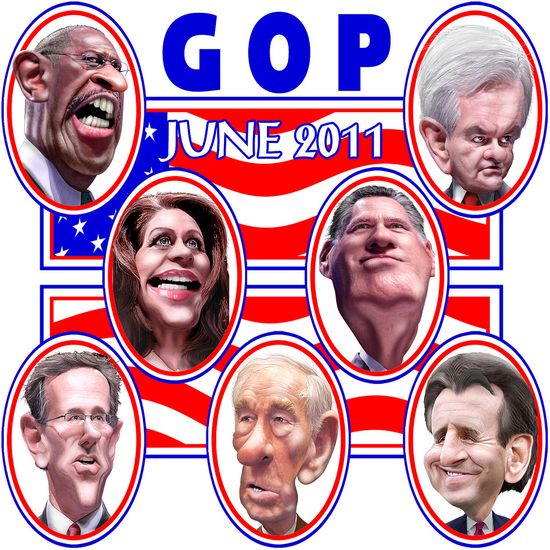
The Caricature Effect

5794874503_5dff0bdbcc_b

Ben Austen describes it:

Human faces are all built pretty much the same: two eyes above a nose that’s above a mouth, the features varying from person to person generally by mere millimeters. So what our brains look for, according to vision scientists, are the outlying features—those characteristics that deviate most from the ideal face we carry around in our heads, the running average of every visage we’ve ever seen. We code each new face we encounter not in absolute terms but in the several ways it differs markedly from the mean.

In other words, to beat what vision scientists call the homogeneity problem, we accentuate what’s most important for recognition and largely ignore what isn’t. Our perception fixates on the upturned nose, rendering it more porcine, the sunken eyes or the fleshy cheeks, making them loom larger. To better identify and remember people, we turn them into caricatures.

(Image: Participants of the New Hampshire debate by Flickr user DonkeyHotey)

Quote For The Day

"Do you actually think we believed what the government told us? Of course not. We got together after work and watched bootleg copies of Titanic and Superman Returns. We always knew life on the other side was better, but we stayed quiet. We didn’t know what anyone else thought," – a former North Korean police commander who escaped to South Korea.

The Postal Service On The Precipice

GT_USPS_110819

The USPS is quickly approaching insolvency and is planning to shed more than one-third of its workforce by 2015. Annie Lowrey discusses a wide range of policy options: 

The most radical option is simply to end the USPS, as suggested by former Republican presidential candidate Tim Pawlenty and the Cato Instituteamong others. This is unnecessary and unlikely. But it is not nearly as crazy as it sounds. The shift to online communication is permanent, and letter volumes will continue to decline. It is hard to see how the USPS will ever make money given its legal strictures, even with its monopoly on letter delivery. Congress could break the monopoly and privatize USPS, opening the field up to the host of companies that already deliver packages and letters, cheaply and fast.

As another possible solution, Brad Plumer appraises the Postal Service's real estate assets. Noting that the federal government needs to decide if the USPS is a "business or welfare/charity organization," Maurice McTigue adds

The current system is poorly configured with archaic facilities in the wrong places. Post offices should be where people go, like grocery stores and malls, so people don’t have to make a special trip. In order to compete with UPS and FedEx, the postal service needs to meet their standard of quality. It needs to develop a strategic goal of delivering all the mail in every significant community in the United States within 24 hrs. 

Yglesias bemoans the horrible timing of the inevitable mass layoffs. Along similar lines, Edward Tenner addresses the problem of "creative destruction" and asks us to consider the historic and socioeconomic implications of a foundering USPS: 

Nationally, the Postal Service reflects the diversity of Americans. But for generations of rural residents, immigrants, and especially African Americans it was a key to a stable middle-class family life, especially during the Great Depression and the flight of industry from cities starting in the 1960s. …

When we consider deficits of the organization, we also have to consider the costs of massive layoffs to communities, and the cost of eliminating decent jobs for young people of all backgrounds. Understandably, there are other hard-working people earning less than postal workers who may object to paying taxes to support the remaining stability and camaraderie of others. On the other hand, they (as well as the better-off) may have to pay higher taxes anyway for welfare and Medicaid after the ensuing job destruction. 

(Photo: US Postal Service letter carrier Anthony Ow places letters in a mailbox as he walks his delivery route July 30, 2009 in San Francisco, California. By Justin Sullivan/Getty Images)