The Coupon Company You Know

Lauren Etter profiles Groupon and its colorful CEO. On the website's many copycats:

Domain squatting is a common pitfall of the Internet world, but it can be especially problematic with a digital business that is easily replicable.

"Groupon isn't a bricks-and-mortar business. It's clicks rather than bricks," says James O'Rourke, a professor of management at the University of Notre Dame. "As a result, they're heavily dependent on owning the domain name and having local familiarity with their brand. If it's not capital-intensive, if the barriers to entry are low, and if you don't have proprietary technology, then anybody can get in the business. It's not like you're building airplanes."

Not Married, With Children

Divorce_Cohabitation

The National Marriage Project has a new report on the dangers of cohabitation. Lauren Sandler considers the stigma cohabitating parents face:

I’m currently researching a book on only children and have come across a great deal of analysis on how children growing up in non-normative family structures are made to feel like outsiders. I can’t help but wonder if the psychological stress of being raised by cohabiting parents is akin to the experience of being an (oft-stereotyped) only child, at least in the upper economic brackets.

In Sweden, where it’s become normal to parent without a marriage certificate, kids with unmarried parents don’t feel this way. But here, as long as marriage is worshipped, supported by friends and family and strangers and the state, as long as kids who are inside a married family know that they are what’s normal and that those other kids aren’t, there will be distress. Nobody wants to feel like his or her family is an experiment. Or that other people get to be supported by stability they are lacking.

Nona Willis Aronowitz notes the obvious:

This study seems like the ultimate validation for "family values" conservatives—until you look a little closer. As marriage scholar Stephanie Coontz points out, "cohabitation and out-of-wedlock childbearing is as much a symptom of the instability of children's lives as it is a cause of it." … Income is a huge factor in family stability, and financial security is a huge factor in people's marriage decisions. So it makes sense that the kids of cohabiting couples, who are more likely to be poor, may have a harder family life.

An earlier look at the economics of cohabitation here.

Why Do Europeans Hate Ice? Ctd

A reader writes:

On this extremely vital question, I have the insight of growing up with a German mother. All of her family, who still live in Germany, confirm the German take on the ice issue.

1. Cool drinks, not cold, give the drinker a better experience of the actual taste of the drink. It drives them a little crazy that Americans think they drink "warm" beer. And in fact, they don't. Beer is cool (or warm by our standards) in Germany because it tastes better than beer so cold, and so pale and thin, it has little flavor. "How else could anyone possibly drink a Coors so cold that you don't have to taste that watery swill?", they ask me.

2. They firmly believe that cold, cold drinks are bad for your stomach, and therefore, your digestion. I've been frequently told there are studies that prove this, though no web links have ever been provided.

After a childhood of drinking water from the tap, no ice and occasional sodas cooled only by being stored in the basement, I'm the rare American who orders her water with no ice at restaurants. I'd do the same for a soda, if I still drank it. And I'm most definitely a beer snob. A Coors would never pass these lips and I know that somewhere in southern Bavaria, my Onkel Helmut is smiling and nodding his approval.

Other readers are supporting the stomach cramps theory. Another offers more ideas:

Because refrigeration came late to Europe, way after WWII. And because tap water was always suspect depending on the region. Bottled water was de rigueur on the Continent. Not so much for the Brits, who always suspected the barkeep of watering down the liquor (what other country has regulations on a the size of a pint)? And really, who wants to have an ice machine when the water is from the merde-filled Seine?

Another:

It occurs to me that the expansion of many parts of America was contingent on air conditioning and refrigeration. (I say this as someone who lived in Florida, which while inhabited for some time saw its population expand considerably when it got AC and people could stand living there.) It seems to me like we embraced AC and refrigeration (and consequently, ice) and advertised it heavily as a selling point (say, to get people into movie theatres or soda fountain shops). On the other hand, ice had to make its way into well-established Europe, which wasn't desperate for a cold drink in any case.

Another makes that point more directly:

Most of Europe is a lot cooler than most of the US. There is less need to cool your drink because people are not as hot, nor will the hot weather heat up your drink as fast.

A European writes:

Too much ice in a drink makes it watery and weak, and too cold. I rather not feel pain in my teeth when I drink a coke, or even a glass of water, and I like being able to taste my drink, rather than have it numb my mouth. I'd ask a counter question: why are Americans so in love with ice?

One very-American reason: it helps you burn calories.

The Daily Wrap

Graph

Today on the Dish, the WSJ tried to defend Perry's threat of personal thuggery while Rove, the Bush family and the GOP establishment weren't running to save him. Jonah Goldberg urged the right to err on the side of electability and the neocons sharpened their teeth. Chait didn't want to credit Perry with Texas' economy since he poached jobs from other states, New Hampshire heckled Perry about climate change, and David Sessions documented Perry's infatuation with war. Perry evolved into his Christianist fanaticism and his rural roots may be fair game.

As to the rest of the field, Bachmann got away with a staffer who stockpiled weapons in Uganda, the GOP elite kept pushing a Ryan candidacy, and Tom Coburn took two steps back with renewed violent rhetoric. McGinnis thought Palin has run out of friends and political allies, while Frum grew dismayed that even after Palin, the GOP hasn't learned its lesson about intelligent candidates. Rockefeller Republicans were a thing of the past, Bachmann didn't know the Spanish word for woman, and Christine O'Donnell had to walk away from TV interviews because she doesn't want to talk about her own anti-gay rhetoric. Pareene and Reihan picked apart the Tea Party's marginal impact on US politics, and Penn Jillette opted for libertarianism for the same reason he chose atheism: not knowing. We measured Obama's approval ratings against past presidents, the market fell because it's August, and Alana Goodman defended Obama's right to go on vacation.

Internationally, Obama, along with the rest of the West, called for Assad to step down, but many analysts criticized Obama for not doing so sooner. The Afghan National Police weren't improving, and Andrew urged the military to keep improving drone accuracy to reduce civilian casualties. The Arab Spring inched closer to Turkey, Hezbollah was finally being indicted, Glenn Beck got caught in his own paranoid conspiracy vortex about protests in Israel, and as Thomas Paine predicted, vengeance in Norway wouldn't do any good.

Around the country, some invested for their retirement with lottery tickets, veterans suffered an unemployment level four points higher than the national average, and raising the Medicare eligibility age could pave the way for bigger reforms. We debated whether elite schools are worth it, Catcher in the Rye still appealed to our 15-year-old selves, and we wondered why Europeans hate ice in their drinks. Yglesias argued for letting ex-cons work, prison doesn't cut the crime rate, and TNC revisited the tragedy of the Civil War. Forgiveness existed in the hearts of victims, and Andrew came to terms with his own vision of God's forgiveness. The Help distorted the lessons of the civil rights movement, and readers defended Star Trek for not distracting them with gay subplots. Experts helped us understand the genetic roots of mitochondrial Eve, while others pondered why Adam and Eve still have belly buttons.

Hathos alert here, coffee rings explained here, VFYW here, MHB here, and FOTD here.

–Z.P.

Was The Civil War Tragic?

Black-Soldiers

Ta-Nehisi continues to argue no:

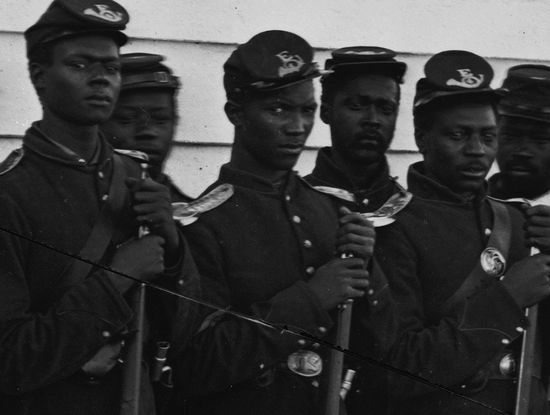
[T]he Civil War as avoidable tragedy didn't materialize out of thin air; it comes not just out of American popular memory, but right out of American historiography. The origins of the American Tragedy are rooted in the Civil War denialism of historians who held that the war wasn't about slavery but, in the words of Charles Beard, "a sectional struggle" between two powers divided by "accidents of climate, soil and geography." Attendant to that view was the Fitzhughesque notion that "wage slavery" was as bad as "chattel slavery." When you reduce the Civil War to a fight between two equivalent systems of labor, it becomes much easier to believe that 600,000 Americans died in vain.

… It is a privilege to view the Civil War merely as four violent years, as opposed to the final liberating act in a two and half century-long saga of horrific violence, a privilege that black people have never enjoyed, and truthfully that no one in this country should indulge.

Calling the war "kind of tragic," Yglesias crunches some numbers:

[T]he Union spent $2.3 billion fighting the war and the South spent $1 billion fighting back. That right there is approximately the monetary cost of just buying all the slaves and freeing them.

Except the war option was not only equally costly in narrowly fiscal terms, it also led to the deaths of 625,000 people and all kinds of other physical devastation. Which is just to say that the war, like most wars, was a monumentally negative sum use of human capabilities and economic resources. Expending vast resources in pursuit of human freedom was eminently justifiable, but it’s still the case that relative to other conceivable ways of wrenching slaves from the grips of their masters "fight a giant war" is a tragically wasteful way to do it.

Freddie deBoer isolates the classic definition of tragedy – "that the tragic is the downfall that springs from character, that tragedy occurs because there is some failing within the tragic character (here the United States) which makes that tragedy inevitable":

In this sense I would say that the Civil War is precisely tragic: given the character of the early United States, it was both inevitable and necessary. That equality was codified in so many of our foundational texts while simultaneously denied to many millions of the country's people isn't merely an ugly contradiction but one which made violent correction inevitable. And it is the same elementary truth that constantly plays out in our conduct today: the United States pays lip service to a set of righteous values while acting in a way totally contrary to those values, and expects the world to judge it by the values and not the action.

Yglesias Award Nominee

"The president’s 10-day trip to Martha’s Vinyard has been drawing predictable fire from conservatives, who say he should be in Washington dealing with the economic crisis. It’s not exactly clear what Obama could be doing to help the situation, especially with Congress out of town on recess. But that didn’t stop Mitt Romney​ from taking a shot at the president yesterday. … You can argue that Obama’s ritzy vacation is bad optics, but from a practical standpoint it’s hard to criticize him. He might be at a summer house, but his job doesn’t end when he leaves Washington — he still gets regular briefings, is in touch with his advisors, and there’s Air Force One if he needs to hop a quick flight back to the White House," – Alana Goodman, Commentary.

Is True Forgiveness Possible? Ctd

IMG_3572

A reader writes:

Perhaps Mark Vernon is correct that true forgiveness isn't possible. What is more realistic is acceptance and understanding of past transgressions. I'm an ex-Catholic turned agnostic, but to me THE most important parable in the New Testament is the Prodigal Son. That story is the best example of what humanity's relationship with God can and should be. There is no need for salvation, saviors, the crucifixion, blood atonement, etc. If God exists, we are his children, and parents accept their children at all times because that is the inherent love in a parent/child relationship. Children don't ask to be born and we often screw up. It's the parent's responsibility to accept them back even when they disappoint us.

When the story is read in its historical context, there is only one way to see it – as a radical view of God, which in today's Christianist world would never be accepted.

That is where I shake out on this thread as well. The atonement in the Crucifixion is not as central to me as the embrace of suffering as the only real – and paradoxical – triumph over evil and injustice. And God's love is radically unconditional – simply because God is God and God is Love. Another concurs:

The expectation of satisfaction, of the give-and-take of apology and statement of absolution, or the quid pro quo of penance, is exactly the opposite of true forgiveness!  Grace, in its most Godly sense, exists prior to apology and far after the polite “I forgive you” that we assume is the necessary transactional basis of love.  The key moment in the parable is that the Father ran toward the Son “while he was still far off.”  Such Grace is the ONLY thing which makes forgiveness possible.

Another:

You've been contemplating a curious question: Is pure forgiveness possible? (By "pure" forgiveness I mean a forgiveness bereft by self-interest.) Can there be a love of another entirely alienated from love of self?

My own view is that "purity" of intent is neither possible nor desirable. Most altruism, upon closer examination, reveals that it is at least in part motivated by self-interest. It can be enlightened self-interest, aware of long-term and/or spiritual consequences; yet somehow this vital grounding for virtue is thought to lessen virtue.

With equal logic one can denounce a rose for having roots in the filthy dirt. But I, for one, forgive the rose for its dirty roots. In fact I admire the rose's ability to turn filth into fragrance. My forgiveness of the rose is not entirely un-self-interested, for as a human being, I too have dirty roots.

Hold The Rye, Ctd

A reader writes:

It's become perfectly fashionable to bash The Catcher in the Rye, and if the familiar critiques have yet to become hackneyed, they're well on their way.  Big yawns and rolling of the eyes, etc.

As with any other work of literature, not least the Old and New Testaments, Salinger's novel is a historical document that speaks with some clarity to the concerns of the time in which it was written. It's nigh impossible to comprehend the degree to which the imperative to conform pervaded in Holden Caulfield's upper-middle class, postwar America, but there's no lack of historical and literary testaments to it.

Context aside, Salinger speaks through Holden's voice to a universal truth about transition and permanence – the Natural History Museum is the same every time, but you've changed since the last time you were there.

Whether the author intended it thus or not (and my money is on the latter), it stands as a deft little trick of solipsism; every time you read Catcher, the printed words on the page come out the same as they always have, and Holden is still a 17-year-old prep school bustout telling his tale to a shrink in California – but you've changed.

Another supports that theory:

As a sophomore in high school, I had to read the book for English class and hated it.  I found Holden to be a self-absorbed, self-pitying, whiny kid.

As a junior, I had to read the novel for English class a second time.  I felt as though I was Saul knocked off of his donkey on the road to Damascus.  I thought, "This may be the greatest novel ever written!  How could I have been such a child when I read it before?"

Some years later, as a graduate student in English, I had to read the novel a third time, and I thought it was … okay.  That's been my opinion for the last 30 years.

Another:

I'm in my 40s. My favorite Salinger book is now Franny and Zooey, for vaguely nostalgic reasons. Overall, I'd consider myself something of a literary snob – a would-be writer who reads primarily "writers' writers" – like Munro, Roth, McEwan.  While I reread Franny and Zooey every few years, I've avoided Catcher in the Rye - maybe as I know it won't hold up to my 40-something literary taste. Maybe it's not timeless or the thing you can reread at 45.

But that doesn't lessen the power of reading it at 15 … the power of being recognized … of being reflected … even reading it 30 years after it was published. Sure it was indulgent, self-absorbed – in a word, adolescent. But it was the first time literature seemed to speak my language, seemed relevant. It made me feel like literature had something to do with me, my loneliness and feelings of alienation, and that such things weren't new to my generation, deep in the cynicism of the Cold War as I felt. It made me want to be a writer.

Perhaps it isn't the kind of thing you reread in your 40s, but I don't think that lessens the power of reading well-chosen adolescent novels during, well, adolescence. Part of literature's magic is in making the reader feel reflected, seen, understood – even during periods of life we would rather downplay.

I still consider it one of my favorite novels – for the power it had for me at 15.

How Much Do Elite Schools Matter?

A new study finds little advantage to highly selective exam schools. Felix Salmon is unsurprised:

In general I think that the obsession over the relative merits of different schools is a classic example of the narcissism of small differences. Some kids fit in much better at this school than at that one — and just as many would be better off at that one rather than this one. There’s no easy way of generalizing, no sense in which School A is in general a significantly “better school” than School B.

When it comes to educational outcomes, by far the most important factors determining them are external to the school — the kid’s health, wealth, and home surroundings. And most important of all, of course, is the character and personality of the individual person being educated — something which is much more innate than subject to shaping.

The lesson Yglesias draws:

The most reliable way to amass impressive alumni is to screen for impressive freshman. But at the policy level it’s more important to identify institutions that are unusually good at helping people learn, not institutions that are unusually good at screening.

Reihan shares his own experience with such schools.