Dan Savage spotlights another tragic tale.
Update: Bilerico, the source for Dan's post, has retracted the story pending verification.
Dan Savage spotlights another tragic tale.
Update: Bilerico, the source for Dan's post, has retracted the story pending verification.
"I am a concerned conservative who believes the White House and Senate are in the hands of politicians and bureaucrats who maintain a fundamentally different vision as to what kind of nation we were meant to be and ought to be. The crucial election is fifteen months away and as such it is time for the GOP to get serious. There are important issues facing this nation and Sarah Palin — popular, telegenic, representing some values to which I hold true while exposing the lie that feminism is the exclusive property of the left — can still do her part. She can surrender the stage so that proper focus can be placed on those within the Republican Party who can win the general election and not just galvanize a spirited minority within the conservative movement. Right now she is doing one of the political parties a huge favor by staying in the limelight but, unfortunately, that party isn’t the GOP," – Brad Schaeffer.

A reader writes:
The readers who responded to the Angry Birds rant really missed its point. Yes, Tetris was very popular when it was released on the Game Boy, but this popularity was mostly limited to children and teens. What makes Angry Birds different is that a significant number of adults have become enthused by the game, more so than with any previous video game. And now we have to listen to all these people who have never really played video games wax poetically about Angry Birds' greatness and uniqueness. This is precisely what is so annoying. While it’s a very good game, there really isn’t anything novel about it, other than claiming a bunch of famous writers as fans.
Another complicates that view:
I agree with your reader that pointed to the "big splash" Tetris made initially. And I even experienced the power of Tetris to ensnare even the most unlikely of gamers. When I received my Gameboy for Christmas (can't remember the exact year, probably 1990) I was young enough for Tetris to be enjoyable, but not old enough to avoid intense frustration in the higher levels when those blocks really start moving. As such, during the days following Christmas I became engrossed in building my new Lego models, and my Gameboy was commandeered by my 60-year-old grandmother. She would sit in her easy chair, holding the Gameboy like a calculator in her left hand, using her right index finger, and only her right index finger, to punch the buttons. Despite this considerable mechanical disadvantage, she managed to reach level 90-something, a source of considerable consternation for both me and my dad, who also got into the game big-time, and would play after everyone else had gone to bed. He couldn't beat her score, either.
Another:
The popularity of Tetris, and now Angry Birds, is simple. Both games are easy to learn and quick to play, requiring only a few minutes of spare time to engage. It’s the People magazine model, where one can absorb just enough information for a session on the toilet. In fact, and this is the truth, I have an old Game Boy with Tetris in my bathroom, and it’s used every day.
(Photo via Yfrog user and blogger Gulliver, who proclaims "Ladies and gentlemen, I present to you my 5-year old nephew's rendering of his favorite distraction.")
Matthew Reed tracks the tremendous amount of money that monarchies belonging to the Gulf Cooperation Council are using to try to stabilize countries undergoing democratic unrest:
Careful review suggests these moves aren’t simply "counter-revolutionary," as some claim. In fact, the money is going to revolutionary causes also, once again proving Gulf power politics are strategically flexible—not just rigid or reactionary. …
With so much money changing hands, a bigger question looms: How much influence can the GCC buy? The answer is not much, but this is no fault of theirs. Recipient countries are not beholden to donors especially if those recipients are self-interested autocrats. Why so? When regimes face existential crises their concerns narrow greatly. If money fails to curb unrest, leaders choose reform or violence. Expect them to respond in their own interest if faced with this choice. Consider how much money the US spends on foreign aid and its modest returns and the GCC’s generosity seems less important.
Reed concludes that money can't buy the Saudis love. Bruce Riedel explains why the Saudis are uncharacteristically siding with revolutionaries in Syria. Andrew Tabler discusses how this kind of foreign pressure could help bring down Assad.
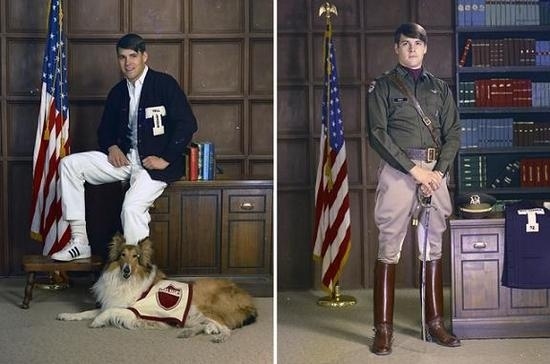
Today on the Dish, Andrew called for Perry to withdraw after he accused Ben Bernanke of treason, and Jpod admitted the error. Even Karl Rove agreed presidential candidates don't joke about treason, we recalled that Bush appointed Bernanke, but Perry refused to apologize. We dug into the dirt of Texas' magical economy, but without the oil boom and government jobs the unemployment numbers were pretty bleak. We learned Rick Perry donned jodhpurs and varsity cardigans in college and Erica Grieder argued he's not as dumb or ideological as many have claimed. We examined his shady funders, Rick Perry loved Israel and Jesus, and Conor scoffed at the contradictions between Rick Perry and his federalist book. John Batchelor wondered how Perry would woo the Yankees, a reader distinguished him from Bush, and one accused Doug Neidermeyer of running for president.
Andrew praised Obama's reaction to legitimate complaints from protesters, Paul Ryan was considering a run for President but Bernstein insisted the field was weak because the party is. Despite silence from the press, Ron Paul earned our attention, and Palin went apeshit on an innocent, conservative reporter. Matthew Zeitlin earned an Yglesias award nominee for calling out liberals for harping on Romney's corporation comment, and the Tea Party screwed the private sector instead of the government. Ross and Reihan mourned the fact that Pawlenty never ran on Sam's Club conservatism, Larison made some hefty predictions about Romney's future success and a reader wanted Romney to step up to Perry on healthcare. Matt Duss stuck it to neocons for claiming Bush caused the Arab Spring, and we wondered if Sean Hannity would correct his incorrect claim that Obama inherited a 5.6% unemployment rate. Social security did resemble a Ponzi scheme, and a reader reminded us that parts of our sordid Southern past are not quite past us.
Andrew revisited Christianism and the case for translating religious convictions into secular arguments. Class warfare was alive and well in England, News International was busted, as was the Bible's Book of Jeremiah. China's protests were challenging the government more and more, foreign relations faced up to designer pathogens, Egypt's liberal parties joined forces for a secular voting bloc, and Soner Cagaptay charted the history of Turkish secularism. Bruce Riedel kept tabs on al-Qaeda's new chief, and the end of war could be on the horizon. We examined "post-conflict reconstruction" via Harry Potter, The Catcher in the Rye just didn't do it for Tom Perrotta and sharks suffered for our cheap cans of tuna fish. Angry Birds resembled Tetris more than we thought, and readers delved into the history of homosexuality on Star Trek.
MHB here, FOTD here, VFYW here and winner #63 here.
–Z.P.

A reader responds:
My comment last week on your post "The Derbyshire-Bartlett Alliance" drew a number of furious dissents from Southern Dish readers, who – between calling me an "asshole" and recommending that I get fucked, characterized my words as "sanctimonious tripe," "mean-spirited childish ranting," "smug narrow-minded jingoism," and myself as "beneath contempt." In other words, I hit a button – apparently, a very hot button.
Fortunately, some other less volatile Southern readers wrote in to defend my perspective, and I can do no better than to quote one of them, when s/he wrote: "The reader was not describing the entire South. [With the phrase "the rump South" the reader] was referring to [the dictionary definition of "rump" as] the last and definitely the inferior part, which [is], as [the dictionary] phrases it, "a small part of the original" and "therefore unrepresentative."
That is precisely correct. The phrase "rump South" refers not to the South or the people of the South as a whole, but to the rump Confederacy and its bastard offspring Jim Crow, and to its political, social, economic, philosophical and spiritual grandchildren (which are by no means confined to the geographical South, as any child of the Midwest, like me, knows all too well).
This neo-Confederate influence, though waning, still manages to constantly rear its ugly head in our national discourse and politics. Consider Rick Perry's 2009 suggestion that Texas had the right to secede from the Union, or the recent debt ceiling crisis, when the Southern Tea Party/Republicans threatened to drive the nation into default unless their demands were met. In fact it was this last crisis that prompted Michael Lind to write the piece in Salon you called a "must-read" (it is) and profiled on August 2 in your post "The Southern Coup: An Update."
Lind's piece and the subsequent related discussion on the Dish, was the background against which I wrote my own comments. They were by no means meant to be a condemnation of the South in general, or the people of the South, any more than were Lind's. But neither do I retract a word of them.
Let me clarify a couple specific points brought up by dissenters, and I'll retire peacefully into the far West, where I now live:
To the dissenter who accused me of "conveniently ignoring facts of history like the wholesale lynching of emancipated slaves during the New York City Draft Riots of 1863, etc.," please take into account I was writing a short comment to Andrew, not a book. As a native of Indiana, I'm more than aware of the sins of the North, Midwest and West:
"The Indiana Klan was a branch of the Ku Klux Klan, a secret society in the United States that practiced racism and terrorism against minority ethnic and religious groups. The Indiana Klan rose to prominence beginning in the years after World War I… The organization reached its highest point of power during the years that followed, and by 1925 over half the members of the Indiana General Assembly, the Governor of Indiana, and many other high ranking members of the government were all members of the Klan."
This was a mere 25 years before I was born. My. Home. State. Just as much "rump South" as anything below the Mason-Dixon line. These are the good Christian people I grew up with — and I know them well, both the good and the bad. At least they had the good sense to eventually throw the Klan out — but only after a horrific scandal.
To the dissenter who felt "sick to [his] stomach" on reading that I thought he "viewed the [2008] election as 'a nigger up against a son of the South'," I would ask that you re-read my comment, and ask yourself: Do you consider yourself part of the "rump South," and all that that connotes? If not, the words do not apply to you. If so, they do.
In any case, picture this, if you will:
some other major world power, once a colonial state in which blacks were enslaved by whites, and now, eight generations later, a black man runs against the great-great-great-grandson of one of the largest slave-holders of the colonial ("planter mentality") era — do you think the world would just ignore that biblical drama? Or should? And yet, did we hear a word, a single word, about McCain's background? I didn't. I didn't know a thing about it until the election was over. No one else I know did either. Yet, that's ALL we heard about Obama. Not one word about McCain's background. Or the plantation that's still in the family. Or the black McCain's still living down there in Mississippi. Apparently none of that is of the slightest interest or importance. But would we have felt that way if it had been happening anywhere else? An historical human drama of that depth and scope?
John McCain is not responsible for what his great-great-grandfathers did. We are not responsible for what Jefferson or Washington or a thousand other founding fathers did. But we all live with it. And to ignore the fact is a form of insanity. "The past," a famous Southern writer once wrote, "is never dead. It's not even past." Faulkner was right. The darkness of the past has not gone away. It will never go away. It cannot be denied. It can be redeemed. And part of that redemption is to call it out, loud and clear, whenever its dark rump spirit rises in the present, whatever new disguise it uses to obscure itself. That's what Lind was doing, that's what Andrew is doing, and that's what I was doing. America has not yet redeemed its past. Not even close. You'll know it has, when the denial stops.
(Photo: Conservative supporters including Chris Scharbauer (C), of Amarillo, gather at the Victory Texas and Republican Party of Texas election night watch party at the Texas Disposal Systems Exotic Game Ranch on November 2, 2010 in Buda, Texas. Gov. Rick Perry has been elected to his third term by defeating Democratic challenger Bill White. By Ben Sklar/Getty Images.)

In the aftermath of the London riots, Peter Oborne proffers a provocative column contending that "the moral decay of our society is as bad at the top as the bottom":
Certainly, the so-called feral youth seem oblivious to decency and morality. But so are the venal rich and powerful – too many of our bankers, footballers, wealthy businessmen and politicians. Of course, most of them are smart and wealthy enough to make sure that they obey the law. That cannot be said of the sad young men and women, without hope or aspiration, who have caused such mayhem and chaos over the past few days. But the rioters have this defence: they are just following the example set by senior and respected figures in society. …
Something has gone horribly wrong in Britain. If we are ever to confront the problems which have been exposed in the past week, it is essential to bear in mind that they do not only exist in inner-city housing estates. The culture of greed and impunity we are witnessing on our TV screens stretches right up into corporate boardrooms and the Cabinet.
Rod Dreher interviews Birmingham University dean James Arthur, who also finds that the rich in England "appear to have no moral compass and young people see this." Along the same lines, Umair Haque diagnoses an era in which social contracts are being "torn up":
There are many kinds of looting. There's looting your local superstore — and then there's, as Nobel Laureates Akerlof and Romer discussed in a paper now famous among geeks, there's looting a bank, a financial system, a corporation…or an entire economy. (Their paper might be crudely summed up in the pithy line: "The best way to rob a bank is to own one.") The bedrock of an enlightened social contract is, crudely, that rent-seeking is punished, and creating enduring, lasting, shared wealth is rewarded and that those who seek to profit by extraction are chastened rather than lauded. Today's world of bailouts, golden parachutes, sky-high financial-sector salaries — while middle incomes stagnate — seems to be exactly the reverse. Perhaps, then, our societies have reached a natural turning point of built-in self-limitation; and this self-limitation is causing a perfect storm to converge.
London mayor Boris Johnson pushes back against this notion of moral equivalence, but wants Londoners to be "less squeamish about the realities of young people's needs." Theodore Dalrymple simply isn't buying the banker-looter analogy:
[T]he comparison fails to recognize the rawness of the injury that looting and arson inflict upon their victims and their surrounding communities. Like almost everyone, I suffer if the stock market declines and a recession occurs. But if you were to ask me which I should prefer—to live through a recession whose human cause was diffuse and imperfectly clear, or to have my house looted or burned down by a mob of young people—I know what I would answer.
Taking a broader view, Joel Kotkin anticipates global class warfare:
The prospects for a widening class conflict are clear even in China, where social inequality is now among the world’s worse . Not surprisingly, one survey conducted the Zhejiang Academy of Social Sciences found that 96% of respondents “resent the rich.” While Tea Partiers and leftists in the U.S. decry the colluding capitalism of the Bush-Obama-Bernanke regime, Chinese working and middle classes confront a hegemonic ruling class consisting of public officials and wealthy capitalists. That this takes place under the aegis of a supposedly “Marxist-Leninist regime” is both ironic and obscene. …
Many conservatives here, as well as abroad, reject the huge role of class. To them, wealth and poverty still reflect levels of virtue — and societal barriers to upward mobility, just a mild inhibitor. But modern society cannot run according to the individualist credo of Ayn Rand; economic systems, to be credible and socially sustainable, must deliver results to the vast majority of citizens. If capitalism cannot do that expect more outbreaks of violence and greater levels of political alienation — not only in Britain but across most of the world’s leading countries, including the U.S.
(Photo: A damaged Barclays bank branch is pictured in Handsworth, Birmingham, central England, on August 9, 2011, following a third night of violence on the streets of London and other parts of Britain. By Andrew Yates/AFP/Getty Images)
“A forgotten population has now become a disappeared population,” – Christopher Gunness, spokesman for the United Nations Relief and Works Agency agency in Jerusalem.
He is referring to Assad's latest assault on a population of Palestinian refugees in Latakia, Syria.
In response to these pictures of Rick Perry, a reader writes:
Good Lord, Doug Neidermeyer is running for President!
And a great American. A heartbreaking story about a kind veteran.
 The Dish