Torture Diamonds

Isaac Chotiner keeps tabs on the trafficking:

After a decade of bloodshed and atrocity, the diamond industry was finally shamed into agreeing to a process whereby diamonds would be deemed "conflict-free" before being sold on the world market. The so-called Kimberley Process, established in 2003, had one glaring weakness, however: it was an industry-run effort with almost no verification mechanisms. So, naturally, last year, amid controversy over whether diamonds from Zimbabwe's Marange diamond fields would be allowed verification and export, the Kimberley Process granted Robert Mugabe's government its approval.

The BBC investigates the origin of those diamonds:

A torture camp run by Zimbabwe's security forces is operating in the country's rich Marange diamond fields, BBC Panorama has found. The programme heard from recent victims who told of severe beatings and sexual assault…The main torture camp uncovered by the programme is known locally as "Diamond Base". Witnesses said it is a remote collection of military tents, with an outdoor razor wire enclosure where the prisoners are kept. It is near an area known as Zengeni in Marange, said to be one of the world's most significant diamond fields. The camp is about one mile from the main Mbada mine that the EU wants to approve exports from. The company that runs the mine is headed by a personal friend of President Mugabe.

A second camp is located in nearby Muchena. "It is the place of torture where sometimes miners are unable to walk on account of the beatings," a victim who was released from the main camp in February told the BBC.

Earlier coverage of blood diamonds and alternative engagement gifts here, here and here. Parts 2 and 3 of the above 2009 Dateline program here and here.

Iraq, The Failed Neocon Experiment

Paul Pillar sees Iraq's role in the Arab Spring as the nail in neoconservatism's coffin:

A fatal flaw in the neocon dream was the almost oxymoronic idea that something imposed from the outside by the United States could motivate people in the Middle East to act on behalf of popular sovereignty. As for the country that was supposed to play the role of lead democratic domino, one of the principal trends in recent years in Iraq—besides the continued violence, which has lately had an upsurge—has been the increasing authoritarianism of the regime of Prime Minister Nuri al-Maliki. Now we're in a different decade from Bush and his war, and there is a genuine burst of yearning for popular sovereignty in the form of the Arab Spring. And what is the posture of the Iraqi regime toward the Arab Spring, specifically next door in Syria, which is currently the hottest front line in the confrontation between freedom and authoritarianism? Maliki is maintaining a distinctively friendly posture toward the Assad regime, while that regime is gunning down protestors in Syrian cities.

Sexual Supply And Demand

Tracy Clark-Flory interviewed Roy Baumeister of Florida State University about his new study "Sexual Economics: A Research-Based Theory of Sexual Interactions, or Why the Man Buys Dinner":

The point of sexual economics is that sex is a resource that women have. Men trade women other resources for sex. Historically, women have restricted each other's sexuality in order to make the price of sex high, so that men pretty much have to make serious commitments of marriage in order to [have sex]. When women have more access to educational and financial opportunities, they don't need to hold sex hostage as much, so they relaxed the controls they've put on sexuality.

Amanda Marcotte joins Tracy in critiquing Baumeister's theory:

His argument is that equality somehow "lowered" the price of sex, because as women have more economic resources of their own, they slut-shame each other less. Okay, fair enough.  But the theory falls apart when you assume, as Baumeister does, that women just aren't into sex.  He claims married women aren't into it, but also that single women aren't into casual sex.  Commitment doesn't make us horny.  Newness doesn't make us horny.  It appears nothing makes us horny.

“Think Of It Like Political Islamism” Ctd

Adam Serwer looks at Bachmann/Perry Dominionism in light of the anti-Sharia crusade:

Perry has ties to the Dominionist New Apostolic Reformation, while Bachmann was featured in a documentary produced by Truth in Action Ministries, whose founder Goldberg explains, has written that "It is dominion we are after. Not just equal time … World conquest.” Don't call it a caliphate. Association with an Islamic-oriented group with similar political goals would be enough to end some nameless government bureaucrat's career, let along hamper someone trying to seek a major party nomination. But conservative enmity towards "sharia" has always been selective, more rooted in religious rivalry and tribalism than any consistent commitment to secular democracy.

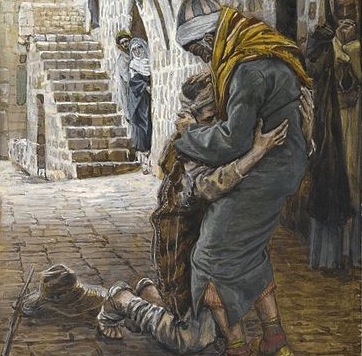
Is True Forgiveness Possible?

379px-Brooklyn_Museum_-_The_Return_of_the_Prodigal_Son_(Le_retour_de_l'enfant_prodigue)_-_James_Tissot

Mark Vernon dismantles various versions:

Evolutionary doctrine itself undermines our capacity to forgive. Rather, it teaches that we learn it's in our own self-interest to co-operate. We put up with others because, at some deep level, we know we serve ourselves in so doing. That's not forgiveness.

Surely, you might be thinking, Christianity teaches forgiveness, a forgiveness that is real. But once more, that can be challenged. Take the parable of the prodigal son. You may half remember it as the paradigmatic tale of forgiveness, the father forgiving the son in spite of his profligacy. But read it again. Forgiveness is not once mentioned. The son does not ask for it. The father does not offer it. … Forgiveness is impossible. Instead, what it reveals is another virtue in operation, the love the father has for his son. It is wildly extravagant. It gratuitously throws a party. The past is not forgiven. It is simply sidestepped. Is this what God's "forgiveness" is like too?

(Image: James Tissot's "Return of the Prodigal Son")

Von Hoffman Award Nominee II

"Over the past week, my colleague in Austin and Andrew Sullivan have been discussing whether there is a Rick-Perry-sized hole in the race. With respect to Mr Sullivan I side with E.G.; while Mr Perry might choose to enter the race and might do quite well, there is no sizable bloc of Republican voters who would be unrepresented or left without a choice should he decide to remain in Texas. The hole in the race is now perfectly Pawlenty-sized: mainstream Republicans need a port in the storm, and it looks like he's the only port available." – Economist blogger J.F. His mea culpa here.