If Ludwig Had A Laptop

Michael Agger marvels at fast writers:

Christopher Hitchens composing a Slate column in 20 minutes—after a chemo session, after a "full" dinner party, late on a Sunday night. The infamously productive Trollope, who used customized paper! "He had a note pad that had been indexed to indicate intervals of 250 words," William F. Buckley told the Paris Review. "He would force himself to write 250 words per 15 minutes. Now, if at the end of 15 minutes he hadn't reached one of those little marks on his page, he would write faster." Buckley himself was a legend of speed—writing a complete book review in crosstown cabs and the like. …

Some writers are "Beethovians" who disdain outlines and notes and instead "compose rough drafts immediately to discover what they have to say." Others are "Mozartians"—cough, cough—who have been known to "delay drafting for lengthy periods of time in order to allow for extensive reflection and planning." According to [psychologist Ronald] Kellogg, perfect-first-drafters and full-steam-aheaders report the same amount of productivity. Methinks someone is lying.

Practice makes perfect, I guess. My speed-writing has become much faster since blogging.
Palin Cites Her Family

It's her routine response to questions about whether she's running. It's odd, given that her family has only embraced celebrity and fame, and are now firmly ensconced in the celebrity-industrial-complex. Unless, she means she might have to address another profound question about the stories she has told about her family. My bet is she'll wait till after Levi's and McGinniss's books come out. And she'll leverage her campaign as a victim of the evil media.

But I cannot know, of course. All I know is that Palin craves attention and believes she has been chosen by God to lead the nation. Bowing out of the race is the end of her fifteen minutes. My bet is she wants a few more hours.

The End Of The Road?

Suitcases

Ari N. Schulman asks how tracking technology would affect Kerouac's On the Road if it were written today:

Can we imagine its characters, and by extension ourselves, escaping into the Western night, navigating by GPS and choosing where to go with Yelp, supplied with surrounding-relevant multimedia by GeoTour, encountering city streets with their iPhones held up and overlaying the view, and still having the same adventure? Something about this image is absurd.

To better appreciate what and why that might be, it is helpful to step back and consider On The Road’s forerunner in American wayfaring legend, the classic Adventures of Huckleberry Finn. Mark Twain’s tale is one of the great depictions of discovery through travel. … There was already a sense, in Huck Finn and On the Road, that something in the air was becoming so thick that it threatened to entrap the human spirit. This reached a frantic intensity for Kerouac, whose characters had to be almost constantly on the move, as if they might otherwise get stuck in place like bugs in amber. Today Sal and Dean could not move fast enough to escape what has congealed in the landscape before them. This is why, if Kerouac’s work succeeded Twain’s as the American fable of wayfaring, today there is no clear successor to Kerouac.

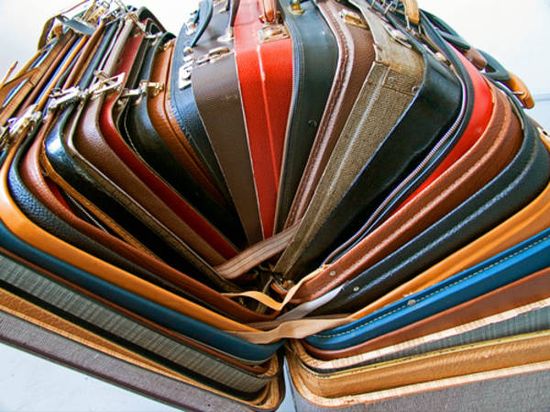
(Photo: Pack Daddy's Suitcases by Michael Johansson)

Malkin Award Nominee

"Could it be that pornography drives some users to a desperate search for some sort of radical "purification" from the pornographic decay in their soul? Could it be that the greater the wedge pornography use drives between an individual's religious aspirations and the individual's actions, the more the desperation escalates, culminating in increasingly horrific public violence, even terrorism?" – Jennifer Bryson.

How Should We Approach Soldiers? Ctd

A reader writes:

A George Saunders story ("Home") that recently appeared in The New Yorker is about a soldier who recently returned from an unnamed war in the Middle East.  In classic, absurd Saunders style, a motif in the story is that the soldier keeps getting thanked for his service. Here is an example scene (the soldier's mother is being evicted):

“This is how you treat the family of a hero?” Harris said. “He’s over there fighting and you’re over here abusing his mother?”

“Friend, excuse me, I’m not abusing,” the man said. “This is evicting. If she’d paid her rent and I was evicting, that would be abusing.”

“And here I work for a beeping church!” Ma shouted.

The man, though low-slung and fat, was admirably bold. He went inside the house and came out carrying the TV with a bored look on his face, like it was his TV and he preferred it in the yard.

“No,” I said.

“I appreciate your service,” he said.

The View From Your Window Contest

Screen shot 2011-08-12 at 5.54.44 PM

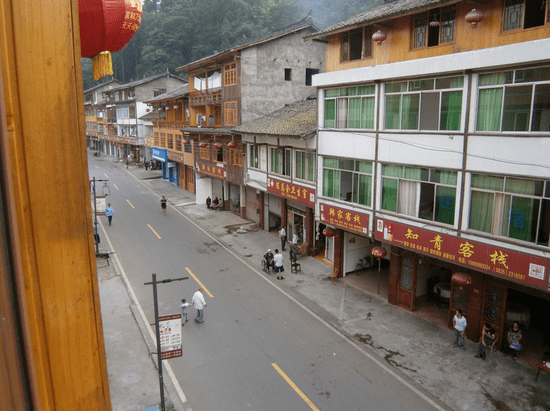
You have until noon on Tuesday to guess it. City and/or state first, then country. Please put the location in the subject heading, along with any description within the email. If no one guesses the exact location, proximity counts.  Be sure to email entries to VFYWcontest@gmail.com. Winner gets a free The View From Your Window book. Have at it.

Why The Court Is Becoming Conservative

Scott Lemieux explains:

Supreme Court justices tend to come from the federal appellate courts. Particularly since the Reagan administration, Republican presidents have been very conscious of trying to put young conservatives on the federal appellate bench. This is how you get John Roberts and Sam Alito appointed to the Court at a young age, in addition to federal courts stacked with your appointments for a long time. Obama, however, has yet to get a single appellate court judge under 45 appointed to the appellate courts. Since the inauguration of Reagan, "Republicans have appointed 41 federal appellate judges under age 45 to the Democrats’ 10."

A Poem For Saturday

GT_JOBSEEKERS_110812

"What Work Is" by Philip Levine, the new US poet laureate:

We stand in the rain in a long line
waiting at Ford Highland Park. For work.
You know what work is—if you’re
old enough to read this you know what
work is, although you may not do it.
Forget you. This is about waiting,
shifting from one foot to another.
Feeling the light rain falling like mist
into your hair, blurring your vision
until you think you see your own brother
ahead of you, maybe ten places.
You rub your glasses with your fingers,
and of course it’s someone else’s brother,
narrower across the shoulders than
yours but with the same sad slouch, the grin
that does not hide the stubbornness,
the sad refusal to give in to
rain, to the hours of wasted waiting,
to the knowledge that somewhere ahead
a man is waiting who will say, “No,
we’re not hiring today,” for any
reason he wants….

Continued here. As a poet who often writes about the working class, Levine told Carolyn Kellogg:

I had thought that the worst collection of people was an English department having a meeting, but the U.S. Congress runs away with the award.

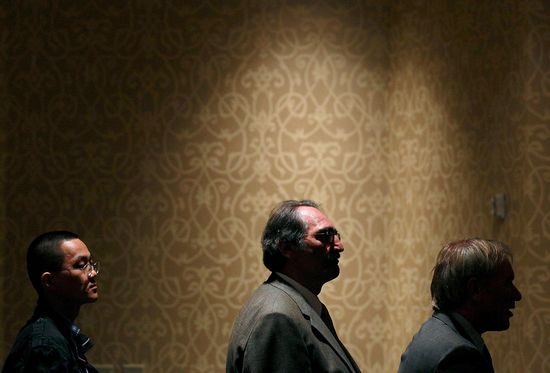
(Photo: Job seekers read pamphlets as they wait in line to have their resumes reviewed during the HIREvent job fair at the Doubletree Hotel on August 10, 2011 in San Jose, California. As the national unemployment rate sits at 9.1 percent, the labor department announced results of a Job Openings and Labor Turnover Survey that showed nearly 3.1 million jobs were open at the end of June, a slight increase from May's upwardly revised 3.0 million. By Justin Sullivan/Getty Images.)