Today on the Dish, after Andrew live-blogged the GOP debate in Iowa, the right fought over who won while the left choked on the candidates' promise of budget suicide. Huntsman lost his nerve, Herman Cain aped Donna Summer, and Joe Scarborough called Bachmann's fiscal recklessness a joke. We fact-checked Santorum on Lincoln and the tenth amendment, Palin arrived in Iowa and humbly informed us she was there for the fried butter, not the spotlight. Andrew sized up the Dems' chances for retaking the House, Chait defended Romney's defense of corporations, and we recalled just what Obama has done for us so far. Perry officially jumped in the race, Balko reminded us of Perry's affinity for executing innocents and Herman Cain quoted Pokemon frequently.
In national news, Palin wasn't above increasing taxes to get a AAA rating for Alaska, Mankiw and Holtz-Eakin proved the stimulus worked, and innovation may be our only way out of this slump. Chait, Westen and Zakaria duked it out on Charlie Rose, and readers had hoped for real policy answers about the economy during the debate. The National Catholic Register insulted Mormonism, and readers emphasized that MLK never ran for office. The 11th Circuit Court of Appeals declared the healthcare mandate unconstitutional, and Ezra examined what happens if it gets struck down.
Around the world, RJ Evans toured Yemen's beauty, China showed off its national might with a new aircraft carrier, and Levi's pulled its revolution in the streets ad from the UK. Murtaza Hussein examined national security in the wake of the UK riots, and Michael Nutter talked straight to the teen hooligans in Philadelphia. China's film business boomed, Slavoj Žižek weighed in on Zionism, and Israel's tent protests circled back to the problem of occupation.
Hot people make $230,000 more over a lifetime, Jason Peters pondered the tension between work and vacations, one law professor admitted law school is a scam, and artists also suffered from website hubris. Credit scores aren't affected by paying off your bill in full each month, some were determined to thank soldiers whether they liked it or not, and a Republican congressman wanted to ban scientific research on great apes. Nicholas Mancusi found the Kierkegaard strains in Louis C.K.'s comedy, Julian Sanchez chastised Sesame Street for letting heterosexual puppets have relationships, and Tom Bissell likened Angry Birds on the iPad to screwing someone in a bathroom bar.
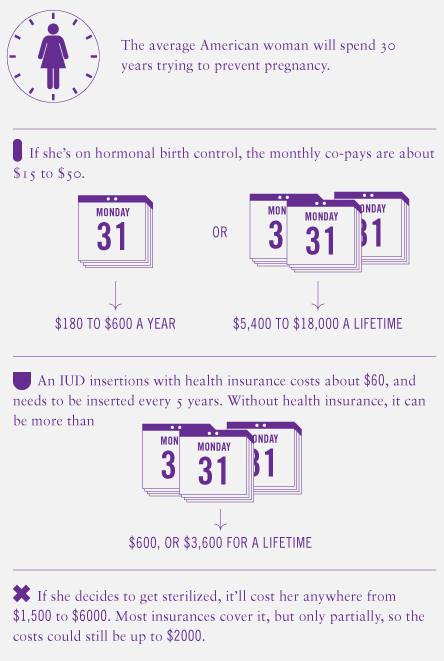
Chart of the day here, dissents of the day here, VFYW here, MHB here, and FOTD here.
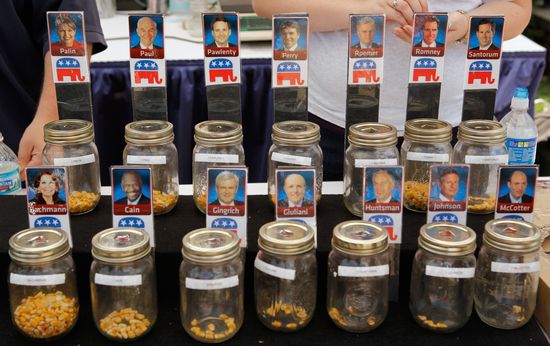
By Chip Somodevilla/Getty Images.
Thursday on the Dish, Andrew live-blogged the most entertaining GOP debate in a long time and reconsidered Christianism in light of Martin Luther King Jr. Andrew noted Romney's former run-in with fiscal conservatism and the S&P but couldn't get over his plastic demeanor. We assessed Romney's defense of corporations as people, and readers didn't think Obama would attack his Mormonism. Pareene sunk his teeth into Rick Perry as a neo-Confederate sympathizer, the Bush comparisons continued, while the neocons lined up to drool. Bachmann looked nuts in other Newsweek photos, and Seth Mandel hyped Perry's popularity over Palin, while she careened her bus tour towards Iowa.
In national affairs, Andrew fisked Santorum's abstract paper towel/ napkin analogy, GOProud bowed to Queen Coulter, the radical homosexual activist agenda marched on, and marriage equality seemed sturdy in New York. Chait defended the Wisconsin recall election, and one black Limbaugh listener got fed up with his exploitation of racial stereotypes. Liberals continued to harp on Obama's faults, Fareed defended Obama's common sense fiscal approach, and Sen. DeMint earned a Hewitt award for calling Obama's administration the most anti-American in memory. Drezner feared a global Depression, independents would axe infrastructure spending but Brian Fung argued we need better polls to truly judge what people want.
On the international front, Andrew addressed cries from the anti-war left, Syria's political system was forever changed by the protests, and Ahmed never mentioned beards. Celeste Ward Gventer attacked US interventionism run amok, and the US is complicit in the fighting in Somalia. In the UK, some rioters had tried to march peacefully without a word from the press, a reader returned to a 2006 Cameron speech, and apparently austerity makes riots more likely.
Some readers tried to live without cash, and another accused credits cards of being rigged. Alan Jacobs argued our real life personas are easier to track than we think, a former Wikipedia editor examined conflicts on the site, and Norm Geras critiqued Terry Eagleton's definition of evil. Selfish elites should learn a lesson from past fiscal crises, male infertility was kept quiet, and Southerners encouraged their fellow liberals to confront the occasional bigotry of family and friends. Restaurant websites may suck because menus are delivered in PDFs for the actual dining experience, and Angry Birds flung themselves at hockey masks.
Creepy ad watch here, VFYW here, MHB here, and FOTD here.
A Day in California from Ryan Killackey on Vimeo.
Wednesday on the Dish, Andrew feared Rick Perry's unabashed extremism in such a bad economy and emphasized why minorities have stuck with Obama. Obama's approval rating lows beat out even Kennedy's, and due to the debt debacle, the GOP got a downgrade. Joshua Goldstein predicted a rise in inflation, Tina Dupuy imagined if liberals acted like the Tea Party, and readers remained fiscally conservative with their credit cards in tact. With two thirds of the country wanting high taxes on the wealthy, Andrew put the heat on the Democrats to actually enact some legislation. Santorum made nonsense arguments against marriage equality while the situation for gays improved worldwide. Megyn Kelly fought back against conservatives for maternity leave, Debbie Schlussel accused Whole Foods of jihadism, and the NRA accused Hillary Clinton of teaming up with Iran and North Korea.
Around the world, Vaughan Bell scoped the psychology of London's rioters, Maria Bustillos recalled the emptiness of looters' greed, and the London reax ranged from Max Hastings calling them wild beasts to photoshopped looters. Malise Ruthven grew concerned for ghettoized Muslims, Egypt and Tunisia were suspended in revolution limbo, Israel moved to expand new settlements and block off a future Palestinian state from Jerusalem, and Brad Thor butchered foreign affairs for the layman. Fallows checked the pulse for revolution in China, Michael Lewis weighed two almost impossible plans for saving Europe, and Stephen Cook designated Netanyahu a very vulnerable Israeli Republican.
On the home front, some veterans just wanted you to buy them a beer, while others got douche chills when they get thanked. Wikipedia needed an infusion of new editors, an Atheist came under "Christian" fire, and Rachel Toor tried to calm down nervous academics. Sexy bonobos beat chimps in intelligence, human dignity grew harder to separate from animal dignity, and America prepared for a flux of aging men. Restaurant websites tried to create atmosphere that just doesn't work online, and atheists could gain more acceptance with less yelling and more leading by example.
Chart of the day here, Southerner dissents of the day here, VFYW here, MHB here, and FOTD here.

Santiago, Cuba, 7.17 pm
Tuesday on the Dish, Andrew envisioned Obama's path to winning the fall with tax reforms a la Reagan, and burrowed into the theology and strategy of Rick Perry, the Christianist's Christianist. The Palins welcomed a new baby to the family on the heels of another quick marriage, Andrew defended Bachmann's crazy eyes on Newsweek as being a trait of her own, and Ryan Lizza was startled by Bachmann's pro-slavery influences. Pete Wehner asked tea-partiers to shame Judson Phillips, Beinart put America's decline in historical context, and Chait deconstructed Westen's fairy tale using Roosevelt as an example. Nate Silver called out S&P but Andrew saw it as necessary for the Grand Bargain, while Drezner and Michael Cohen followed up on the federal crackup. Drum solicited constructive criticism about how to fix the economy but international economists weren't optimistic. The right responded with calls to impeach Obama but they have already ruined themselves in the polls.
On the London riots, Andrew saw comparisons to DC's looting in 1990 and Egypt's revolutionaries reminded everyone that they didn't get their country back by stealing DVD players. Some looters robbed injured kids, sales of metal baseball bats skyrocketed, some fought back peacefully, and John Derbyshire opted to let London burn. In other international news, Congress used their important vacation time to travel to Israel, and the protesters in Israel forced the government to look to defense cuts there as well. Blake Hounshell didn't think Assad had much time left in Syria while disagreements grew in Tahrir Square at the start of Mubarak's trial. Dahlia Lithwick emphasized that Rumsfeld torture could happen to you, and we were pretty sure Russia has not attacked the US recently. Joshua Foust questioned US deaths in Afghanistan because we shouldn't still be there; meanwhile veterans were happy to be thanked once they've told you how they served.
Andrew defended Bert and Ernie's right to not be gay, the Republican party was close to winning the fight in breaking up longterm families, a poor family could sell their used microwave for three days worth of food, and anonymous identities online remained important for public discourse.
Chart of the day here, beard redux here, FOTD here, MHB here, VFYW here, and VFYW winner #62 here.
Teebs "Moments" from Paul Trillo on Vimeo.
Monday on the Dish, Andrew defended Obama from Drew Westen's lefty attack, praised Obama's calm in the face of criticism, and viewed the S&P downgrade as a condemnation of the right. Benen argued that the right already rules the economy, stimulus spending remained unpopular, and Robert Hughes helped take Westen down a notch. Ronald Reagan's solicitor-general dissed Boehner, and Andrew was ready to retire compassionate conservatism. Andrew marked Bachmann's similarities to Palin, Judson Phillips earned a well-deserved Malkin award for accusing the left of mass murder and Matt Steinglass destroyed Phillips' weak argument for more military spending.
In international news, Andrew didn't view flogging as torture but readers pushed back, and the American reward for bin Laden may have tempted a Pakistani intelligence officer into outing him. Larison analyzed British austerity and putting their military on a diet, and we debated whether it's appropriate to thank soldiers whenever we see them. Not all of Egypt's Islamists would vote together, al-Shabaab's withdrawal didn't quell the fighting in Somalia, Israel's protests hit all new highs, and because of all its adherents, there is no single doctrine of Islam.
In national affairs, Andrew bemoaned the perverse logic of credit cards and credit, Angry Birds approached the bosom, and philosophers tried their hands at online dating. Hucksters forced people to pay to remove their mug shots from the internet, twentysomethings tried to get laid, and lazers changed our cemetaries. Southern belles rebelled against their Garden And Gun characterization, and coffee acted like a drug with different effects for different people. Traffic intersections evolved past the left turn, Philip Tetlock continued to analyze pundits as hedgehogs or foxes, and readers toyed with international languages. The Grant administration made beards cool again, Oscar Wilde wouldn't have watched "The A-List" and a gay Dodger invented the high five.
Charts of the day here and here, cool ad watch here, VFYW here, FOTD here, and MHB here.
–Z.P.






 The Dish