Revolutionizing The Gravestone

Screen shot 2011-08-08 at 5.04.48 AM

Alexis Madrigal investigates how lasers have remade our cemeteries:

As we circumnavigated the plots, we began to see a pattern. Shiny, black headstones lined vast tracts of lighter gray headstones "almost like stitching," Sarah observed. These headstones were different from the ones that had come before them. Not only were they a different color and texture, they also featured photorealistic portraits of the people buried underneath them. They were a new breed of monument. One look at them could have told you that no human hand had chiseled those drawings in the stone.

(Photo by Alexis)

How Would Egyptian Islamists Govern?

Issandr El-Amrani sees the fundamentalists as a diverse lot:

Egypt's Islamists will probably form the largest ideological bloc in parliament, but not necessarily the largest voting bloc. This is because some of them may prefer entering into a political alliance with centrist secular parties (as the Muslim Brotherhood and some others are already working towards) rather than forming a more controversial hard-right alliance. Moreover, as Egypt's political system is still strongly presidential, an Islamist-dominated parliament may not immediately translate into policy changes.

Talal Asad blurs the line between "secular" and "religious" in Egyptian politics.

Don’t Jail Them, Flog Them, Ctd

A reader writes:

Flogging may not constitute torture – and at this stage there is little point returning to this point – but it is almost inevitably cruel and unusual punishment as defined by the Eighth Amendment of the US Constitution.  While the Supreme Court held in Ingraham v. Wright (1977) that corporal punishment was not cruel and unusual punishment, the decision was largely based on a technicality that public schools do not form part of the criminal justice system.  To that degree, the Eighth Circuit in Jackson v. Bishop (1968) ruled that corporal punishment in the Arkansas prison system ran afoul of the Eighth Amendment.  As Justice Blackman went on to say:

Neither do we wish to draw, in this context, any meaningful distinction between punishment by way of sentence statutorily prescribed and punishment imposed for prison disciplinary purposes. It seems to us that the 8th Amendment’s proscription has applicability to both.

Moreover, the very idea is on the face of it completely absurd.  As a starting point, we should start work on the reasonable assumption that Americans are no more and no less law-abiding than citizens of any other Western liberal democracy; that they are no more or no less violent; that they are no more or no less susceptible to illicit substances, etc.  Then we should consider why the US is more prone to incarcerating its citizenry than any other nation – for example, are there more criminal offences on the statute books, do US authorities seek jail sentences for more minor crimes, etc – and only then should we consider whether “justice” in the United States is working to the degree which it should, particularly by comparing recidivism rates.  That most, if potentially not all European and Australasian nations seem perfectly capable of keeping both crime and recidivism rates lower than those in the US without resorting to corporal punishment only serves to undermine the professor’s philosophy, and simply reflects the singularly American idea (within Western democracies) that violent retribution is required as a punishment.

Another:

My first thought was about the current demographics of our prison population and I wondered how would that look: whipping black men.  Ugh.

Advice For Twentysomethings

Drew Zandonella-Stannard dishes it out:

We are not so mysterious. If you want to get to know someone infinitely better, meet their parents for five minutes. We are attracted to people who were loved in the ways we were loved as children. We are attracted to people who are lacking in ways we understand. We are all terrified to take our clothing off and equally eager to show our genitals to each other. Do not be so afraid. … Mostly, your relationships will end. You will hold people close to you with the knowledge that everyone is on a timeline. That everyone’s heart will eventually stop beating. Most of the time, though, things will not be this grim. If they were, no one would get laid.

How Should We Approach Soldiers?

Elizabeth Samet examines the phenomenon of civilians saying "thank you" to service members they see in uniform:

If our theater of gratitude provoked introspection or led to a substantive dialogue between giver and recipient, I would celebrate it. But having witnessed these bizarre, fleeting scenes, I have come to believe that they are a poor substitute for something more difficult and painful — a conversation about what war does to the people who serve and to the people who don’t. There are contradictions inherent in being, as many Americans claim to be, for the troops but against the war. Most fail to consider the social responsibilities such a stance commits them to fulfilling in the coming decades.

Jason Fritz recounts how he's dealt with said thanks, while Captain Hyphen thinks about the inherent awkwardness of the situation. On that note, above is a well-intended but hathos-filled PSA posted by K-Lo a while back. For my part, I say thanks every time I meet someone in the uniform, unless it would interrupt them or seem rude. It seems like pretty basic civic manners to me.

The Cycle Of Escalation, Ctd

Larison pushes back against Yglesias's view of the "regime change ratchet" illustrated by Eric Martin:

Where Yglesias goes wrong here is in attributing [US intervention] mostly to excess military capacity. … Yglesias greatly underestimates the importance of ideology and specifically the belief that the nation has a mission and a responsibility to the rest of the world. The U.S. military could be reduced to a tenth of its current size, but until we rid ourselves of the idea that the internal conflicts of other countries are legitimately our concern our government will keep looking for and finding ways to intervene.

The British government’s behavior in the last year is instructive.

Cameron’s government engaged in deep austerity cuts in its military budget. Given British deficits, this was an understandable move provided that they didn’t intend to keep launching major military expeditions. Unfortunately, Cameron and many of his Cabinet ministers continued to believe that Britain had to “punch above its weight” after having put Britain on a diet, and some of them were ideologically committed to the idea that Britain must intervene for humanitarian and democracy-promoting reasons.

Would Wilde Be Proud?

Alex Ross assesses the change in gay culture after Oscar Wilde:

Wilde foresaw his posthumous triumph. “I have no doubt we shall win, but the road is long, and red with monstrous martyrdoms,” he wrote to the early gay-rights campaigner George Ives. … When I was in college, AIDS cast a pall of fear over gay life, and I struggled to summon the courage to tell my closest friends who I was. I couldn’t have imagined that gay marriage would become legal in half a dozen states, or that I would be married myself. The transformation is almost dreamlike. Yet I doubt that Wilde would recognize in our world the utopia that he dreamed aloud in “The Soul of Man Under Socialism.” A man who steeped himself in the literature of the ancient Greeks, who modelled his being on the writing of Balzac and Stendhal and Pater, who read Dante every day in prison, might have seen a new kind of hell in the global triumph of American-style pop culture.

Quite. Imagine him in the gym. Or watching "The A-List." Or wearing a rainbow flag. All those "monstrous martyrdoms" for the lowest common denominator that now passes for so much of gay culture?

High Fives Are So Gay

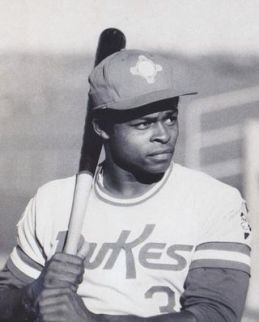
Jon Mooallem traces the emergence of the gesture to Glenn Burke, a gay Dodgers player in 1977. Burke was abruptly traded to the Oakland A's in 1978, most likely because of his sexuality. But he found another home in San Francisco's gay community:

6a00d83451c45669e201543441c958970c-800wi In the Castro, Burke's creation of the high five was part of this Herculean mystique. He would regularly sit on the hood of a car — whichever one happened to be parked in front of a gay bar called the Pendulum Club — flash his magnetic smile and high-five everyone who walked by. In 1982, Burke came out publicly in an Inside Sports magazine profile called "The Double Life of a Gay Dodger." The writer, a gay activist named Michael J. Smith, appropriated the high five as a defiant symbol of gay pride. Rising from the wreckage of Burke's aborted baseball career, Smith wrote, was "a legacy of two men's hands touching, high above their heads." …

Burke's friend Abdul-Jalil al-Hakim argues: "The high five liberated everybody. It gave you permission to enjoy your high points." And not just in sports but at your kid's spelling bee or your office after a killer PowerPoint presentation. In this interpretation, Burke didn't just add a bit of flair to baseball — he uncorked a repressed longing for personal expression and connection in all of American society.