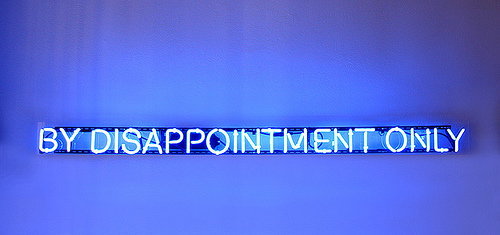
Death Fugues

Scott Johnson describes his time as a war correspondent:

The fugue of the musician: “A contrapuntal composition in which a short melody or phrase (the subject) is introduced by one part and successively taken up by others and developed by interweaving the parts.” The fugue of the psychiatrist: “A state or period of loss of awareness of one’s identity, often coupled with flight from one’s usual environment, associated with certain forms of hysteria or epilepsy.” My fugue: I am stopped at a traffic light in Kuwait City. And then this question arises: Am I dead?

I am not sure. I am confused about it. I run through the events again. I am driving down Highway 8, in southern Iraq. I come to what I believe is a checkpoint. A man with a large gun is standing to the side of the road with his gun pointed at me. Weapons, weapons, they have weapons comes to me over the radio from Luc, who is in another car, ahead of me. The words are in French. The shooting begins. It is directed at me. The bullets puncture the car. They sound like hard rain. Hail. They sound like small hammers, children’s toy hammers. As they pass through the car they suck air out with them. I duck. When I do, I lose control of the car. It flips onto a sidewalk. I skid into a pole. When I come to, I am on my side. I can smell gas. I am sure that any moment a face will appear in front of the window, raise a weapon, and end me. In Kuwait City, the lights have changed. Cars begin to honk. I am not sure what to do. If I am dead, then presumably I don’t need to do anything urgently. Death absolves one of a certain degree of responsibility it would seem. If, however, I am not dead, I need to act.
Ode To Failure

Steve Silberman thanks Allen Ginsberg for embracing life's disappointments in his later years:

If Ginsberg hadn't clued me in to foreknowledge of death, to the news of our coming failures, I would have tortured myself thinking that the world (at least my world) had somehow gone wrong. I would have thought that my father "wasn't supposed to die" of a heart attack at age 69 after taking that icy sip of apple juice in the union meeting. I would have thought that the 15-second phone call telling me that my 14 years of automatic contract renewals at a magazine were over was a terrible mistake. I would have been completely unmoored by my mother's relapse into alcoholism. …

I would have thought I was entitled to a more excellent universe than the one we find ourselves in. Now that I'm nearly the age that Ginsberg was that summer, I can see what he saw: that so much of the hectic yearning and anxious industry of young people is an effort to cover up a hole in the world.

A Screed Against War Or Against God?

Ron Rosenbaum thinks Catch-22 is the latter:

People speak too narrowly when they talk of Catch-22 as a satire of humanity. It's that, yes, and there are few better. But it's really a vicious satiric attack on God, as much as his poorly made creatures. This denunciation of God comes from the heart—Yossarian's, anyway—and transcends any denunciation of the evil of war. It's about the evil of existence itself and the creator of that existence and that evil.

He holds up this rant of Yossarian's as proof:

Good God, how much reverence can you have for a Supreme Being who finds it necessary to include such phenomena as phlegm and tooth decay in His divine system of creation? What in the world was running through that warped, evil, scatological mind of His when He robbed old people of the power to control their bowel movements? Why in the world did he ever create pain? … Oh, He was really being charitable to us when He gave us pain! [to warn us of danger] Why couldn't He have used a doorbell instead to notify us, or one of His celestial choirs? Or a system of blue-and-red neon tubes right in the middle of each person's forehead. Any jukebox manufacturer worth his salt could have done that. Why couldn't He? … What a colossal, immortal blunderer! When you consider the opportunity and power He had to really do a job, and then look at the stupid, ugly little mess He made of it instead, His sheer incompetence is almost staggering. …

Earlier coverage of Catch-22's enduring legacy here.

A Poem For Sunday

466517327_d8dafefa3b_z

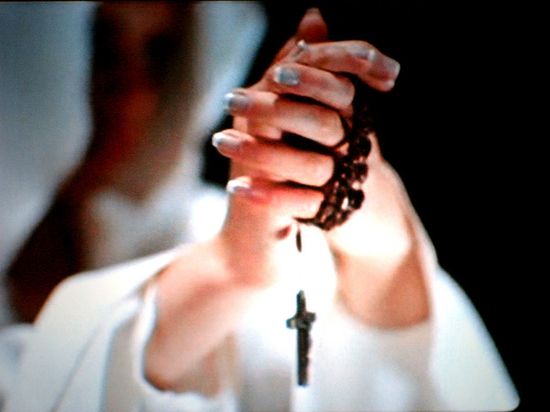
"With Mercy For The Greedy," by Anne Sexton:

For my friend, Ruth, who urges me to make an appointment for the Sacrament of Confession

Concerning your letter in which you ask&n bsp;  
me to call a priest and in which you ask   
me to wear The Cross that you enclose;   
your own cross,
your dog-bitten cross,
no larger than a thumb,
small and wooden, no thorns, this rose—

I pray to its shadow,
that gray place
where it lies on your letter … deep, deep.
I detest my sins and I try to believe
in The Cross. I touch its tender hips, its dark jawed face,   
its solid neck, its brown sleep.

True. There is
a beautiful Jesus.
He is frozen to his bones like a chunk of beef.
How desperately he wanted to pull his arms in!
How desperately I touch his vertical and horizontal axes!   
But I can’t. Need is not quite belief.

Continued here.

(Photo by Peyman Faghir Mirnezami)

Faith In Uncertainty

Diaz

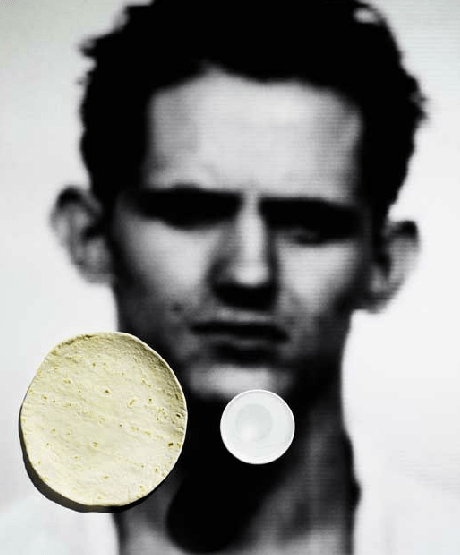
Back in April, Kyle Cupp explained why he had abandoned "God as an explanation" but continued to believe in the story:

On the one hand, my choice to believe the truth of these writings—writings that don’t perfectly add up, to be sure—is a decision to believe that an underlying thematic truth speaks through incredible, fantastical tales told to me by mostly unknown strangers, and passed down to me by figures holy and insidious, self-giving and power-hungry, saintly and vicious. On the other hand, I find some of those who have told and retold these stories, particularly the early Christian martyrs, to be credible witnesses. Those who have given their lives for Christ did so not merely in defiance of their murders, but as an act of witness embraced in the hope that their enemies would become their brothers and sisters. That kind of love strikes me as the height of love. And it’s been known to work wonders. What does my faith give me? It gives me a love story. Not a story that explains love, but a story that gives birth to—and directs my heart, mind, and very being to—the fullest expression and fulfillment of love. It is a story that means everything if it means anything at all. It is a story about what it means to be human and what it means to be divine, both of which tell of what it means to love.

That's beautifully put. I'd add, in my case, a reverence for the sacraments of the Church and an awe in the face of the knowledge that for two millennia, Christians have practised them just as I can. Kupp stands by the fact that religious certainty is overrated:

It’s possible that what I call my faith experiences are the result of digestion, bodily chemistry, neurosis, the fear of death, or the desire for meaning. Because I do not know myself with certainty, I cannot know my faith with certainty. … It’s not as though certainty is one of the virtues, theological or otherwise.  I seem to get along, faith-wise, just fine without it.

I think I get along better, faith-wise, with it.

(Image by Alejandro Diaz via mrod)

Are Atheists Also Evangelicals?

Yes, according to Reza Aslan. He challenges the new atheist movement:

What if one viewed the recurring patterns of religious phenomena that so many diverse cultures and civilizations–separated by immeasurable time and distance–seem to have shared as evidence of an active, engaging, transcendent presence (what Muslims call the Universal Spirit, Hindus call prana, Taoists call chi'i, Jews call ruah, and Christians call the Holy Spirit) that underlies creation, that, in fact, impels creation? Is such a possibility any more hypothetical than say, superstring theory or the notion of the multiverse?