A reader writes:
To the reader who counters the gay superstar debate with Martina Navritolova, I should note that not only does the underlying article point this out and concedes the enormous, longstanding contributions of out-lesbians to the sports world, but the
reader misses the point entirely. Without putting too fine a point on gender roles within and outside of the LGBT community, femme women are not expected to excel at sports, and the Venn diagrams of "athletic women" and "lesbians" has a not-inconsiderable overlap. Gay men, however, are anathema to the world of competitive team sports. Athletic men are supposed to be (at least in some circles) the male ideal – virile, strong, macho, heterosexual. Gay men throw a wrench into this equation. Gay men are also much rarer in the world of team sports (the Venn diagrams of "gay men" and "guys who like/follow/participate in sports" having very little overlap, generally speaking) and are seen by the world at large as fey, weak, uncoordinated. We throw like girls, as they say.
So, not to take anything away from the contributions of lesbians to athletics, but lesbians in athletics are not exactly forging new territory. In fact, lesbians comprise such a large number of WNBA players and what may be a majority of WNBA fans that out-lesbianism isn't worth blinking an eye. It's convenient for the reader to claim this is another example of "men never tiring of thinking that the only important events in the world are done by men," it's flat out wrong here.
And, P.S., this isn't even getting into the controversial but worth-having-at-some-point argument that, as far as the heternormative world views the LGBT community, the bias goes in the other direction. Out-lesbians are socially acceptable in the entertainment industry; gay men not so much. Straight men get off to lesbian porn and think generally the idea of lesbian sex is "hot"; straight men are repulsed by the mechanics of gay sex. (And guess what? Straight men are still the holy grail for advertisers). So, yeah. I'm not buying this reader's argument at all.
Another is more succinct:
There's no denying Navratilova's courage. Even years later, openly-gay tenniswomen like Amelie Mauresmo still have to face homophobic comments (Martina Hingis' "She's half a man" is the most famous). Nevertheless, Navratilova doesn't count. An openly gay sports superstar would make a big difference because so many think of sports as the very embodiment of masculinity and think of gay men as the antithesis of masculinity. To someone who thinks along those lines, a gay woman in pro sports is, if anything, a confirmation of their prejudice. ("Ah, she's gay! That makes a lot more sense!") But when they learn that male superstar XYZ is gay, they are forced to revisit their assumptions.
Another:
The reader wrote, "When you think of who has come out in sports and entertainment, the groundbreakers are almost all women." Okay, but that's not what we're talking about here. Just as SLDN (one of the main organizations behind the repeal of DADT) chose to use muscular, strong, and overtly masculine men in its photos and PR, this problem is about marketing. A lesbian woman who becomes a superstar in the field of sport, where men are thought to dominate, is as expected, however sadly, as a gay man who becomes the talk of the fashion world.
The point here is not that we just need to demonstrate that there are gays and lesbians in different fields. The point is that we need lipstick lesbians (as girly and feminine as can be) to walk in a Victoria's Secret Fashion show; and we need aggressive and athletic males to dominate a sport like football or basketball (the two most culturally masculine and homophobic sports in the US). Is it right that we need these two examples just to prove a point? Hell no. But is it part of the marketing plan if we need to ultimately win the war of ideas and kill the stereotypes? Damn right.
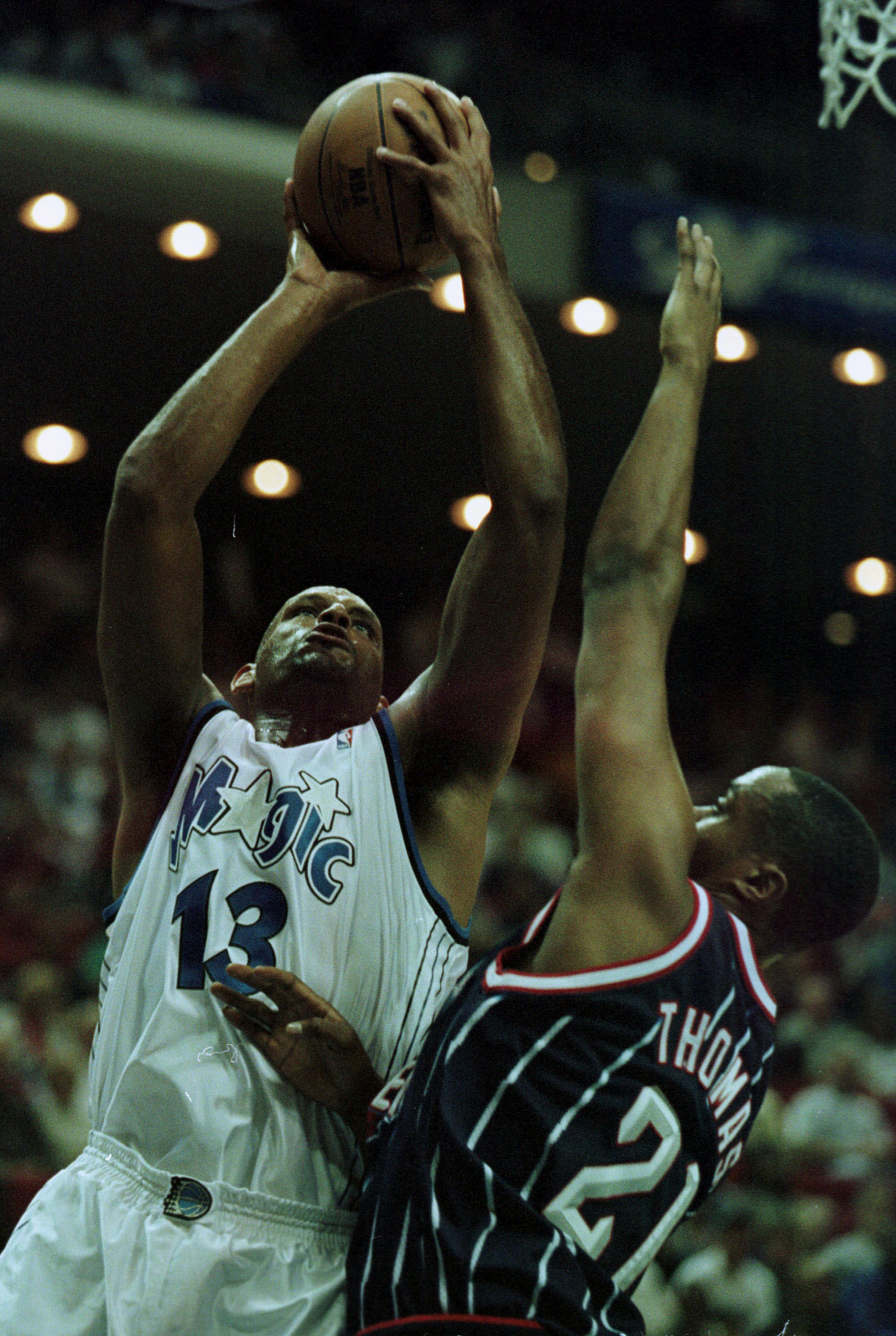
(Photo: John Amaechi of the Orlando Magic shoots the ball over Kenny Thomas of the Houston Rockets during a game at the TD Waterhouse Centre in Orlando, Florida on March 24, 2000. By Andy Lyons/ALLSPORT. Amaechi, following his retirement, became the first openly gay NBA player.)
 The Dish