Julian Sanchez detects a pattern. His explanation:
The hero must wield enormous power in order to effectively perform the superheroic function, but cannot seem to seek it too eagerly, even for admirable ends—perhaps particularly when we consider that they typically make use of their great economic power by translating it into a superhuman capacity for physical violence. Spider-Man is always reminding us that “with great power comes great responsibility”—but the responsibility is the noblesse oblige of one who has (often reluctantly) found that power thrust upon him.
Alyssa Rosenberg goes all materialist:
When a hero moves from having his wealth be the most important fact around him to his capacity for good being the most important fact around him, it invites the audience to reassess how important they think wealth actually is. These reassessments only go so far, of course. It’s not like Batman is liquidating Wayne Enterprises and giving his fortune away. We wouldn’t want to make people think that wealth itself is bad, now would we? Wealthy people who become superheroes are a great way of reconciling us to concentrations of wealth, to convince us of the idea that it’s actually a good thing for some people to have accumulate vast sums of money because they’ll channel it for public benefit.
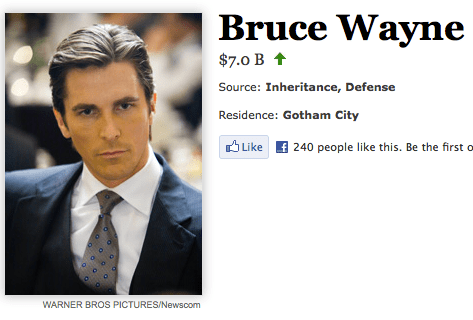
Screenshot from Forbes fictional character rich list.
 The Dish