Rick Perry Can’t Handle The Truth

Balko pores over the Texas governor's record on criminal justice:

I still think [Perry's] actions in the Willingham case should disqualify him from the White House, for a reason that goes beyond crime and the death penalty: Faced with the prospect that the state of Texas may have done the worst thing a state government can possibly do to one of its citizens, Perry has expressed resolute faith that the government got it right, refused to even consider the strong evidence indicating otherwise, and has spent the years since trying to prevent the public from knowing what happened.

Again, this goes beyond capital punishment. When you consider what we’ve seen from the last two administrations on issues like torture, rendition, black sites, state secrets, the innocent detainees in Gitmo, and a host of other issues, Perry’s demonstrated instincts in the Willingham case are disturbing. And they certainly aren’t the instincts you’d hope to find in a guy claiming to run as the limited government candidate.

A Defense Of “Ruin Porn”

5083975322_2a01a77787_b

Citing the 237,500 people who deserted Detroit in the last decade, Willy Staley argues that photos of the city's ruins are a document of "the actual illness that plagues the city—a lack of jobs, commerce, safety, and now, people":

The city is packing it in by tearing down thousands of vestiges of its old self, its gangrenous appendages that need to be amputated. It has finally come to terms with what it has become. All that our college-educated neophyte boosters have to offer us is denial of this diagnosis, and denial prevents treatment. Those who deny Detroit’s illness benefit from it; and they have created a sexy counterargument (even using the word porn!) that dismisses all documentation of Detroit’s decline out of hand, claiming the moral high ground while doing so.

(Photo by Flickr user Thomas Hawk)

Malkin Award Nominee, Ctd

Pareene rips into Matthew Vadun:

Conservatives justified their investigations into ACORN by claiming to be rooting out "fraud." They claimed to care solely about punishing actual crimes. When you write that you actually just oppose letting poor people vote, you're giving the game away. You're never supposed to openly state the goals of the conservative movement, because no one but a small cadre of sociopaths actually supports them. (This is why Frank Luntz was invented.)

After The Breather

IMG_0266

For me, it's not an unfamiliar pattern. A few days before my scheduled vacation, my lymph nodes started to pop out like golfballs and the night after I went off-grid, I got violent chills, fevers and aches that lasted until a couple of days ago. I'm still creaking a bit. Loads of tests; nothing conclusive, except for a summer flu. Bummer. But it was a change, if not a holiday, and I'm glad to be back, and grateful for the Dish team for a superb job while I was indisposed.

Two rough observations as I dipped into the news from my iPad – observations which sometimes require a few steps back from the cult of contemporaneity we live in. One profound thing has happened this year. It has become clear that the 2007 recession was much, much more severe than we realized at the time; and that the employment recovery is likely to be stalled for as long as it takes for Americans to pay down more debt. This is not that surprising. We knew this was a bad one; and we also knew that recoveries after financial crashes tend to last longer. But politically, it has up-ended the core strategy of Obama's re-election. The bet was that recovery would be visible enough by 2012 for voters to remember who got us into this mess and be patient with those trying to get us out of it.

For the most part, it seems to me that the bet has failed. The stimulus was not perfect, but it definitely put a floor under the pain. But we've been bouncing along that floor ever since – and, in my view, are far too indebted to risk another huge bout of borrowing to try and kickstart the engine again. Worse, the Republican brinksmanship over the debt ceiling and the subsequent downgrade seriously hurt the president's image of competence. Yes, the Tea Party was hurt much more. But they have dragged Obama down with them, and helped create a narrative of a weak, flailing executive. I don't think the president who enacted universal healthcare, rescued Detroit successfully and killed Osama bin Laden and much of al Qaeda's leadership can be described as weak. But the Christianist right's passionate hatred of the man has taken a toll; and the refusal of the left to defend the administration's substantive achievements has led to Obama once again on the ropes.

Yes, he has been there before. Many times. But this is the most serious in terms of approval ratings. His job now is to keep insisting on a balanced debt reduction package and an aggressive attempt to do the limited things he can to help employment rebound. Once this dynamic kicks in, as it will this Thursday, I think the core GOP obstructionist case against anything this president wants gets politically riskier. We will segue into the phase of a choice, not a referendum. And as yet, the GOP has not mustered a credible or persuasive plan to cut the debt and get the economy moving again. Until they can explain what they would have done differently in the last two years and link that argument to a case for economic revival ahead, I think they're far too cocky right now.

The second observation is that Qaddafi is now out of power. I opposed the war and worried it would become a long and civil one. I remain unconvinced that we did the right thing, and concerned that the consequences of this will still be ugly, or less damaging to human lives than non-interventionism would have been. Nonetheless: Obama asked for patience, defended his new "lead-from-behind" strategy with the allies, and the NATO campaign has succeeded in its core task. I read a column like this by Nick Kristof and I get a lump in my realist throat. I'll remain suspicious of what lies ahead and dismayed by the imperial manner in which this war was launched. But credit where it's due.

Since Obama's speech in Cairo, Tehran has been rocked to the core by a popular revolt, Mubarak and Ben Ali are gone, Qaddafi has been deposed and Assad looks weaker by the day. For good measure, al Qaeda in Afghanistan and Pakistan has been decimated and bin Laden captured and killed. Like George H W Bush through the last years of the Soviet Empire, Obama has been castigated throughout for caution, nuance, restraint. But like GHW Bush, his foreign policy legacy is shaping up to be transformational.

Bin Laden’s Weapon Of Choice Was Fear

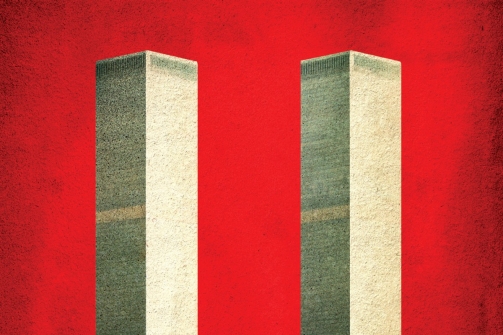
Twin_Towers

by Patrick Appel

Andrew's reflection on 9/11 is among the best I've read. From the conclusion:

Bin Laden and his henchmen failed … But our own fear won. Fear stopped us, overwhelmed us, as our ra-tion-al-ity deserted us. Yes, it was understandable, given what we endured that September morning. But we need to admit that our response was close to fatal. A bankrupted America that tortured innocents and disregarded its own Constitution is barely recognizable as America.

Rejecting False Narratives

by Patrick Appel

Stacia L. Brown, a "a third generation single mother," gives advice to her daughter:

You will find that people love their narratives. They need for your life to have meaning; it must provide them a teachable moment, whether cautionary or aspirational.

But you will never be who they think you are. The more you allow their expectations to dictate to you what you should be, the more unfamiliar you’ll become with your own reflection in a mirror. You must know, even as a grade school girl—and perhaps particularly then, as children can be cruel—that you are not pitiable because your parents are not married. You shouldn’t feel excess pressure to excel because “the odds are against you,” nor does my marital status require you to defend me or yourself against the assumptions of your peers. But it also does not give you license to exalt yourself over other children whose circumstances are different than your own. You will find soon enough that all homes, whether married or single-parent, are not created equal.

The Jack Mormon? Ctd

by Chris Bodenner

A reader writes:

Your recent post included a comment saying that caffeine will keep you out of the Mormon temple. That isn't exactly true; only coffee or tea will keep you out. Coke, Dr. Pepper, Mt. Dew and even Red Bull are ok; only tobacco, alcohol, coffee, and tea are specifically prohibited.

You're also seeing a decrease in excommunications, as the leadership is learning that very few people who are excommunicated come back to the church. They might be disfellowshipped (still technically members, but prohibited from participating in services) but are only excommunicated in extreme cases.

Another complicates the view of Mormons further:

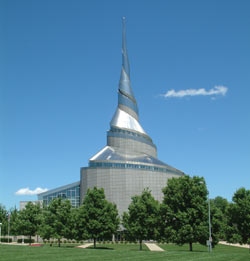
Residents of Independence, Missouri, the first "Zion" named by Joseph Smith, are neighbors with an entire denomination of "Jack Mormons". It is a Mormon "Bizzaro 1Temple World" where the Book of Mormon is routinely quoted on Sundays, yet in congregations often pastored by ordained women, where coffee is served after church, where they are actively considering greater inclusion of gays in church life, and where their very unique temple, open to all visitors, dominates the Independence skyline. Formerly called "The Reorganized Church of Jesus Christ of Latter Day Saints," and now called "The Community of Christ," the church was led for 120 years by the son, grandsons, and great-grandson of Joseph Smith by his first (and they would say, only) wife. Founded in opposition to the polygamy-promoting Brigham Young, the church has grown to 250,000 members in 50 countries, and has traditionally sought a role within the larger Christian community. Interestingly, women even serve on their version of a "First Presidency" and "Quorum of Twelve Apostles."
Another:

I have to take issue with some of your reader's comments about liberalization and evolution within the Mormon church, and about the place for Jack Mormons in this church. I, like him, grew up in Utah. I, like him, am gay, and have not been an active church-goer for 15 years now. But unlike him, I do see tremendous amounts of diversity of thought in Mormonism – and room for it within the institutional church. Your reader says he does not see a movement like Reform Judaism coming out of Mormonism because of the church's tradition of strict adherence to black-and-white rules. He is wrong for several reasons. 

First, Judaism has the advantage of being thousands of years older than Mormonism, so it's had much more time to branch and grow and shift and ebb and flow into the full spectrum it is today.  

Second, Mormonism already has a history that is much less rigid than the current church might suggest.

Until the mid-20th century, Mormonism was a much more flexible, open-source, bring-your-own-beliefs type of faith. Starting in the 1920s but really ramping up in the '50s, the institutional church implemented a program called the Priesthood Correlation Program. Known today widely as just Correlation, it was an effort to rein in all the divergent theologies and doctrines rampant among Mormon congregations as the church spread beyond the "Book of Mormon Belt" of Utah, Idaho, Arizona, Nevada, and southern California. Before Correlation, top leaders of the church often bickered and debated very publicly about specifics of doctrine or theology.

Brigham Young especially had some really interesting, controversial theories, such as the Adam-God theory (that Adam himself was God in a human body), which other church presidents and leaders have denounced or disavowed. Brigham and one of his apostles also famously argued about the question of "eternal progression," which holds that all beings spend the eternities constantly growing, learning, and progressing. Since part of that progression includes the possibility of our own godhood someday, it stands to reason that God himself is still progressing and is not yet perfect. In the early days of the LDS church, some Mormons embraced that idea as a beautiful reminder that, just like ourselves, God is still growing and getting better and better; others found the implication that God was less-than-perfect blasphemous.

The point is that, in those days, it was perfectly acceptable to argue and debate points of theology, even with the Prophet himself, even in public. Mormonism was a spiritual framework, a cultural identity, a mindset, and a movement, and every person brought his or her own viewpoints and spiritual insights to that movement.

Which brings me to my third rebuttal of your reader. A budding movement of "uncorrelated" Mormons has been around for several decades, and seems to be having Screen shot 2011-09-05 at 2.21.39 PM a major moment of its own right now. It's been spurred largely by the Internet and the unprecedented availability of information about the church's history, doctrines, politics, etc. (Mountain Meadows Massacre, Adam-God, Prop 8, Joseph Smith's polygamy and polyandry, genetic and archaeological in the Book of Mormon, to name only a tiny fraction).

I am addicted to a podcast called Mormon Stories, which looks at the dramatic tapestry of lives that make up modern Mormonism – gay Mormons, feminist Mormons, intellectual Mormons, liberal Mormons, orthodox Mormons… One of the foremost bloggers in the Mormon blogosphere – known often as the Bloggernacle – is Joanna Brooks, a brilliant, pro-gay, feminist Mormon herself. A Mormon stake in the Bay Area (a stake is like a diocese) recently called an openly and unrepentantly gay man to a high-profile position within his congregation.

In this Mormon moment, many of us who have strong historical, familial, cultural, and, yes, in some ways spiritual ties to Mormonism are finding plenty of opportunities to reclaim a Mormon identity for ourselves, even if we don't embrace all the quirks of the theology, the politics, or the orthodoxy. Your reader wrote, "I might be considered a Jack Mormon (except of course as a gay man who long ago left Mormonism behind, I doubt I’d be granted that status)." But I'd argue that the Mormon community is increasingly headed in a direction where our Mormon identity is not about something that's granted to us; it's something we are free to claim as our own.


Has There Been A Great 9/11 Work Of Art? Ctd

by Zoë Pollock

In light of the anniversary, many are recalling Don DeLillo's prescience. In Mao II, published in 1991, he theorized that "terrorists and bomb-makers had replaced writers and artists as the myth-makers of our age":

[Their work] involves mid-air explosions and crumbled buildings. This is the new tragic narrative … Terror makes the new future possible.

Michiko Kakutani argues 9/11 didn't provoke a seismic change in the arts, or in daily life:

9/11 works feel like blips on the cultural landscape — they neither represent a new paradigm nor suggest that the attacks were a cultural watershed.

Scott Esposito differs:

I think that Kakutani is right that no single great work of art came out of 9/11 (the day itself) in the way that monumental books and movies were set during the Vietnam War, I think she’s absolutely wrong that literature of the era has not been written in the 10 years since. I also don’t know where in the world she gets the misguided notion that “9/11 did not really change daily life for much of the country,” seeing as it has been used to justify everything from war to torture to tax cuts to surveillance.

Byran Appleyard's thoughts here.

Sportswriters As Historians

by Zoë Pollock

Simon Maxwell Apter argues "it is through the prism of sports that we frame our ethical values, remember our history, envision our future, and find the figures of speech that create our common culture and define our national identity." He cites Muhammad Ali’s 1974 fight against George Foreman in Kinshasa, Zaire:

President Ford had controversially pardoned Nixon seven weeks before the bout, the nation still reeled from political scandal, but if Ali could beat Foreman, he might restore pride to the nation and complete one of the greatest comebacks in American history: from convicted draft dodger and bankrupted pariah to heavyweight hero, his criminal record removed by the Supreme Court, his historical legacy preserved by America’s sportswriting intelligentsia. Like him or not, the country would once again be represented by something called “the Greatest.”

Giles Harvey comes to a similar conclusion. He quotes Albert Camus, who played soccer:

After many years during which I saw many things, what I know most surely about morality and the duty of man I owe to sport…

Ought We Abandon Morality? Ctd

by Zack Beauchamp

Joel Marks has written a follow-up defending his post I critiqued here. It's less mystico-cryptic than the original, but still, I don't think, really defends his view that morality doesn't exist. One minor quibble:

What I did not explain in the earlier essay is that I am making two distinct claims. One is that morality does not exist. This, odd as it may sound to say so, is relatively uncontroversial in modern ethical philosophy; for what I mean by morality here is its metaphysical conception as a truth or command that comes to us from “on high.” Very few well-known philosophical moralists have believed in such a thing since a century and more.

This is flatly wrong. As I wrote in my response, a number of very prominent contemporary moral philosophers and, indeed, whole schools of thought accept objective morality.  Just to take an easy example, one might look at a new book defending the idea by Derek Parfit, one of the most influential living scholars.  Even worse for Marks, a recent survey of philosophers found that over half of them believe in an objectively true morality. Over half! Does that sound "uncontroversial in modern ethical philosophy" to you?