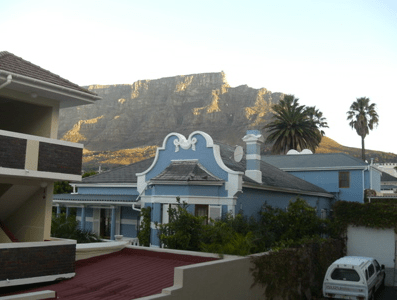
A reader writes:
The stucco buildings, the balconies and the palm trees all suggest a tropical setting. The blue building with the curly gable hints at a Dutch influence. The mountain in the background looks blasted away – as though to make room for incoming or outgoing planes, perhaps? I'm thinking Charlotte Amalie on the island of St. Thomas in the Virgin Islands.
Another writes:
The first thing that crosses the mind is the rain gutters and the vintage SUV parked in the driveway. These point towards any city in USA. Given the contest's reputation, the limited landmarks in the image further bothers me to select USA. The style of housing with red roofs and blue color for housing suggests countryside. The most haunting clue is the sand butte in the background. This is a typical geological structure seen in the 'Colorado Plateau'. This strongly reminds me of the documentary Sons of Perdition, a film about the kids that escape the FLDS fence only to find a bigger challenge for survival. Anyway, my gut feeling says Colorado City, Arizona.
Another:
Looks a lot like New Mexico. But that truck and the architecture doesn't look like it's from the U.S. I'm going to pick the Mexican state of Chihuahua, because it has the most similar geology/landforms to New Mexico and it's right next door. That's all I've got, sadly.
Another:
Another hard one. Precious few clues to narrow it down. The palm trees – a date palm and a fan palm – indicate at least a sub-tropical climate or warmer, which I think might disqualify the Grand Canyon. The place apparently does have rain, according to the gutters and downspouts on all the buildings. But the unusual looking tailgate on the pickup truck says Mexico to me. It used to be common, where I live along the border, to see American-made pickups with beds that were clearly made somehwere else. These trucks invariably had Mexican license plates and I suspect the custom was for the dealers there to buy American trucks without the beds and then install locally manufactured ones. So I'm sticking with Mexico, perhaps somewhere in the state of Sonora.
Another gets very close:
I believe this photo was taken in Sun City, South Africa. Sun City is just to the west of Table Mountain near Cape Town. The mountain is bathed in the fading light of the setting sun. Also, note the Dutch (Boer) influence on the buildings in the foreground.
Another nails it:
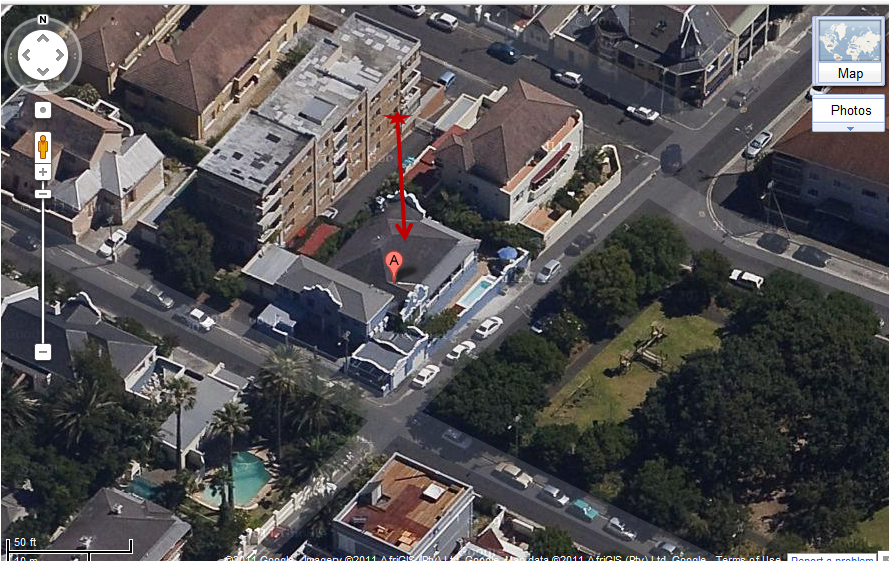
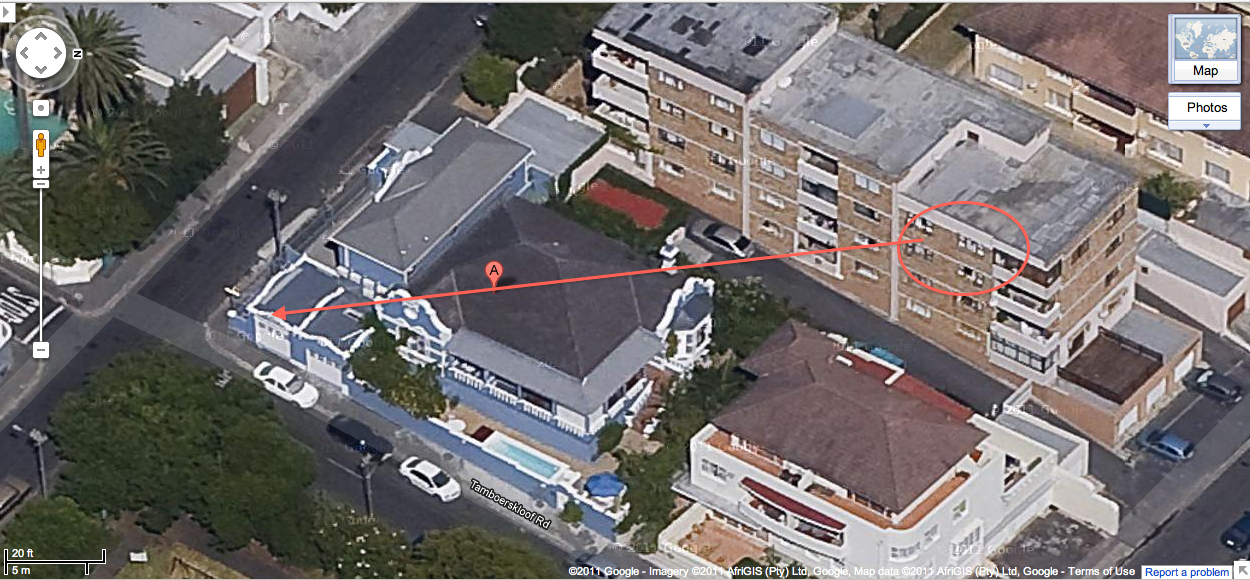
After years of marveling at the obsessiveness of VFYW contestants, I've finally become one of them. Clearly, this week was an easy one, since it took a novice like me about 10 minutes to narrow it down to Cape Town, South Africa. The blue building with the fabulous gables is the Table Mountain Lodge on Tamboerskloof Road in Cape Town. The photo was taken from the building next to the lodge on Burnside Rd:
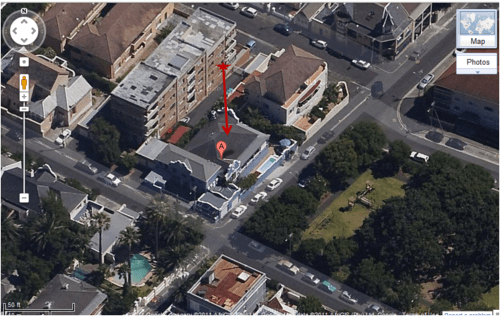
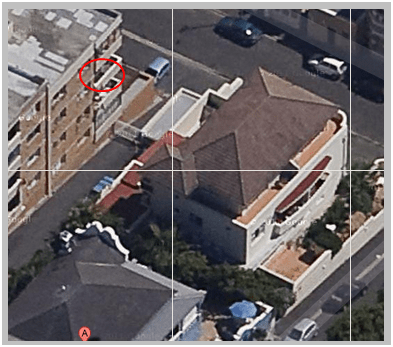
I'm going to guess it was from the window on the back of the second floor marked below. (The angle almost looks like it could have been taken from the back balcony, but then would that count for VFYW?) This week's contest makes me hope I get the chance to visit Cape Town sometime. At the very least, I learned a little about Cape Dutch architecture. Thanks!
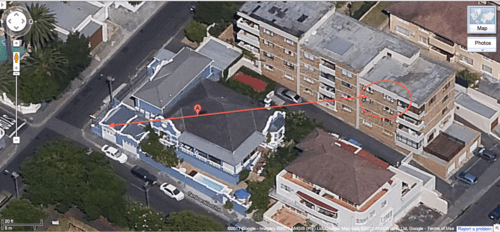
A different angle:
Another:
The lovely Delft blue building is the Table Mountain Lodge, but if you really like this view, an apartment in this very building is available for vacation rental here. The owners, the Millingtons, are an Anglo-Irish couple living in France and they play in a band called The Portraits. Here is a sample of their music, I quite enjoyed it. Perhaps this week's photographer has heard them rehearsing a floor or two above.
I imagine there will be quite a few correct guesses this week, and I'm relatively new to the game (but very proud that my Ulaan Baator and Hofn guesses were published!) So to increase my very slim chance of being a book winner this week, I'll include a link to a video of a cute beagle puppy.
Pandering at least gets you posted. Another:
The lilac house was built in 1885 as a farmhouse in the Cape Dutch style, which is unique to the Western Cape province. We see a side of the house. The rounded gables were derived from the townhouses of Amsterdam. when first built, It was probably white with a thatched roof. The palm trees in the background are common around Cape Town.
Another:
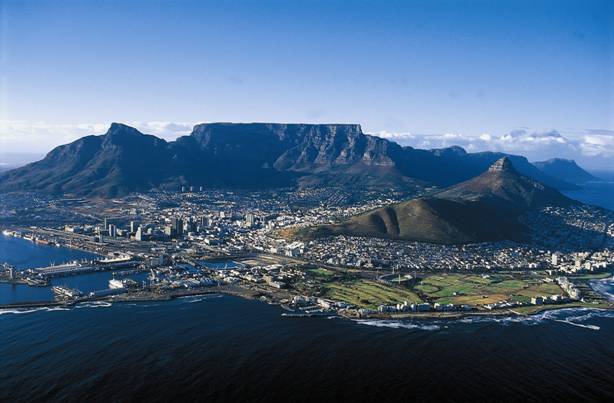
After too many hard views, this is too easy. This looks very much like one of the most beautiful cities I have ever visited – Capetown. Table Rock is a striking and very wonderful backdrop for this city, and is visible from nearly everywere because of it's overwhelming size and distinctively flat top.
Another sends a stunning photo:

Another:
Excellent contest this week, which means I was able to find it. Table Mountain in Cape Town is quite recognizable, and even if you didn't know it, it's the second picture on the Wikipedia listing for Mesa.
Another:
My parents lived in South Africa for four years before I was born. My oldest sister was born there, my middle sister was conceived there, then they moved to Detroit before I was born. Thanks, mom and dad (I kid, I love Detroit). The sister who was born there eventually studied abroad at the University of Cape Town, and I was lucky enough to tag along with my folks to visit her there when I was 19. The scenery, the wine and the beaches were enough to convince me that I would eventually need to move there at some point in my life (still waiting on that). It was a big deal to be able to drink with my parents at only 19, as I'd gotten into quite a bit of trouble with the law already for underage drinking. It was the first time I realized there was more to drinking wine than guzzling Franzia out of a box. Vineyard-hopping in Stellenbosch changed my life.
Another:
I know this one! The blue building is the lovely Table Mountain Lodge guest house on Tamberskloef Road in Cape Town, where I stayed a couple of nights to do some sightseeing in and around Cape Town after a conference in 2009. Lining up the corners of the buildings, it looks as if the view was taken from the window marked by an arrow in the adjacent apartment building, called "Bagamoya", on Brunswick Road. One of my favourite pictures from that trip:
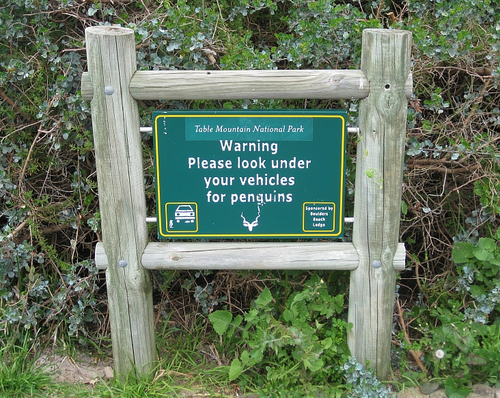
I have my book already – now it's all about the thrill of the chase!
Another:
I spent an eye-opening academic year abroad in the mid-'80s at the University of Cape Town as an 18 year-old American watching the apartheid state seize up and begin to crack apart. The stunningly beautiful city and its mountains and coasts were a welcome balm amid all the fear and anger, even as the access I enjoyed as a white tourist underscored the system's rank injustice. Still, the walk I took from the city's main train station to the foot of Table Mountain, straight up its eastern face to the top and then back down under the peaks known as The Twelve Apostles to Camps Bay on the South Atlantic is in my humble opinion one of the great day hikes in the world.
Here's a nice shot from the web of the cable car station atop the Table on the left, and the Apostles in the center. Hiking trails descend directly to posh beachside neighborhoods just below.
Another:
The pimple on the far right of the table-top is where the cableway starts and ends. Tears came to my eyes as I saw this picture … I was born and brought up there.
Another:
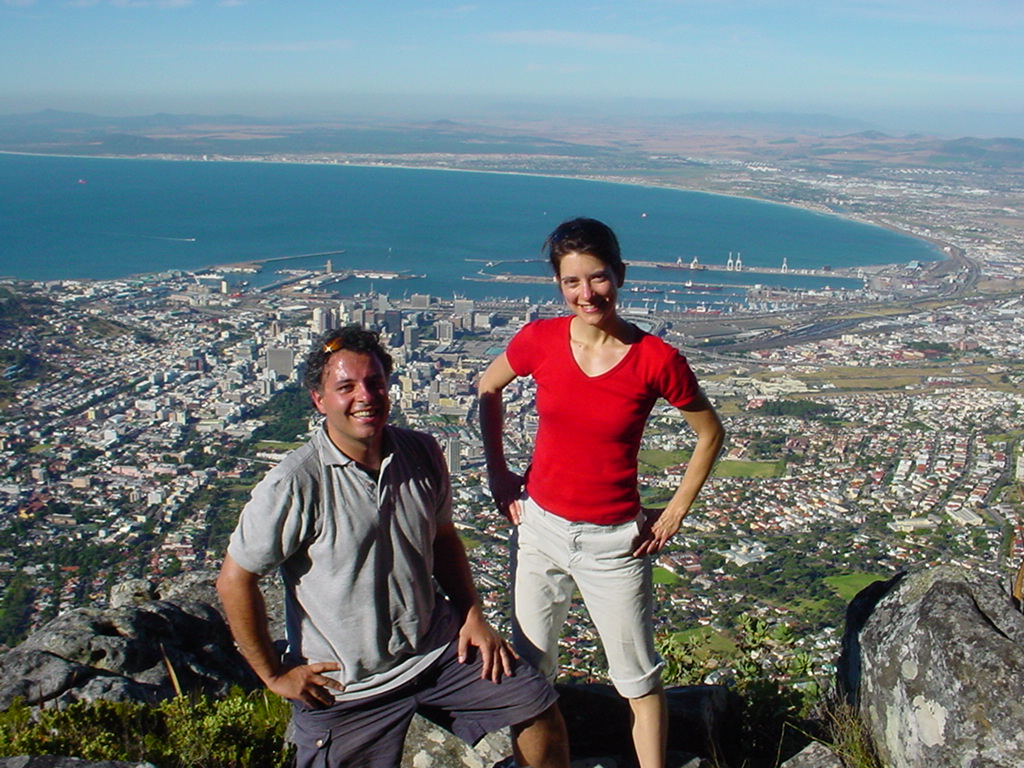
Yo! this is Capetown! I know it. It's one of the seven apostles (the huge mountainous formation in the back is Table Mountain). Besides, the house is typical Dutch colonial. But anyways, I climbed that fucker on foot with my girlfriend. We thought it would be easy. There was a path that seemed to go up. The path turned to nothing after a while. It took us eight hours to get all the way up, thanks to the help of an eccentric Swiss expat who knew his way around the rocks and rubble. It was actually dangerous at times. At the end, it was all foggy and damp. We had a couple of bottles of that amazing Graham Beck Champaign to celebrate, at the cafe next to the cable car station. Here's a picture from our ascent:

Dorks. We're still smiling because we were only about halfway through.
Another:
The cable car station, with about a million visitors a year may, be one of the top destinations in South Africa. My cousins and their parents and I lived on Bridle Road, about the highest road on the mountain until 1965, when my aunt and uncle were banned by the regime and had to leave the country. They did come back 25 years later, to see the rebirth of this awesome country. Cape Town has jaw dropping scenery of mountains, white beaches and blue ocean sprinkled with massive rounded granite rocks. At the same time, it’s a blended mosaic of First and Third World, new and old. It’s 350 years old. It resisted the Apartheid regime more than any city, and it is a true rainbow city, an addictive place.
Another:
The mountain historically has been preserved in a manner similar to America's National Parks, glorifying the white European settlers who "tamed" the landscape and kicked out other indigenous people in the name of preservation, and the schematic/mental maps of the city typically draw the mountain as facing from the ocean from the northwest looking southeast. Interestingly, as Cape Town slowly progresses out of apartheid and works towards equality, the stories and traditions of Table Mountain of the non-Afriikaners have begun to gain importance. New efforts by these groups and 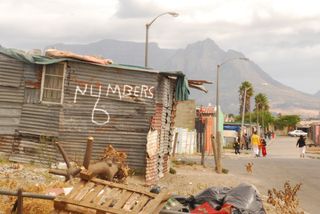 their allies have begun building narratives around how other members of South Africa's Rainbow Nation have thought about, related to, recreated on, and mythologized Cape Town's signature monument. If you look at a map, you'll see that the majority of the town's townships are located to the east of the mountain; the "skyline" of table mountain appears very different from the townships.
Somehow, there's a metaphor here about how pluralism and multicultural democracy needs more people who are actively willing to look at what they perceive to be their gigantic civic monuments from different perspectives, to see something beloved and cherished from the view of those literally living in its shadows, to think critically about how the semiotics of these iconic places are implicated in larger discussions about equity and representation in a still largely unequal, unrepresented society.
Another:
My job has taken me to Cape Town and other areas of South Africa many times. My organization provides technical assistance to the Ministry of Health for developing, implementing and evaluating prevention of mother-to-child transmission of HIV programs. I have watched the tremendous progress made in HIV care and treatment between the abysmal government (non) response from the start of the epidemic to the long-dreamed of availability of treatment in almost every corner of the country. The rate of mother-to-child transmission has recently plummeted. I'm proud to say that nurses are making all the difference, as it is mostly nurses who manage antiretroviral treatment in primary care settings.
Another:
Well, I am probably the billionth person to get this right this week. Those mountains are very distinctive for anyone who knows Cape Town, South Africa (which I don’t). And those same mountains have appeared in previous VFYWs here and probably also here. Good luck choosing a winner. (I have already won one by sheer luck.)
Another:
I feel like I cheated! You've published this precise photo before, on May 25, 2006.
It's been very difficult finding candidates for the contest, so we had to look in the archives for interesting photos to run. Speaking of which, a remarkable email we just received:
Alright, alright … I'm kind of freaking out. First of all, I know exactly where that picture was taken, because I'm the guy who took it. I was an American visiting Cape Town, with my partner, who at the time lived in India. It was our first trip abroad together. We were (and still are) a same-sex bi-national couple, and I remember you included part of my letter when you published the photo, which you didn't normally do.
The second reason that I'm freaking out is that I haven't been back there since I took that photo more than five years ago, but today (Sunday), I'm going back there, back to that very same apartment. I'm writing to you from LAX. My partner's not coming along this time because he's going to India next week to visit family. But that's good news in a way, because he lives in Canada now after I moved there and sponsored his immigration.
So five years down the road, and … things do get better. Sort of. Life is complicated, and the recession sent me back to America. But we're only a few hours apart now and see each other all the time. We're not always under the same roof, but at least we're in the same time zone.
PS: The address where the photo was taken from is 3 Brunswick Ave, Tamboerskloof, Cape Town, South Africa. You can see a 3 or 4 level apartment building on the east side of the street. That's the place.
About two dozen readers correctly answered 3 Brunswick Avenue. Breaking the tie wasn't easy, so we looked to the two readers who so narrowly lost last week's contest. As it happens, one of them answered 3 Brunswick:
Thanks to everyone else for the excellent entries.
(Archive)

 The Dish