A Poem For Saturday

Shel

From a new posthumous collection by Shel Silverstein:

I asked for a hot dog
With everything on it
And that was my big mistake,
'Cause it came with a parrot,
A bee in a bonnet,
A wristwatch, a wrench, and a rake.

Continued here. Ben Zimmer deconstructs the poem:

The way that Silverstein plays with the meaning of "a hot dog with everything (on it)" is reminiscent of the old joke, "The Dalai Lama walks up to a hot dog vendor and says, 'Make me one with everything.'" A variant of this joke, featuring pizza instead of hot dogs, came up here a few months ago in a post by Geoff Pullum, about an Australian TV journalist trying to tell the joke to the Dalai Lama himself.

Clearing Bush

Texas native Bryan Curtis compares cowboys:

5345812540_44be4cd4ec_b The difference between Perry and Bush, in Texas terms, is Old West versus New West. Bush was New West. His Texanness was pure theater. Think of him calling for Osama Bin Laden "dead or alive," or his Crawford ranch, where the brush-clearing never stopped. These are New West affects, slipped on as easily as a Fort Worthian slips on a pair boots from Leddy's. If Bush was tapping a vein of Texas mythology, it was that of the big-city wheeler-dealer—T. Boone Pickens, Jerry Jones—even if Bush never wheeled and dealed at their level. Rick Perry is Old West. He dreams a 19th-century dream.

Perry's great-great-grandfather, D.H. Hamilton, was an ex-Confederate who resettled in Texas, like John Wayne's Ethan Edwards in The Searchers. Perry's great-grandfather lived near Paint Creek, a fly-speck West Texas town, as did his grandfather, and his father, Ray. Paint Creek is Perry's Olduvai Gorge, the cradle of his Texanness. "A very broad area but with very few people," as he later put it. The Perrys had no plumbing until Rick was 6, and took baths in a washtub on the back porch. Perry's mother, Amelia, made his underwear even when he left for college. As Patricia Kilday Hart noted in a Texas Monthly profile, the Perrys "lived a life few Texans can imagine today."

(Photo by Flickr user nixter. As Curtis notes in his piece, "[Perry]  owns a pair of boots called "Freedom" and "Liberty."")

Could Radiolab Save Journalism?

Ira Glass gushes over the radio program and makes an important point about the medium:

Real journalism – and by that I mean fact-based reporting – is getting trounced by commentary and opinion in all its forms, from Fox News to the political blogs to Jon Stewart. Everyone knows newspapers are in horrible trouble. TV news continually loses ratings. And one way we broadcast journalists can fight back and hold our audience is to sound like human beings on the air. Not know-it-all stiffs. One way the opinion guys kick our ass and appeal to an audience is that they talk like normal people, not like news robots speaking their stentorian news-speak.

The View From Your Window Contest

Screen shot 2011-09-23 at 5.56.16 PM

You have until noon on Tuesday to guess it. City and/or state first, then country. Please put the location in the subject heading, along with any description within the email. If no one guesses the exact location, proximity counts.  Be sure to email entries to VFYWcontest@gmail.com. Winner gets a free The View From Your Window book. Have at it.

The Words Of Work

The Idler’s Glossary was released in October 2008, on the cusp of the Great Recession. The Wage Slave’s Glossary, another volume of "anti-economic etymology," was just released. Co-author Josh Glenn explains how we've incorporated work-related jargon into our lives:

[Downtime] was a mid-century term that meant time when a machine is out of action or unavailable for use. And today, of course, this means that human beings who aren't working are compared to machines that are being serviced, or robots that are being recharged. And the worst thing of all, is that many of us now use "downtime" to describe our own weekends and vacations.

An excerpt from The Wage Slave’s Glossary here. In 2009, the authors discussed a similar logic in our reaction to idleness. Co-author Mark Kingwell:

The Latin word negotium, which gives us English terms for business and transaction, actually means the negation of otium, which means leisure. But then otium gets annexed into the pejorative word ‘otiose’, which means useless or redundant. The language we use contains the clues the reversal of values that got us here, thinking that work is more important than leisure. The ancient philosophers knew better. Work is mere necessity; leisure is divine.

Should Obama Get Angry?

McWhorter argues yes:

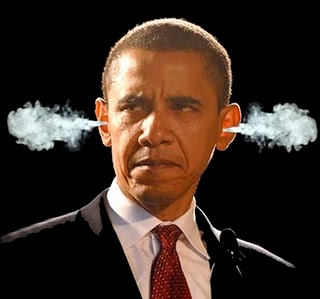
The president had no way of knowing that he would be up against as hollow-hearted and Angry-obama anti-intellectual a contingent as the Tea Partiers. But as of the debt-ceiling negotiations, it has become clear to all of us — Obama included — that we're not going to be rising above much of anything anytime soon. … Obama's model should be, as many have noted, Franklin D. Roosevelt's 1936 campaign speech, in which the line about "I welcome their hatred" was just the highlight of a template for a president in the situation Obama is in now. Like FDR, Obama should not be afraid to lace his barnstorming addresses over the next couple of months and beyond with words like "deceit" and "indignation."

Greg Sargent notes the uptick in Obama's aggression on the jobs front:

[I]n a surprisingly aggressive appearance at a bridge in John Boehner’s district, Obama took this a step further still, explicitly claiming the role of "warrior" on behalf of the middle class. … For any of you card carrying members of the professional left who had hoped to see Obama barnstorm the country and call out Republicans by name, well, you’ve now seen just that. As for the question of whether we’re going to see more of it, by all indications this is a fight that Obama intends to continue indefinitely. We are now seeing the professional left’s preferred script being put to the test.

(Image from Cat in the Bag)

Aging Immigration

The UN projects that over the next 40 years, more than half of the world's population growth will come from people over 60. That could drastically change the flow of migration:

In Mexico, for example, the population of children age 4 and under was 434,000 less in 2010 than it was in 1996. The result? The demographic momentum that fueled huge flows of Mexican migration to the United States has waned, and will wane much more in the future. Already, the net flow of illegal Mexican immigration northward has slowed to a trickle. With fewer children to support and not yet burdened by a huge surge of elders, the Mexican economy is doing much better than in the past, giving people less reason to leave. By 2025, young people on both sides of the border may struggle to understand why their parents' generation built this huge fence.