The Original Illegal Immigrants

Timothy B. Lee recounts their tale:

Homestead_Act_Stamp Everyone knows that America was settled by immigrants. But few realize how much of this settlement was done illegally. Shortly after winning independence, Congress enacted legislation that called for newly acquired western lands to be divided into large 640-acre plots and sold for a dollar an acre. This scheme proved proved impractical. As economist Hernando de Soto has written, few settlers had either $640 or the legal expertise to navigate America’s cumbersome property laws. And so thousands of migrants simply ignored the law and settled illegally on vacant land.

The US Army tried to evict the squatters but couldn't keep up. Kentucky became one of the first states to offer squatters a path to legalization, and "Congress finally acknowledged defeat in 1862 with the passage of the Homestead Act, which gave settlers free federal land if they cultivated it for five years."

(Image via Wikimedia Commons)

A Question Of Loyalty

Will Wilzlo reviews Eric Felton's Loyalty: The Vexing Virtue:

Family — built love, shared suffering, history, and biology — is one of the strongest ties between individuals. Intense familial obligation goes in all directions: from parent to child, from sister to sister, from uncle to nephew, ad nauseum. Arguably one first learns the value of loyalty from mutual dependence and instinctual love in the household. But if we hold family above all else, what value does that grant our other commitments? … How does society avoid universal adoption of the Tony Soprano Family and Business Program? Thus, wonders Felten, is family "the foundation of all our other loyalties, or a grubby sort of me-and-mine selfishness?"

A Poem For Sunday

GT_PELICAN_110915

"Equanimity" by Les Murray:

we are looking into the light–
it makes some smile, some grimace.
more natural to look at the birds about the street, their life
that is greedy, pinched, courageous and prudential
as any on these bricked tree-mingled miles of settlement,
to watch the unceasing on-off
grace that attends their nearly every movement,
the same grace moveless in the shapes of trees
and complex in our selves and fellow walkers: we see it’s indivisible
and scarcely willed. That it lights us from the incommensurable
we sometimes glimpse, from being trapped in the point
(bird minds and ours are so pointedly visual):
a field all foreground, and equally all background,
like a painting of equality. Of infinite detailed extent
like God’s attention. Where nothing is diminished by perspective.

The full poem can be found here. J. M. Coetzee breaks it down:

We should not be dismayed, suggests Murray, by the elusive, flickering, on-off quality of our contact with the numinous. Rather, we should learn to wait with equanimity—as poet or as believer—for the next flash of grace.

(Photo: A Dalmatian pelican nestles its head in its feathers as falling rain leaves water droplets on its feathers at the Berlin Zoo on September 9, 2011 in Berlin, Germany. By Sean Gallup/Getty Images)

Philosophy Experiments

David Menconi looks at an intellectual movement – called, simply enough, "experimental philosophy" – that tries to perform them:

These scholars use the tools of social science—they devise questionnaires, go out and conduct surveys, gather data—and then try to figure out what philosophical truths they reveal. At times, experimental philosophy looks no different than social psychology. (It is perhaps telling that Knobe has office space in both the philosophy and psychology departments at Yale.) It's a lot more likely than conventional philosophy to be a collaborative effort, too. When experimental philosophers disagree over something, Knobe says, the default response is for them to try to work together.

Naturally, there's a blog about it.

What We Pass On

Shadow-5

Alix Spiegel profiles psychiatrist Harvey Chochenoff, who developed dignity therapy:

The patients would be asked a series of questions about their life history and the parts they remember most or think are most important. Their answers would be transcribed and presented to them for editing until, after going back and forth with the therapist, a polished document resulted that could be passed on to the people that they loved. Chochenoff named this process dignity therapy, and for the last 10 years he has used it with the dying. And one of the things that has struck him about the processes is this: The stories we tell about ourselves at the end of our lives are often very different than the stories that we tell about ourselves at other points.

(Image: Shadow by Rook Floro)

The Worthy Life

Todd May addresses Susan Wolf's thesis in Meaning in Life and Why it Matters:

A meaningful life, she claims, is distinct from a happy life or a morally good one. In her view, “meaning arises when subjective attraction meets objective attractiveness.” … A life of commitment to causes that are generally defined as worthy — like feeding and clothing the poor or ministering to the ill — but that do not move the person participating in them will lack meaningfulness in this sense. However, for a life to be meaningful, it must also be worthwhile. Engagement in a life of tiddlywinks does not rise to the level of a meaningful life, no matter how gripped one might be by the game.

May tries to reconcile that definition with the fact that we're "encouraged to think of ourselves either as consumers or as entrepreneurs": 

To be sure, we must buy things, and may even enjoy shopping.  And we should not be entirely unconcerned with where we place our limited energies or monies.  But are these the themes of a meaningful life?  Are we likely to say of someone that he or she was a great networker or shopper, and so really knew how to live?

Psychological First Aid

We used to treat trauma with "critical incident stress debriefing," where patients would describe what had happened and their emotions. 9/11 changed that:

In the past decade … research has shown that sort of intervention, no matter how well intentioned, is probably not the most helpful response to get victims feeling better more quickly. As [Patricia Watson, of the National Center for Child Traumatic Stress] notes, these sessions might well "be too brief to allow for adequate emotional processing, may increase arousal and anxiety levels or may inadvertently decrease the likelihood that individuals will pursue more intense interventions.

Vaughan Bell simplifies the current advice:

You don’t need to be a mental health professional to use the techniques and they largely consist of looking after the practical needs of the person plus working toward making them feel safe and comfortable. No processing of emotions, no ‘disaster narratives’, no fancy psychology – really just being practical, gentle and kind.

The Fear Of Public Speaking

Sam Harris ponders it:

Pathological self-consciousness in front of a crowd is more than ordinary anxiety: it lies closer to the core of the self. It seems, in fact, to be the self—the very feeling we call “I”—but magnified grotesquely. There are few instances in life when the sense of being someone becomes so onerous.

The Good Neighbor

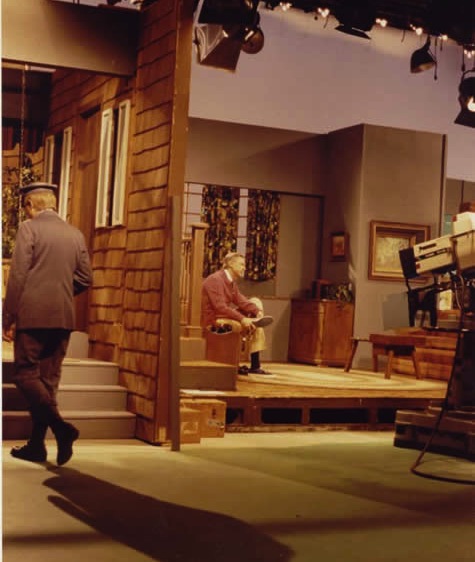
6a00d83451c45669e2015391a21bb1970b-800wi

Kottke recently dug up Tom Junod's profile of Mr. Rogers from 1998.  At one point Mr. Rogers meets a teenage fan with a bad case of cerebral palsy. The TV host asks the boy to pray for him:

The boy had always been prayed for. The boy had always been the object of prayer, and now he was being asked to pray for Mister Rogers, and although at first he didn't know if he could do it, he said he would, he said he'd try, and ever since then he keeps Mister Rogers in his prayers and doesn't talk about wanting to die anymore, because he figures Mister Rogers is close to God, and if Mister Rogers likes him, that must mean God likes him, too.

As for Mister Rogers himself … well, he doesn't look at the story in the same way that the boy did or that I did. In fact, when Mister Rogers first told me the story, I complimented him on being so smart–for knowing that asking the boy for his prayers would make the boy feel better about himself–and Mister Rogers responded by looking at me at first with puzzlement and then with surprise. "Oh, heavens no, Tom! I didn't ask him for his prayers for him; I asked for me. I asked him because I think that anyone who has gone through challenges like that must be very close to God. I asked him because I wanted his intercession."

A collection of clips and important links here and here.

(Image via Behind The Scenes)