Why Many Religious Aren’t Bothered By Atheism

Jonathan Rée bridges the divide:

Opponents of religion – anti-clericals, humanists, rationalists or whatever we want to call ourselves – ought to recognise that religion is a complicated box of tricks, containing much wisdom as well as folly, along with diversity, dynamism and disagreement. And we need to realise that many modern believers have moved a long way from the positions of their predecessors: as Mill once said, they may believe they are loyal to an old-time religion when in reality they have subjected it to “modifications amounting to an essential change of its character”. In particular, they may not accept the idea of God as an actually existing entity, so arguments for atheism will not disturb them; and they will be aware that there has always been more to religion than belief in God.

Sexuality Isn’t Rational

Mark Vernon explores the psychodynamics of sexual identity:

In his autobiography, Chance Witness, the journalist Matthew Parris describes one day standing by an exit of the London Underground, from which commuters are pouring, and asking himself how many of the passing men he would like to have sex with? His answer is low: barely one in a hundred. So what sense, he asks, does it make to define himself as gay – a man supposed to seek sex with other men – when the overwhelming majority of men do nothing for him erotically?

If Michel Foucault is right, the modern experience of being human has been shaped, in part, by a scientia sexualis. The science established a link between the truth of an individual’s personhood and their sexual activity … And yet, Foucault also argued that sexual rationality is simultaneously alienating, as it provokes anxiety about the truth of an individual’s sexuality identity too. Parris’s confusion is a case in point.

End Of Gay Culture Watch: A Hetero Grindr, Ctd

Tracy Clark-Flory reviews Blendr, which she calls "SO BORING":

Interestingly, though, it's straight female jealousy of gay male culture that inspired Grindr's founder, Joel Simkhai, to create Blendr in the first place: His female friends said they wanted access to a similar app. What he created, though, was an entirely different, and neutered, animal. In interviews, Simkhai has quaintly described Blendr as a way to meet someone who "speaks the same language or is also into cooking, or crafts." I guess that's great news for straight women looking for friends to share in their hobby of making macrame vibrator cozies, or hetero men looking for quality time with other sexually frustrated hetero men. Also in luck: people who want to meet up with total Internet strangers based on a shared interest in one of the generic categories provided (e.g., "dogs" or "nightlife"). But those expecting a sexual playground will be disappointed.

Earlier coverage here and here.

The Urban Oenophile

MetroDetail

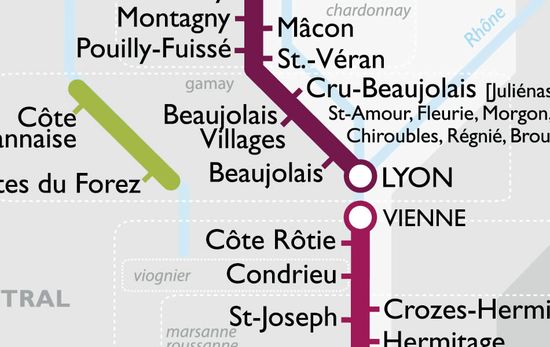
Nicola Twilley interviews David Gissen on The Metro Wine Map of France, which represents the country’s wines as stops on a regional subway line:

One thing I only learned through making the map was that all the “lines,” with just a few exceptions, follow rivers or coastlines. You would not necessarily understand, by looking at a normal French wine map, the absolute centrality of the rivers, which are the routes that the Greeks and Romans used as they were moving through France and planting vines. …

Our experience of wine is really an urban one — I think that may well be historically true as well, back as far as the Greeks and Romans founding towns and then planting grapes around them. And yet the first thing that most people who love wine do in order to learn more about wine is run out into the vineyard. I’m interested in going the opposite route, and digging deeper into the urban experience of wine.

The full map is here.

Reality TV Replacing The Neighborhood Gossip

David Roth explores the sociology behind the genre:

“The knee-jerk reaction to reality TV is that it’s dumbification,” [urbanist Richard Florida] says. “But it’s not, and the people watching aren’t dumb. They’re just looking for connection.” Florida uses Cambridge University psychologist Peter J. Rentfrow’s concept of communal consumers to describe reality junkies. “These are people who want stories about people and who used to rely on gossip, or on the little mini-dramas in their community,” he says. “And when you’re isolated in the suburbs, you don’t have that.”

Amanda Marcotte worries about our lack of empathy:

While the real world gossip mill can be really cruel and judgmental, I don't think it's so indifferent to suffering; on the contrary, a popular form of gossip is to talk about other people's woes and feel bad for them.  ("Did you hear so-and-so's in the hospital?" "Such a shame the way he just ran out on his family." Frowns.)  Reality TV and tabloids provide all the entertaining judging of gossip but very little of the empathizing.

A Poem For Saturday

Gods_jul08_main

"The Agamemnon Rag" By Jack Conway:

Atlas, you’re Homer. I am so glad you’re Hera.   
Thera so many things to tell you. I went on that   
minotaur of the museum. The new display centaurs   
on how you can contract Sisyphus if you don’t use   
a Trojan on your Dictys. It was all Greek to me, see.
When I was Roman around,   
I rubbed Midas against someone. “Medea, you look like a Goddess,”   
he said. The Minerva him! I told him to   
Frigg off, oracle the cops. “Loki here,” I said.   
“In Odin times men had better manners.” It’s best to try   
and nymph that sort of thing in the bud. He said he knew   
Athena two about women like me, then tried to Bacchus   
into a corner. Dryads I could, he wouldn’t stop.   
“Don’t Troy with my affections,” he said.  

The poem continues here.

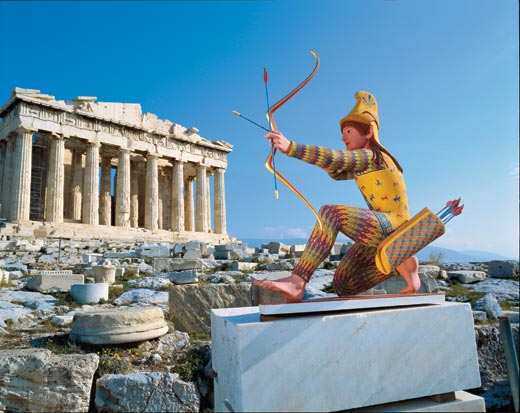
(Photo: A reproduction of an ancient Greek sculpture by archaeologist Vinzenz Brinkmann, which he insists is the original color of the statue.)

Is Intellectualism Waning?

Jessa Crispin argues that we've traded one monoculture for another:

Twenty years after the Velvet Revolution, [the Czech playwright-turned-national-leader Vaclav Havel] gave a public speech in which he assessed the current state of the free Czech Republic. “On the one hand everything is getting better — a new generation of mobile phones is being released every week,” he said. “But in order to make use of them, you need to follow new instructions. So you end up reading instruction manuals instead of books and in your free time you watch TV where handsome tanned guys scream from advertisements about how happy they are to have new swimming trunks"… The artistic and literary scene that flourished paradoxically under censorship and repression has died off.

The public intellectual is, for the most part, no longer invited to the most important parties. [Author] Anna Porter writes, “Now that everyone can publish what they want, what is the role of the intellectuals?” and she can’t find an answer. It’s no longer the police state that’s attacking the intelligentsia — it’s disinterest and boredom. It’s distraction. It’s a trade off. And it’s one that we should be able to acknowledge and be allowed to mourn.

Marriage: Low-Risk Asset Or Junk Bond?

Marina Adshade explores the metaphor:

In making financial decisions women are far less willing to take on risky assets than are men; they appear more risk-averse. Single individuals, in turn, appear more risk-averse than married individuals and so it follows that married women, historically at least, are less risk averse that single women. … While in North America we have seen little change in divorce rates over the last decade, the same cannot be said for Italy. In fact in just two years (between 2000 and 2002) the divorce rate in that country increased by 45%. So in a period of increased risk in marriage the level of risk aversion of married women has converged to that of single women, which is consistent with our hypothesis that as marriage becomes a risky asset married women prefer safer assets.

Searching For Artistic Value

Soup-2_custom

In Culture: Leading Scientists Explore Societies, Art, Power, and Technology, Brian Eno writes:

Nearly all of art history is about trying to identify the source of value in cultural objects. Color theories and dimension theories, golden means, all those sort of ideas, assume that some objects are intrinsically more beautiful and meaningful than others. New cultural thinking isn’t like that. It says that we confer value on things. We create the value in things. It’s the act of conferring that makes things valuable. Now this is very important, because so many, in fact all fundamentalist ideas, rest on the assumption that some things have intrinsic value and resonance and meaning. All pragmatists work from another assumption: No, it’s us. It’s us who make those meanings.

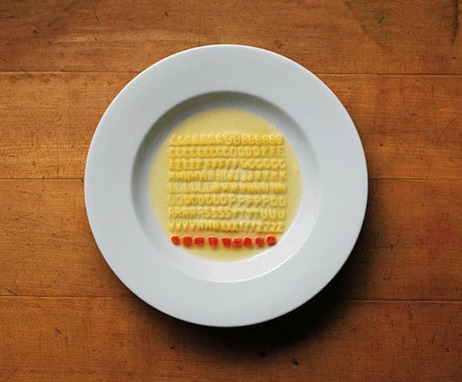
(Photo by Swiss artist Ursus Wehrli via Robert Krulwich)