That's Reid Cherlin's math for infrastructure projects in Obama’s jobs proposal.
Month: September 2011
Ozone Politics
The WSJ reports on Chief of Staff Bill Daley's role in rolling back regulations on ozone:
When the American Lung Association mentioned a poll showing public support for EPA standards, Mr. Daley appeared uninterested, according to one person in the room. "He literally cut the person off and said 'I don't give a [expletive] about the poll'," this person said. … The same day, Mr. Daley met with industry groups, who gave the White House a map showing counties that would be out of compliance with the Clean Air Act if the stricter standards were put in place. The map showed that the rule would affect areas in the politically important 2012 election states of Florida, Pennsylvania, Virginia and Ohio.
David Roberts has to sit down:
[T]he notion that this individual sop to industry can meaningfully affect the electoral dynamics of swing states demonstrates an almost pathological ignorance of post-truth politics. … Obama cut taxes more than Bush did in his first term. Yet he's still known — even among most Democratic voters! — as a tax-and-spend, big-government liberal. And this one-off regulatory decision is supposed to cut through the clutter?
Yglesias differs on Roberts's logic:
There’s no need to assume that voters will know anything about the EPA or the rulemaking process, you just need to assume that people are generally aware of the short-term economic trends in their community. None of this changes the fact that taking a step that’s bad for public health in order to obtain a marginal advantage on Election Day is not exactly the audacity of hope, change we can believe in, or the fierce urgency of now.
Krugman employs [NYT] the Broken Window Fallacy to argue that "tighter ozone regulation would actually have created jobs: it would have forced firms to spend on upgrading or replacing equipment, helping to boost demand." Steve Sexton disagrees on the economics:
[E]ven among those businesses sitting on cash reserves, it is likely that regulatory compliance costs would crowd out other expenditures (and thus other employment) as those firms sought to maintain the cash reserves they deemed optimal in the first place as a hedge against an uncertain economic future.
Armando Llorens brings it back to the politics:
[T]here is no way Obama or Dems will ever out-antiregulate Republicans. This reminds me of the eternal futile search for Values Voters to go Dem. They don't. Dems will never out "Value Voters" Republicans.
The Weekly Wrap
Today on the Dish, Andrew tracked Rogue reviews and Todd's rant, and was still left curious whether any of McGinniss' claims would be debunked. Readers accused Sarah of wanting to run nothing except her mouth, while others insisted she's just crazy enough to do whatever she feels like. Her cocaine snorting while snowmobiling didn't bother us as much as her hypocrisy about the war on drugs, and Pareene remarked that if she was smart she'd cop to it and move on, instead of accusing McGinnis of pedophilia.
Andrew tried to reconcile the right's view on healthcare with the economic reality, and Americans suffered a skills-jobs mismatch. Reihan thought the Republican base could skew to Rick Perry, Jennifer Rubin skewered Perry's anti-intellectualism, and Perry liked to tax strippers. The GOP was going to get more extreme before it got more moderate, but the media refused to call un-conservative radicals by a different name. Huntsman garnered one important endorsement, Romney was in danger of losing New Hampshire, Max Boot was incapable of naming a single Pentagon program that could be cut, and Larison picked on Marco Rubio's vague foreign policy attacks. Bruce Bartlett assessed Obama's economic legacy, Michael Moore earned his own Moore award for saying Obama's acting like a white guy, and Jon Stewart struggled to make fun of Obama while still believing in him. Pat Robertson sullied his own pristine defintion of marriage, and we worried what the Solyndra scandal would do to the solar industry.
Internationally, Daniel Levy wondered if Europe could support a Palestinian state, we weighed what it would do to stability in the region, and Erik Voeten tried to predict the outcome of a UN vote. We decided we can't use Palestinian security aid as a bargaining tool, Edward Koch deemed the Arab Spring a fraud, some countries execute people for drug offenses, and population alarmism hurts the fight for global reproductive rights.
Star Trek predicted death by drone, the web made it harder to confront our fears slowly, and Rod Dreher lost his sister to cancer. Great architecture doesn't always make for a place people want to hang out, female orgasms are hard to measure, and Jews love Chinese food because it doesn't mix meat and dairy like the Italians.
VFYW here, MHB here, and FOTD here.
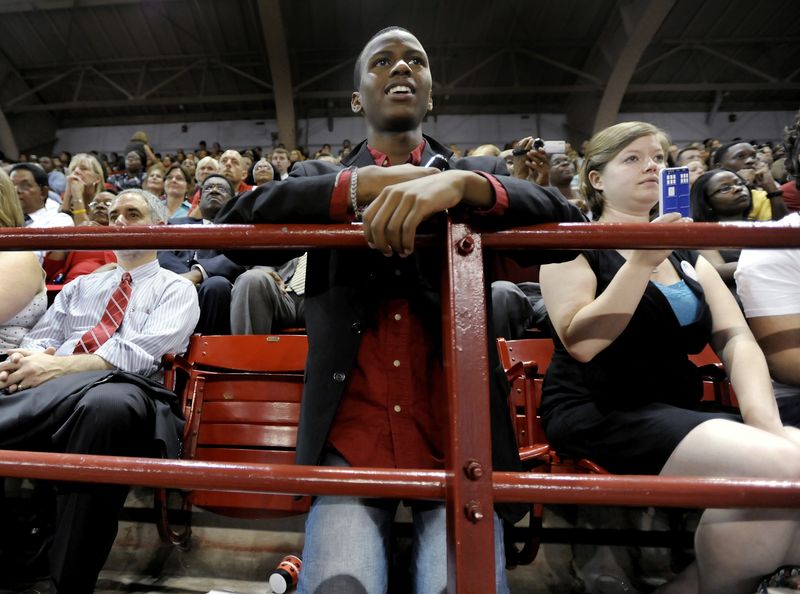
Thursday on the Dish, Andrew defended Obama's record on the economy, the NYT tackled Palin's "supposed" labor without bothering to factcheck McGinniss, and the right resorted to imagined violence against McGinniss. Palin's affair with a sports-star while in the media drove one sports columnist up the wall, Andrew Sprung disembowled Perry's electability, and Perry doubled down on the evangelical front. Dan Savage earned a Moore award for going overboard on HPV, a reader reminded us about oral cancer, and bioethicists dared Bachmann to produce science to back her claims. Megyn Kelly earned an Yglesias award for her "post-partum compassion," young people took advantage of new healthcare provisions, and Roderick Long tutored Ron Paul on how to talk about libertarians and healthcare. We sized up Warren's fight against Scott Brown, Obama's base happened to consist of Dr. Who fans, and TNC chastised the left for having a bigger bark than bite.
Around the world, Reza Aslan made the case that Palestinians were following Israel's footsteps in declaring a state, and the blogosphere was mostly disappointed by the lack of Israeli creativity. Johann Hari apologized, Thomas Dinham got mistaken for a Jew, and Daveed Gartenstein-Ross exemplified why civility in the blogosphere succeeds. Ann Curry blessed Iran's president with a total softball interview, and the FBI disappointed us with their Islam training material. Drone could one day fight wars better than real soldiers, and Ackerman wondered what happened to all the Islamophobic veterans the right used to trot out.
Rape doesn't just apply to female soldiers, and Canada proved we can't afford to ignore the good soldiers who are female. Lawless fertility businesses spurred innovation, testosterone and happy marriages don't fit into a single box, and the Dish got there first on whether college athletes should be paid. Game theory could predict wars so we don't have to fight them, the way we measure poverty has evolved, and we're not making enough new antibiotics. Meth use plummeted while pot use spiked, Nicolas Cage confronted a naked intruder with a fudgesicle, and Jews love Chinese food because it's varied, fatty and festive.
Chart of the day here, cool ad watch here, VFYW here, MHB here, and FOTD here.
By Sara D. Davis/Getty Images.
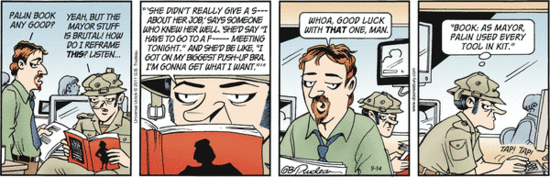
Wednesday on the Dish, Andrew believed Obama could easily best Perry even with a bad economy, and Paul Burka told Perry to watch out for Palin's bid. More papers hopped on the censorship bandwagon to avoid offending Palin's fans with a Doonesbury comic strip, and details leaked from "The Rogue." Bachmann's anti-vaccine nonsense incensed the bloggy right, Chris Good urged Perry to stick with his pro-immigration policies, and readers parsed the libertarian argument against emergency rooms. Dissents of the day addressed where exactly the cheers were directed, and Kornacki argued Perry's GOP weaknesses are actually national strengths. Nate Silver expressed concern for Dems in the Senate after the special election, while Robbie George chalked it up to Jewish Fundamentalism in New York. Elizabeth Warren threw her hat in the Senate race, contractors make way more money than federal employees, and Jonathan Bernstein didn't believe in equal media coverage.
In international news, Tony Judt didn't go easy on Israel in his last interview, Benny Morris captured the social inequality, and Obama still doesn't hate Israel. Israel wasn't prepared for non-violent Palestinian protests, and Frontline tracked when torture arrived in America. John Quiggin wondered if China can weather its serious economic shocks, Dave Betz explored the extreme loyalty and bonding of terrorists, and News International's list of victims expanded. Libya faced a political nightmare for reconstruction,
In other national affairs, we examined how much we pay into and get back from Medicare and Social Security and immigration depresses the wages of established immigrants more than any other group. Bartering and debt is more personal than we think, and the US has had a lucky history with regards to buying and holding onto stocks. HIV could hold the key to curing cancer, and the science of testosterone was catching up to a more egalitarian theory of masculinity. Readers stormed the gates with examples of democratic children's literature, we faced up to the ugly truths of rape and war for women in battle, and two female vets relayed their experiences. Plastic surgery could fulfill the transhumanist dream, American tennis fandom declined, having a nice camera doesn't make you a great photographer, and rural areas resemble cities more and more.
Chart of the day here, email of the day here, MHB here, VFYW here, and FOTD here.
Tuesday on the Dish, Andrew called the GOP out for cheering what the tragedy of the uninsured. Real conservatives moved towards moderation and compromise, while GOP elites freaked out about Perry's electability. Michael Scherer marveled at Perry's many campaign personalities over the years, Perry somewhat redeemed himself with an Yglesias award, and Ed Morrissey fact-checked Bachmann's anti-vaccine nonsense. Jamie Fuller compared Hillary and Obama to Romney and Perry, Palin pinged Perry and credited herself with calling the shots for the candidates and Levi entertained us with a new round of Sarah horror stories.
Conservatives will have to rethink their infatuation with Chile’s privatized social security system, Derek Thompson assessed productivity in the healthcare and education fields, and Seth Masket emphasized this election matters because the next president gets credit for saving the country. Members of Congress vote to please rich people because, for the most part, they are rich people, and fees may solve our revenue woes. The middle class felt the blow of a recession more than the rich, Jonah Goldberg exhibited some cognitive dissonance on exploitative rhetoric, and Eliezer Yudkowsky aired his libertarian frustrations.
Andrew echoed Erdogan and Bob Gates on how spoiled Israel is, we assessed the future fallout of a Palestinian declaration, and Michael Totten measured the hurdles Eygpt still faces for democracy. Church attendance boomed in China, and al-Qaeda may be done thanks to Obama's lethal persistence, while others disagreed. Flying while part-Arab is still a risk, Noah Millman recalled our wounded post-9/11 rationality, and approval of interracial marriage hit an all-time high, but Julian Sanchez wasn't buying it.
Andrew explored lower levels of testosterone after kids, and college is in for a transformation akin to journalism's. This is a truly great piece of 9/11 art, readers piled on the existence of Che shirts in Brooklyn, and one reader just couldn't handle the idea of women dying in combat. Jay Ulfelder challenged dictators in children's fiction, and Contagion sacrifices good story-telling for scientific accuracy. YouTube links live the longest online, and the future of home deliveries could involve 7-Eleven lockers.
Hathos alert here, map of the day here, MHB here, FOTD here, VFYW here, and contest winner #67 here.

Chesterfield, New Jersey, 10.07 am
Monday on the Dish, Andrew warned of the dangers of a GOP that operates like a religious movement and not a political party, and live-blogged the Tea Party debate in horror. The full reax is here, Andrew dared Hannity to admit Obama has cut taxes more than Bush did, and countered Maureen Dowd on Obama's "weakness." Pawlenty endorsed Romney, and Andrew and Douthat sparred over the viability index. It may be too late for Perry to save Social Security after he's bashed it so joyfully, and GOP consultants wanted Romney to get Perry to attack recklessly. Economists mostly agreed that the Social Security as Ponzi scheme analogy is flawed, and David Dow listed the Texas executions that are a result of unfair policies promoted by Perry. Garry Trudeau joined Andrew in being unable to put down Joe McGinniss Palin book, and then the Chicago Tribune promptly pulled the offending comic strips.
Andrew applauded Leon Wieseltier's 9/11 take on religious freedom in America, Sally Kern feared homosexuality more than terrorism, another 9/11-inspired Malkin award here, and Herman Cain sang the pain away. Terror invaded our televisions and our police departments, and readers submitted the art that touched them after 9/11. Andrew struggled to understand Max Boot's logic on the aftermath of the Iraq war, a reader echoed Andrew's appreciation of Mearsheimer's prescience, and Ali Soufan's book illuminated how torture was ordered by the White House. Internationally, Andrew urged Israel to take a leap of faith on Palestinian statehood, and congratulated Niall and Ayann on their very American union. Germany prepared for a Greek default, India scanned the irises of its 1.2 billion population, and Japanese men wore Hawaiian shirts to save the environment.
Uranium exposure doesn't just apply to female troops, guilt-trips help doctors wash their hands, and behavioral economics offered a politicians a way out from instituting harsher laws. A reader wasn't a fan of Jen Graves' race essay, and Anne-Marie Slaughter predicted the next wars will be fought by cyber-warriors. Steven Johnson predicted ripped jeans and the Roomba, Gregg Bernstein made the iTunes agreement actually legible, and fetal microchimerism means we never really leave our mothers. The Dish got psyched for pot culled from the bodies of naked resin-covered men and horses, birth control affects your memory, and the self-control showed by Jenga dog blew our minds.
Chart of the day here, VFYW here, MHB here, and FOTD here.
–Z.P.
Where Does Political Philosophy Come From?
Will Wilkinson believes that our a priori politics determine our philosophical beliefs:
It seems to me that most of our high-level political concepts like "freedom" or "equality" are tailored and tweaked to justify the kind of political regime we already tend to favor. If you are offended by taxation, you'll settle on a conception of liberty according to which taxation is a violation. If you think a relatively high level of taxation is necessary to give people what you think they ought to get, you'll settle on a conception of liberty according to which taxation is not a violation, but not giving people what you think they ought to get is. That's why abstract political philosophy is so often futile. It's probably more useful to start out arguing over regime types in the first place, since mostly what we do is choose our favorite regime type and then reason backwards to conceptions of liberty, equality, and so forth that justify our pick.
Wanted: Fewer People
Robert Engelmann worries about overpopulation. Betsy Hartmann counters:
Family size has fallen to a global average of 2.45 children and is projected to fall to two or less in the next decades. The main reason why global population is projected to increase to 9 billion by 2050, and possibly 10 billion by 2100 (a high projection that is disputed by demographers), is that currently there exists a large cohort of young people of reproductive age. High fertility, however, persists in only a few countries, mainly in sub-Saharan Africa, because of deep class and gender inequalities and the failure of elites to invest in education, health care, and other social services, including high quality family planning. Population alarmism threatens to erode the progress made since the 1994 Cairo conference in moving the family planning field away from top-down and coercive population control programs toward a focus on reproductive health and rights.
Are “Green Jobs” A Scam? Ctd
David Frum fears so:
[H]ere’s what I would predict: we’re rapidly going to discover that new energy forms will destroy many more energy-sector jobs than they create. And we’ll (re)discover for the umpteenth time that the reason government fails as a venture capitalist is that government faces too many and too contradictory goals. Government effort to subsidize “green jobs” will emerge – not as a benefit from the spread of green energy – but as one of the greatest obstacles impeding the spread of green energy.
Earlier discussion of green jobs here.
The Art Of Placemaking

In an interview with Samantha Michaels, Project for Public Spaces president Fred Kent channels Holly Whyte and Jane Jacobs:
Placemaking…requires the community members to be at the center of planning. The outcome has to be theirs. Urban designers who respect community wisdom can be enormous assets is they are willing to leave behind their egos and help communities achieve their goals. Design is a small but significant part of Placemaking. Managing and programming the space is the most critical. Great places are about what people do in them, and how they feel, use, and 'own' those places…Take Frank Gehry's Guggenheim Museum Bilbao, which succeeds spectacularly as an iconic structure, but fails miserably as a public space. Contrast that to Balboa Park in San Diego, which gets 10 million visitors per year without any trendy buildings or fancy design gimmicks. It's just a great park that offers people the activities and amenities they actually want.
(Photo: "The Museum of Man" in Balboa Park by Flickr user DanReichert.)
“She’s Not Running. She’s Never Going To Run” Ctd
A reader writes:
I agree with everything your reader wrote. Except the conclusion. Of course she doesn't have a grand strategy. Of course potential candidates are more popular than actual candidates. Of course a campaign would be the end of her. But if there's one thing that I can say with confidence about Sarah Palin, it is that when it comes to her decisions the only opinion that matters is her own. If she thinks running with make her more popular and get her more attention, she will run. It doesn't matter whether or not it's realistic; it only matters whether she believes it.
And one more thing, in response to the quote from Marion Berry: Jesse Jackson actually did run for president.
Another questions the Jackson comparison:
As a life long Detroiter, I just have to chime in to disagree with your reader re: the quote about Jesse Jackson. I'm near-certain that wasn't a Marion Barry quip, but instead was a quote from Detroit's late, famously-acid-tongued mayor, Coleman A. Young. (But I do agree that the sentiment applies to Sarah Palin as well. She's not running for President.)
Another speculates about Palin's intentions:
Sarah Palin is certainly delusional, but she's got enough on the ball to realize she's incapable of managing and winning a presidential campaign. However, I think she yearns to be president, partly as payback for the all criticism which appears similar to the motivation which has many conservative Christians yearning for Armageddon to prove they're not wing-nuts, e.g., Sarah Palin. That leaves one avenue: another VP nomination.
Most of what I've observed is her laying the groundwork in becoming the default pick for VP if a so-called moderate like Mitt Romney in '12 wins the nomination or in '16, a Jon Huntsman or Chris Christie – primarily to optimize social conservative turn-out in the general election. There's some behavior which probably argues against my hypothesis, e.g., quitting as governor, some recent and weakly asserted anti-capitalist rhetoric, but the bulk of her behavior appears to have her working to become the default pick if a so-called moderate wins the nomination.
Another:
Your reader says running for president "would be the end of her." I would argue the exact opposite. If she doesn't run it will be the end of her. The loyal supporters would leave her in droves … that would be the end of the attention for her. She would be completely irrelevant, even to hardcore conservatives. If she doesn't run she would just be another talking head on FOX.
I think the question Sarah Palin is asking herself is "What Would Esther Do?"
Faces Of The Day

Would A Palestine Statehood Vote Pass?
Erik Voeten's UN voting model doesn't have enough information to make a call yet:
[W]e can’t at this point predict the outcome of the vote. We don’t know the text of the resolution and even if we did, we don’t know the location of the cut-point that divides proponents and opponents of a resolution. Moreover, states may be motivated by other concerns in a vote with clear strategic consequences. I already mentioned precedent but there is also evidence that states that receive a great deal of foreign aid from the U.S. are more likely to vote with the U.S. only on those issues where the U.S. actively lobbies (pdf, non-gated). So, vote-buying may distort the predictive ability of a model purely based on these ideal points …
 The Dish