Is File-Sharing Theft?

Not in France:

One of the cool things about France’s civil law system is that it places a premium on defining things precisely, and thus I’ve never seen a better definition of "theft" than that of the French Penal Code: the fraudulent subtraction of another person’s property. The word "subtraction" here, of course, is key. To steal something is to fraudulently subtract from their property. With file sharing, of course, no subtraction occurs, since the file is copied.

Earlier, Mataconis differed:

From a philosophical and moral point of view, there seems to me to be no question that there’s very little difference between stealing a physical copy of a book and illegally making a copy of a digital version of that same book. In both cases, the creator of the work has been deprived of an economic benefit to which they’re clearly entitled, and the person committing the act is gaining possession of something for which they haven’t paid for. That’s stealing.

Yglesias pushed back, reminding us that something called libraries exist:

Now as it happens, the powers that be have decided that it’s socially beneficial to allow friends to borrow each others’ books even though this results in losses of royalties. The government even funds, at taxpayer expense, institutions dedicated to helping members of the public obtain books without paying royalties to the author.

The View From Your Window Contest

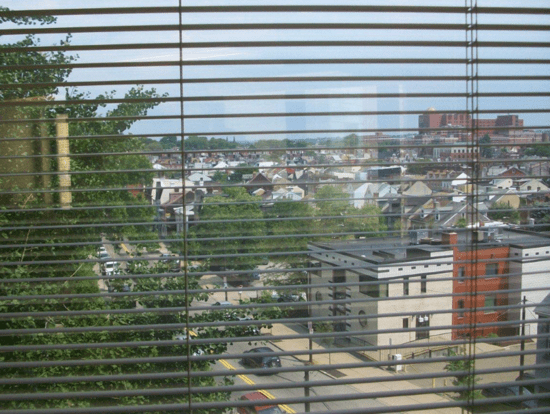
Vfyw-contest_9-10

You have until noon on Tuesday to guess it. City and/or state first, then country. Please put the location in the subject heading, along with any description within the email. If no one guesses the exact location, proximity counts.  Be sure to email entries to VFYWcontest@gmail.com. Winner gets a free The View From Your Window book. Have at it.

In Praise Of Beta

An excerpt from Jeff Jarvis's essay in the book End Malaria:

Voltaire was half right. “Le mieux est l’ennemi du bien,” he said: The best is the enemy of the good. The best is also the enemy of the better. Striving for perfection complicates and delays getting things done. … The modern cure to Voltaire’s paradox—and a gift of the digital age—is the beta: the unfinished and imperfect product or process that is opened up so customers can offer advice and improvements. Releasing a beta is a public act, an invitation to customers to help complete and improve it. It is an act of transparency and an admission of humility.

Conservative Suburbia

Suburbs

Howard Ahmanson explores why non-suburbanites might distrust suburbanites:

It is popular in conservative circles, especially, to talk about ‘smaller government,’ but ‘smaller government’ is the last thing that suburbanites want if it means that whatever they were trying to leave behind can come into their neighborhood. … Interestingly enough, local governments have started to imitate homeowners’ associations, in that they claim the right to compel neatness and other things that traditionally a civil government did not claim beyond a demonstrable health or safety standard. 

Living in Philadelphia as a conservative changed Rod Dreher's view of community:

With the nation in for a long stretch of hard times, I find within myself an urge to be around people like me. What I mean by that is not  "white middle-class right-wingers," but rather people who share conservative morals (even if they are Democrats), and a religious sensibility — be it Christian, Jewish, Muslim, Mormon, Hindu, etc. These are my people, so to speak, not because they share my political views, my ethnicity, my income, or even my particular religion. Where do they live? Probably in the suburbs.

(Image via Letterology)

Turning The Mall Into A Police State

Taking photos or writing in a notebook can now get you interrogated at the Mall of America. More importantly, the gathered information by mall security has been shared with the Bloomington police, the FBI and, in some cases, the federal Immigration and Customs Enforcement agency:

Najam Qureshi, owner of a kiosk that sold items from his native Pakistan, also had his own experience with authorities after his father left a cell phone on a table in the food court. The consequence: An FBI agent showed up at the family’s home, asking if they knew anyone who might want to hurt the United States. 

Mall of America officials say their security unit stops and questions on average up to 1,200 people each year. The interviews at the mall are part of a counterterrorism initiative that acts as the private eyes and ears of law enforcement authorities but has often ensnared innocent people… In many cases, the written reports were filed without the knowledge of those interviewed by security. Several people named in the reports learned from journalists that their birth dates, race, names of employers and other personal information were compiled along with surveillance images.

Should The NRA Endorse Obama?

Coyotespecial

Gun sales have reached record levels since Obama took office. This year they could pass 15 million for the first time:

"I think half of the people in the firearms industry, if asked, would hope [Obama] is not President, but then will secretly go out and vote for him again,” [gun manufacturer Michael Fifer] said. Talk like that won’t win Fifer any plaudits from the NRA. But it does capture the industry’s strange predicament: If gunmakers work too hard to defeat Obama, they may be shooting themselves in the foot.

(Photo of Sturm, Ruger & Co.'s “Coyote Special” commemorative gun for "A True Texan" in honor of Rick Perry, who shot a coyote while jogging.)

You Can Keep Your Shoes On

Well, Janet Napolitano says they're working on it:

We are moving towards an intelligence and risk-based approach to how we screen. I think one of the first things you will see over time is the ability to keep your shoes on. One of the last things you will [see] is the reduction or limitation on liquids.

Freakonomics covered the ridiculous toll exacted by Richard Reid's failed shoe-bomb attempt:

Let’s say it takes an average of one minute to remove and replace your shoes in the airport security line. In the United States alone, this procedure happens roughly 560 million times per year. Five hundred and sixty million minutes equals more than 1,065 years—which, divided by 77.8 years (the average U.S. life expectancy at birth), yields a total of nearly 14 person-lives. So even though Richard Reid failed to kill a single person, he levied a tax that is the time equivalent of 14 lives per year.

(Hat tip: Katherine Mangu-Ward)

Can We Save The USPS? Ctd

A reader writes:

I know you’ve covered this subject extensively, but have you read this article in the Washington Post?

In addition to structural reforms, Sen. Claire McCaskill (D-Mo.) suggested that USPS should mount a national advertising campaign promoting the value of printed mail. "You cannot get money by text message," McCaskill said. “I really think that there is a longing out there right now, especially in these uncertain times, for some of the things that have provided stability over the years." … Lieberman voiced his support, suggesting, "We should be writing more passionate letters to those we love."

How idiotic are these people? First class mail is DEAD. I’ve been paying bills online for a decade, and I can send money through email to anyone with a PayPal account. Does McCaskill live in 2011, or in 1950?

And don’t get me started on Lieberman’s stunningly stupid statement. The personal letter is DEAD. Everyone calls, texts or emails the ones they love, or they Skype. It’s like saying that cars and gasoline are too expensive, so let’s start a campaign to get more people to ride horses.

Yes, the USPS is a venerable institution steeped in tradition and part of our national heritage, but they are operating under basically the same business model that they did 100 years ago -inconvenient counter hours, rude and uncaring employees (not all, surely), six-days-a-week delivery to every known address in the United States, and a reliance on first-class mail as the backbone of their survival.

Years ago the USPS surrendered much of its parcel service to UPS and FedEx. Time to get that back. Run a campaign that says something like "If Brown cannot do it for you, come back to the red, white and blue." They are on the right track with the flat-rate box campaign, but as a heavy user of the USPS, I find that it’s actually cheaper in most cases to ship at regular calculated rates. Scrap it all and make it simple: you need a computer to figure out how much it costs to send a package because the rates are based on volume, weight and zone. In addition, there’s regular Priority Mail, flat-rate Priority Mail, and even Priority Mail Regional rates. Or do you want parcel post, or media mail, express mail, or first class? Is your mailing piece a letter, a flat, or a parcel?

The USPS needs to learn to compete in today’s market. The entire business model needs to be overhauled. It will take a visionary, but Senators like McCaskill and Lieberman are too out of touch and rooted in the past that they cannot see what should be so obvious.

Another summarizes the other side:

The post office exists by Article 1, Section 8 of the U.S. Constitution, which means its establishment is constitutional, not legislative. The post office is not a business but a constitutional agency providing a means of communication between the country’s citizens. The post office will always have trouble being financially feasible because they deliver to that last house on the road, to the Indian reservation in in the Grand Canyon, to the wide-open prairies of the Midwest that the private businesses won’t find profitable. The post office is not a profit-driven business but a constitutionally-driven social service, established in the document the Tea Party says they love so much, and put in the Constitution by the Founders, whose words the Tea Party says need to be revered.

The Weekly Wrap

Today on the Dish, the internet weighed whether Obama's bill could pass, and David Brooks joined Andrew in supporting Obama's second stimulus. Andrew lingered on whether Palin's populism stems from opportunism or principle, Dan Savage bemoaned the fact that in America you can die by tooth infection, and Perry acted the hypocrite on health-related mandates. Maggie Gallagher earned an Yglesias award for telling Perry he needs to act like he wants to save Social Security, and Andrew agreed that his extremism could hurt him. Mitt dissed Congress for failing on Social Security, we assessed the psychology of small businesses, and Toobin pointed Perry to the fact that the death penalty is withering even in Texas. Greg Marx defended the influence of horse-race politics, we poured over an early electoral map, and behind the 21-year-old neocon phenom was a 32-year-old man.

Andrew explained his support of the Palestinian Hail Mary at the UN, and readers regaled us with stories of their favorite 9/11 art including Short Bus and Wilco's "Jesus, Etc." Stanley McChrystal modeled our military after al-Qaeda's, and Mubarak might go free. Sophisticated missiles went missing in Libya, and Matt Steinglass nailed how we missed the mark on terrorism versus how Israel deals with it. Thomas P.M. Barnett congratulated the US on finding a good model for multilateral intervention, an IED costs less than a new iPhone, and a former Guantanamo interrogator admitted torture doesn't work. China scaled back its oil interest in Iran, and Karim Sadjadpour compared Iran's lecture to Syria on using force to Berlusconi lecturing Charlie Sheen about womanizing.

Wilkinson proposed scaling back the postal service to a couple days a week, Bodenner shot down the "women are weaker" argument about the military, while a reader made a legitimate case based on birth defects from uranium. The hetero version of Grindr drifted farther from the original, and Google bought Zagat to the chagrin of Yelp. Narcissists are proud of their arrogance, goths danced to Madonna, and a drunk Swedish moose got stuck in a tree.

Cool ad watch here, interview of the day with Mel Gibson here, storytelling advice from Matt and Trey here, chart of the day here, MHB here, VFYW here, and FOTD here.
Jobs   

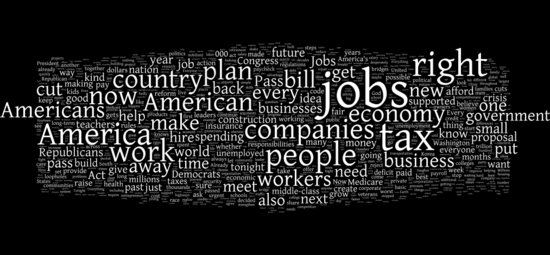
Thursday on the Dish, Andrew rallied Obama to step up to his moment of truth on jobs, and he brought it, hard. Readers had the same reaction as Andrew: meep meep motherfuckers, and the blogosphere agreed.

On last night's GOP debate, Dish readers offered their own reax on our Facebook page, and Sally Kohn couldn't see the resemblance of any of the candidates to Reagan. Andrew assessed the Catholic response to the GOP cheers for the death penalty, Huntsman showed his true conservative colors, and Bernstein backed Andrew's (and the GOP's) fear of a Palin candidacy. Bloggers debated the source of Perry's achilles heel, which could very well be foreign policy, but he didn't lose any Tea Party votes on global warming. Edward Glaeser didn't want to credit Huntsman or Romeny with creating or losing jobs, and we wondered if Americans were hungry for the red meat Perry offered on Social Security and Medicare. Weigel wasn't sure Americans know what a Ponzi scheme really is, we were kidding about the corndog photo ops, and male candidates can get fat.

Susan Jacoby warned against sacrilizing 9/11, the internet debated whether al-Qaeda has been defeated, and your 9/11 emotional time-suck here. Egyptian activists might boycott the election, and Jeremy Scahill recounted how we helped create the Somali terrorist organization al-Shabaab.

Andrew credited gay marriage with helping the rise in monogamy, and we examined Mike Lofgren's lessons about obstructing justice in Congress. Casey Mulligan mulled over the hours worked by different age groups, deregulating food trucks makes sense, and infectious disease appears to be a primary cause of the global variation in human intelligence. We assessed the politics of Che and Hitler for hipsters, analyzed Amazon's requirement to pay taxes, and updated our blog etiquette. Megan H. MacKenzie made the case for letting women serve in combat, and a First Class passenger gave his seat up to a serviceman.

App of the day here, MHB here, VFYW here, and FOTD here.

Norangdal Valley-Norway-5pm

Norangsdalen Valley, Norway, 5 pm

Wednesday on the Dish, Andrew live-blogged the GOP debate where all eyes were on Perry, who proved to be an "extreme, inarticulate, incurious W clone." We rounded up the full reax here, Andrew parsed the semantic implications of where and how Rick Perry and Marcus Bachmann consume corndogs, Silver assessed Bachmann's odds, and the left and right disagreed about what we're polarized about (wealth versus politics). Taibbi gave up on Obama's campaign promises, Andy McCarthy delivered a whopper on Obama's economy, and Erick Erickson was sick of Palin's games. Kevin Williamson continued to see nothing wrong with the death penalty even for the innocent, and Romney's new economic plan sounded quiet on the major problem of US unemployment. We tracked the conservative movement for criminal justice reform, and Joe Romm countered that green jobs aren't a scam.

Andrew recalled how Darwin lends the story of Adam and Eve even more importance and revisited his initial support for the war in Iraq in answer to the dissent of the day. Israel continued to be held up by Christianists Americans, and Andrew encouraged you to ask the next freshman you see in a CCCP t-shirt why he isn't wearing a swastika, ironically. Lawrence Korb tracked how 9/11 decimated our military, and readers shared their picks for the best 9/11 art, music and films, revisiting the 25th Hour rant. Captured Af-Pak militants may be exacting their revenge with the help of US drone attacks, Israeli girls were indoctrinated with the settler mentality, and the 9/11 memorial is organized by meaningful adjacencies. Iraq still can't run itself, and economic mobility could be an economic boon for the world.

We analyzed why land values beat home prices, readers pushed back against Andrew on why iPhones can't be made in the USA, and Andrew considered moral hazard and the bond markets, on the advice of Martin Wolf. Andrew welcomed Eli Lake to the Beast team along with other media news, Rod Dreher remembered that most Americans don't live in the NYC/ DC bubble, and James Murdoch was as screwed as ever. Tina Brown explained why insecure men act out with sexual antics, Alexis imagined charging your iPhone in a sunny part of the park, and Drudge sank to new lows with his image choice for a $300 billion stimulus.

Dan Savage and Joss Whedon enlightened us on how they got through high-school, readers debated dogs vs children in restaurants, and a dad saw the appeal of violent videogames for kids. Erick Schonfeld bowed down before TV on the internet, KJ Dell Antonia disapproved of a sperm donor allowed to have 150 kids, and heteros got their own version of Grindr.

Chart of the day here, VFYW here, FOTD here, MHB here, and WTF video of the day here.

GT_IndianAmericanDay_110906

By Mario Tama/Getty Images.

Tuesday on the Dish, Andrew assessed what how the economic and international front after his breather, but glimpsed the silver lining for Obama. He pressed Douthat on the radical theological politics that dominates the GOP, exemplified by Francis Schaeffer's Christianist advice to Bachmann. Andrew refused to decode Palin's rambling nonsense, Perry exemplified the GOP's over-reach into a platform far removed from reality, and we remembered that Romney remains the default, as he's easy on suburban eyes and ears. Ron Paul attacked Perry by comparing himself to Reagan, and Andrew compared Texas' population without health insurance at 27.2% with Massachusetts' 5.2 percent. The iPhone can't save the US economy, we analyzed the US government's green investments, and if driving is subsidized, then we're all socialists now. Bruce Bartlett warned Democrats not to cave in too much to the GOP, and Andrew was grateful to have left certain life-consuming hyperboles behind for a couple of weeks. Andrew's 9/11 take here and his hope for HRC's future here.

Around the world, we examined where doctors are needed, China was addicted to smoking, and James Traub put the brakes on overspending to prevent a war with China. Zadie Smith contemplated how 9/11 changed the perception of Muslims in the UK, Maximilian Popp feared Germany's Islamic parallel justice system, and many Muslims don't believe Arabs were behind the 9/11 attacks.

Pareene let Matthew Vadun have it over ACORN, and Balko compared Perry on capital punishment to the last two administrations on issues like torture and rendition. Our education system has its roots in securing a docile workforce, Lewis McCrary defended Civil War reenactments, and even transgendered people mix up their pronouns. Rob Horning disagreed with Jaron Lanier on similarities between the Tea Party and internet users, a college student prepared to be humbled by the job market, and Willy Staley defended Detroit's ruin porn. Happyplace collected hilarious captions for nonsensical signs, Sam Biddle didn't want to rent his bathroom to strangers, and we updated our approach to predicting the future.

Cool ad watch here, chart of the day here, FOTD here, MHB here, VFYW here and VFYW contest #66 here.

–Z.P.