The Economic Case For Human Mobility

Spotting "the world's greatest arbitrage opportunity," Michael Clemens imagines a world without borders:

Large numbers of people wish to move permanently to another country – more than 40% of adults in the poorest quarter of nations. But most of them are either ineligible for any form of legal movement or face waiting lists of a decade or more. Those giant walls are a human creation, but cause more than just human harm: they hobble the global economy, costing the world roughly half its potential economic product.

Should Sperm Donors Be Allowed To Spawn 150 Children?

KJ Dell Antonia shakes her head:

[L]ack of regulation plays into the hands of people like the Institute for American Values, who use findings that the children of sperm donors are troubled in various ways by their origins in support of their agenda, which would limit or end donor-assisted reproductive technologies. But who wouldn't be troubled by the discovery of 150 half-siblings? It's not the fact of the sperm donation that causes that particular form of culture shock, but the lack of control, or even the most basic consideration, about the technology's use.

Are “Green Jobs” A Scam?

Greenjobs

David Brooks' mea culpa for supporting green jobs as a cure for our economic woes has led to end-zone dancing on the right. Joe Romm counters:

The original article, whose headline boldly read “OBAMA VISITS CORPORATION WHERE HIS STIMULUS CREATED ‘GREEN’ JOBS AT $2 MILLION PER JOB” quietly admits further down in the article that this price is true only “if no more jobs are added.” Not surprisingly, the headline was not circulated with this critical disclaimer. The article also failed to mention that development is less than 50% complete, less than one third of the funds have been spent, and further expansion will create thousands of jobs in the coming years.

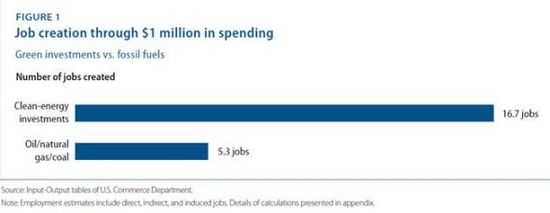
According to Johnson Controls, around 3,000 jobs will be created in the construction and operation of three separate facilities built with the $299 million grant. That means the federal government is actually creating one job with every $100,000 spent on the project – not $2 million as this misleading coverage asserts. This investment in jobs actually compares very favorably to job creation from other types of energy projects.

Forever War Watch

Joel Wing reports on a fight between the White House and the military over US troop levels:

The problem stems from the fact that the military doesn’t believe that Iraq can run itself. It thinks that everything will fall apart if it were to ever leave. That’s why it has been pushing for a troop extension with as many soldiers as it can.

Mercifully, the Iraqis probably won't let the military-industrial complex have its way:

Iraq's fractured politics are going to be a major factor in deciding what happens from here. To ignore the wishes of the Iraqis in this matter would be tantamount to denying the sovereignty that was returned with so much fanfare more than five years ago. Maliki's cabinet has agreed to negotiate an extended US presence – but has insisted any possible deal be limited to training only. Maliki, as a politician whose own constituency is generally hostile to any extension of what many there still call the US "occupation," would be asking for serious political trouble by openly advocating a larger US presence.

iSolar

Katie Fehrenbacher believes that Apple could revolutionize the solar industry if it integrated sun-powered technology into its products. Alexis Madrigal is onboard:

Imagine sitting in the sun with your iPad for as long as you wanted to without having to power up. Instead of hunting for an outlet at the coffee shop, you could fight over the best sunny spot in the park across the street.

Dogs vs Kids In Restaurants

A reader writes:

I agree with the dog-haters who wrote in that American dogs tend to have terrible manners and clueless owners. But this is because they live in a system that creates bad dogs and clueless owners.  European dog ownership works because it sets dogs up to do what they do best: hang out with humans doing what the humans want them to do. American dog ownership is a mess because dogs are expected to do things that dogs just aren't good at, like being alone for hours at a stretch and not being a consistent part of the human's social and work life. Let dogs into restaurants and hold them accountable for their behavior, as in Germany and France, and dog manners will improve.

My dog's manners are impeccable because he needs them. He works with me, runs many errands with me and, for now, eats and drinks with me.

Another points out more differences:

Last time I checked, people aren't allergic to children (at least in the medical sense) but plenty of people are allergic to dogs.  I know several people who almost immediately start getting congested with rhinitis around dogs. Along the same lines, but more in the mental health area, is that a fear of dogs is a common phobia.

Another testifies:

Growing up, I lived in inner-city Cleveland where packs of dogs ran loose. I don't know if I'm phobic, or just very cautious. But since some of your dog-loving readers seem to think it's OK to equate  dogs with rude children, I thought I'd share my fear. A child may be obnoxious. But she's not going to bite my face off.

Another:

There is another huge difference between a child and a dog: a child is a human being, usually a U.S. citizen, who has a right to be served food in a restaurant. Public accommodation laws have never been applied to animals.

Another:

Whenever I become frustrated with a noisy or annoying child in a restaurant, on an airplane, or any public space, I try to remind myself of how my behavior affected adults when I was very young. I’m sure I was as loud, whiny, and boisterous as very young children tend to be before their parents’ efforts to teach them to control themselves take effect (if they ever do). We were all noisy, crying infants once; grownups had to put up with us then and we have to pay that forward.

Another:

Almost everyone who has written to you regarding the presence of dogs in bars has pretty much taken it as a given that dogs shouldn't be allowed in places that serve food because of health concerns.  Can anybody find a shred of evidence that there are health risks to having dogs in restaurants, or is this just (excuse the pun) dogma?  Seriously, I am much more concerned with the cleanliness of the kitchen staff then I am of canines.

Palin Toys With Her Fans

Erick Erickson is beginning to lose patience with Sarah:

The comparisons to a late Reagan entry in 1980 and late Clinton entry in 1992 are frivolous and false comparisons. While both waited to make it official until November for Reagan and October for Clinton, it was abundantly clear to people even outside their most ardent supporters that they were running. Few outside Palin’s most ardent fans think she is running and, at this point, a sizable majority no longer care.