Hard drugs account for around 80 percent of Mexico's drug-trafficking revenue. Mark Kleiman says that to solve the problem we would need to eliminate the heavy use of about 3 million Americans:
Frequent or random drug testing [of those on parole or probation], with a guaranteed short jail stay (as little as two days) for each incident of detected use, can have remarkable efficacy in reducing offenders' drug use: Hawaii's now-famous HOPE project manages to get 80 percent of its long-term methamphetamine users clean and out of confinement after one year. The program more than pays for itself by reducing the incarceration rate in that group to less than half that of a randomly selected control group under probation as usual. HOPE participants are not forced to receive drug treatment; instead, they are required to stop using. … If HOPE were to be successfully implemented as part of routine probation and parole supervision, the resulting reduction in drug use could shrink the market — and thus the revenue of Mexico's drug-trafficking organizations — by as much as 40 percent.
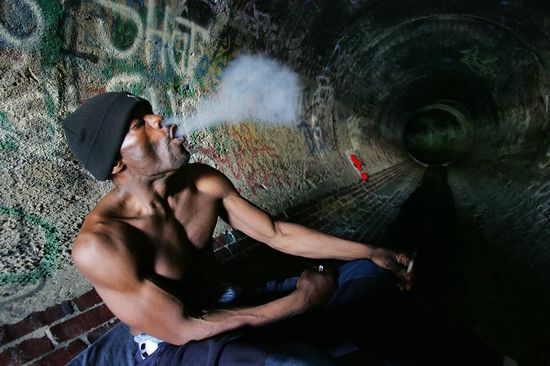
(Photo: Donald Rayfield, known on the street as 'Detroit', smokes crack cocaine in an underground storm drain on January 18, 2006 in Los Angeles, California. Detroit became homeless when he began smoking crack as he grieved the sudden death of his mother ending four years of drug-free living. By David McNew/Getty Images)
 The Dish