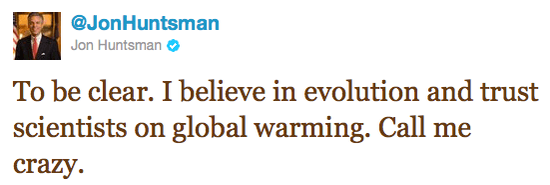
Kenneth Green tried to argue it swings both ways:
[T]he way I see the ledger, the religious Right gets a handful of anti-science points for views on evolution (and related rationalizations about the age of the earth, etc.), and for some dismissal of climate change theory, but the Left gets many more anti-science points for exaggerating the health and ecological risks of POPs; DDT; GMOs; plastics and plasticizers; pesticide residues; conventional agriculture; low-dose EM radiation; high-tension powerlines; climate change; population growth; resource depletion; chemical sweeteners; species extinction rates; biodiversity decline; and I’m sure the list could go on.
Chris Mooney draws an important distinction:
On the left, we eat alive our own allies when they make false claims. That’s precisely what happened on vaccines and autism. We don’t follow the leader—any leader. This is part of our inherent disunity (often a political liability) and anti-authoritarian psychology. On the right, the dynamic is different and authority is too often followed, even when it is dead wrong. And you stand up for your friends. That’s a virtue in many instances—but not when those friends need calling out and correcting.
Phil Plait expands the political point:
To say you think evolution might be true is political suicide if you’re a Republican candidate right now. It’s that simple, and that bad. I think that, like on the left, the majority of voters on the right are not antiscience, but if you look to the leaders in Congress, in State legislatures, and at the Presidential candidates, that’s all you see.
 The Dish