Dust off your photosynthesis knowledge:
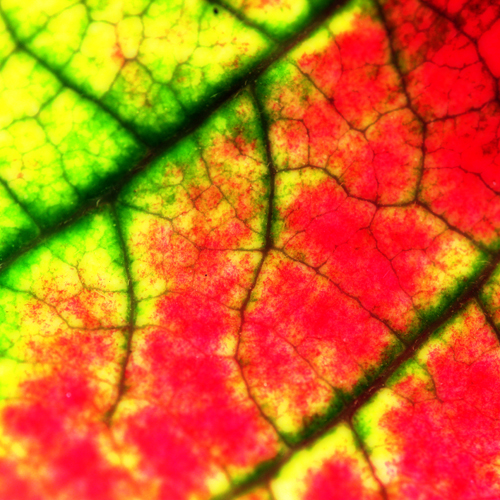
[Chlorophyll] absorbs the sunlight, which makes it critical for photosynthesis, and it is responsible for the green in leaves. During the growing season, it acts as a dominant pigment, masking pigments underneath. But here's the thing: Chlorophyll is not a very stable compound. It requires sunlight and warm temperatures, which means photosynthesis is going gangbusters all summer. But in autumn, a few things happen. Chlorophyll gets sluggish as nights grow longer and sunlight hours shrink. … As this happens, the trees break down the chlorophyll and a yellow pigment called carotene get[s] unmasked. Carotenoids and another pigment, xanthophylls, are responsible for the yellow and orange colors in corn, carrots, pumpkins and daffodils, as well as leaves.
This foliage map of New York state shows how the leaves of various geographic regions change at slightly different times.
(Photo by Kevin Dooley)
 The Dish