Hussein Ibish gives a primer on Israeli coalition politics and their consequences:
Coalition building in parliamentary democracies frequently involves jockeying for positions between party leaders based on the number of votes they can produce in the legislature. But Netanyahu has managed to create an ideologically crazy-quilt coalition that is nonetheless one of the most stable in Israel's history precisely because all of its members get exactly what they need … Well-managed quota systems make for very good politics, particularly when the goal is staying in power by making sure everybody has a “taste.” But it makes bold decision-making almost impossible. Netanyahu, even if he were inclined to make concessions on peace, is a self-condemned hostage to this structure.
Sari Bashi thinks the Shalit deal gives Netanyahu some room for a concession on the Gaza blockade:
Shalit's release provides Israel the opportunity to allow rational self-interest — and respect for individual rights — to guide its policy toward the million and a half Palestinians living in Gaza and to allow them to travel and transfer goods, subject to individual security screenings. Whether Netanyahu presents the policy as an extension of his promise of "economic peace" to Gaza or a continuation of the easing of the closure that began last year, he would benefit from ample political cover. The people of Gaza deserve a chance to access the resources they need to build a healthy, prosperous society, integrated with the West Bank and able to live in peace next to Israel.
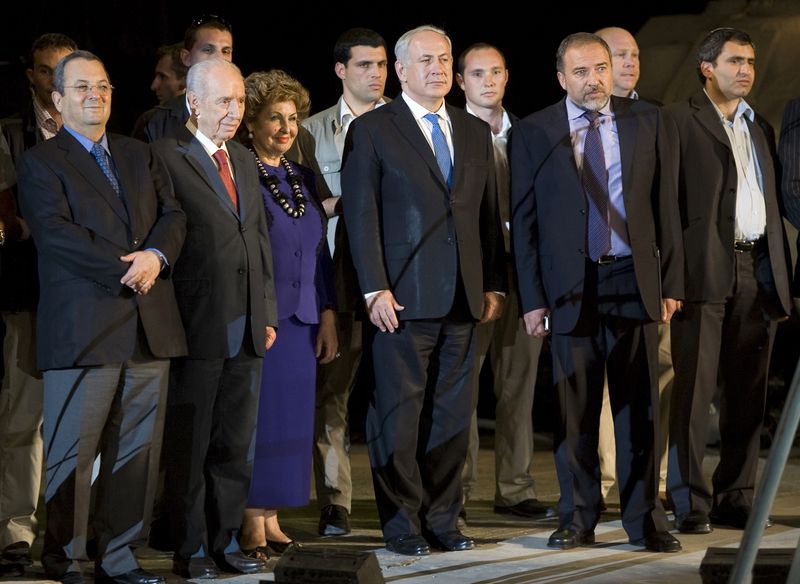
(Photo: Israeli Defence Minister Ehud Barak, President Shimon Peres, Immigrant Absorption Minister Sofa Landver, Prime Minister Benjamin Netanyahu and Foreign Minister Avigdor Liberman attend a ceremony that honored World War II veterans. By Jonathan Nackstrand-Pool/Getty Images.)
 The Dish