Dov Zakheim critiques L. Paul Bremer's attempt to give advice to Libya based on his Iraq "experience":
Leave aside Bremer's controversial decisions to disband the Iraqi Army and to maximize the extent of de-Ba'athification, neither of which he mentions, and both of which many analysts (myself included) consider to have been major blunders that led to the sectarian violence that plagued the country for the ensuing four years. Bremer asserts that it was only with the trial and death of Saddam that Iraqis stopped fearing a return of the old regime. But he does not mention that it was not until the surge of forces into Iraq, which was not completed until the middle of the following year, that Iraq began to return to a semblance of stability.
Evidently even with Saddam gone, the population did not believe that political change was "lasting." The violence continued until the influx of American troops, coupled with the Sunni Awakening, seemed to promise that political change was not a pipe dream. And, for all we know, the violence may return once American troops depart in a few months' time.
Doug Saunders thinks Libya is too unique to make cross-national comparisons all that useful.
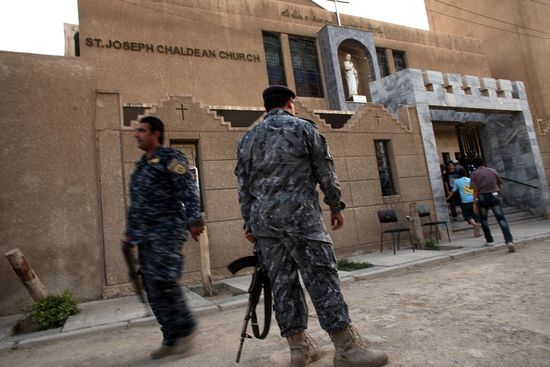
(Photo: An Iraqi police officers stands guard outside of St. Joseph Chaldean Church following a Sunday service on July 24, 2011 in Baghdad, Iraq. Forming one of the oldest Christian communities of the Middle East, Iraqi Christians have been targeted for attack since 2003, with numerous abductions, murders and threats for them to leave Iraq. Christians across the Middle East have been experiencing similar threats to their communities and businesses as the Arab Spring unleashes pent-up hostilities and economic uncertainty. By Spencer Platt/Getty Images.)
 The Dish