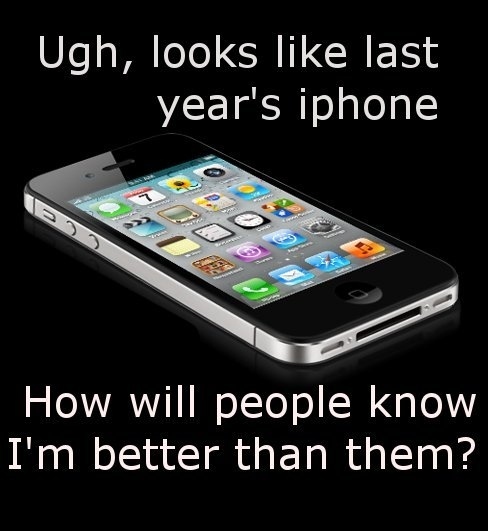
Sam Graham-Felsen traded in his iPhone for a "a ridiculously unsleek '90s-era Nokia." Why?:
When I had an iPhone, the Internet was no longer a destination; it was on me every day, like a piece of clothing I put on first thing in the morning. When I get tempted to return to that life, I ask myself: Do I really want the Internet to be something I feel naked without?
Sorry, but trading in your iPhone for a flip cell phone after you read Henry David Thoreau’s Walden—which you read on your iPhone—is really pretentious.
Ford Vox worries about doctors participating in protests:
What about the committed doctor who intends to remain in the profession but advocate for a change, perhaps one related to the practice of medicine or the needs of patients? Understand that public protests are a general venue open to all, but doctors can never expect to be nameless faces in the crowd. They are always subject to being singled out and having their participation analyzed for its relationship to medicine.
When Hollywood celebrities fly out to African refugee camps, or get themselves arrested in domestic protests, they lose their own narrative as well. They routinely insist they want the focus of attention to be on their cause, but their public identity as an actor or musician routinely proves too powerful for reporters to ignore: questions of motivation always follow. Were they seeking publicity? Were they trying to shape their own image by attaching their persona to a humanitarian cause? Doctors will similarly find their motivations questioned: the public, and the reporters who keep them informed, will always attempt to comprehend your actions in the context of the greater medical narrative.
Chris Christie vetoed a subsidy for "Jersey Shore." Robert Soave explains why such policies are so egregious:
The aim of the incentives is to create economic growth and jobs by encouraging new industries to move to a given state. But study after study has revealed the obvious: such programs merely take money from some businesses and give it to others. This weakens the taxpaying businesses just as much as it helps the studios. Hurting efficient, self-reliant industries in order to prop up artificial, subsidized ones does not grow a state’s economy in any meaningful way. In my home state of Michigan, entertainment studios can bill the state for a staggering 42% of their production costs.
A new report … from the Michigan Senate Fiscal Agency looked at that state's film tax credit program — the country's most generous — and found that even under the most optimistic assumptions, tax receipts driven by new economic activity barely offset 10% of the cost of awarding film tax credits. It estimates that the $125 million Michigan will spend on film credits in FY10-11 will generate just $13.5 million in new tax receipts, for a net fiscal cost of $111.5 million.
(Video: Trailer for "House of the Rising Sun," which the state of Michigan awarded $435,000. The film only took in $100,000 in DVD and Blu-Ray sales.)
Kenneth Rogoff foresees more "politically-induced volatility" as the global economy succumbs to pre-election political inertia:
In normal times, any dynamic that shut down the political business cycle might well be interpreted as a plus for longer-term stability and growth. But the risk of partisan political paralysis in the face of a potential euro crash is another matter. Imagine, for example, that US growth collapses so severely that once again a major financial company finds itself on the brink of bankruptcy. Will the Fed and the Treasury be able to prevent a full-scale panic and systemic collapse in a timely fashion? Perhaps, but pre-election paralysis might make the task even harder than it was in 2008, particularly thanks to Dodd-Frank legislation aimed at preventing bail-outs.
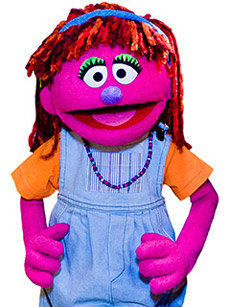
I’m curious to see what whose family is financially disadvantaged enough that they have trouble keeping food on the table. As much as very special episodes are annoying, this strikes me as a good idea. The prospect of not having enough to eat is really viscerally terrifying, especially if you’re young. But it’s important for kids (and adults as well) to understand how many Americans are hungry in what’s supposed to be a land of opportunity. More than 10 percent of Americans relied on food stamps for at least part of 2010. Trying to communicate the magnitude of that problem while spurring people to action (rather than scaring them so much they shut down) is a difficult task, but I hope this special can be an occasion for broader family conversations about poverty and the economy.
If the conservative party lacks a deep bench of promising leaders, the fault belongs first to its un-visionary leadership class (both in the party and in the think tanks and activist groups), but also with GOP voters, who think it’s adequate, even salutary, to keep doing what we did in the past, but hoping that it works this time.
Today on the Dish, Andrew mourned one of the best in American history and rejoiced as one of the worst bowed out. The GOP's erratic base resisted Romney as elites resigned themselves to him, a liberal issued confidence in his sobriety, and Latino voters fled (Jon Stewart's devastating take-down here). We examined the Herman Cain boomlet as he took the lead in some states, and the GOP's "black friend" doesn't appear to have any gay ones. Bachmann suggested that the president should be impeached, and aggregate spending on political ads matters more than messaging. In our video feature, Andrew celebrated his Americanism.
We lost confidence in the super committee's willingness to cut a deal, Bartlett exposed the notion of "regulatory uncertainty" as sheer political invention, and individual rights stimulate economic growth. Cheney should apologize to Obama and not the other way around, and Rumsfeld flopped in his first real interview. Roger Ailes refreshingly admitted the obvious, David Cameron made Andrew's conservative argument for gay marriage, and Russell Kirk envisioned a conservatism of "thought and imagination." A buttoned-down Wall Street occupier defended the movement as Wilkinson smiled upon it, and idealism surrounding divided government was crushed.
Foreign aid hit the chopping block, but our "fetishistic" funding of Israel remained sacrosanct, and Congress undermined the security of Israel by taking steps to punish the Palestinians in spite of Netanyahu. Military conscription waned, the army prepped a young veteran for homelessness, Russia and China had Assad's back in the UN, and we won't sweat China's economic slowdown.
Apple made an uncanny prediction about its new voice assistant feature 24 years ago. Employers snooped on our not-so-private lives, atheists really shouldn't take the Bible literally in their critiques, free sperm donors proliferated, and false confessions are easier to extract than you would think.
VFYW here, MHB here, FOTD here, and gay vintage military recruiting posters here.
Palin talks to Mark Levin here (her voice is the deeper one). Her explanation is, as usual, opaque. But the idea that this person is protecting her family – after putting them all on a reality show, after deploying an infant with Down Syndrome as a book-selling prop, after pushing her son into the military, after sending her elderly dad headfirst into a ravine for a reality TV shot, and after using another young daughter as a campaign press bouncer … well, it's as ludicrous as almost everything she says. I suspect she knows somewhere that the truth about her will eventually come out in full – as it has already in part, culminating with Joe McGinniss' devastating and exhaustively reported book, The Rogue. And the sheer craziness of this clinically disturbed person would bring it all crashing down. So she's bowing out. Call it cowardice; call it a rare example of sanity; call it a bizarre end to an even weirder game of hide and seek for the past few months. But the bottom line is: we can stop worrying about the threat she posed to this country. That is all I really cared about: the insane gamble with the world that John McCain foisted on us, with no vetting and no reason but desperation and cynicism.
It is hard to describe the relief of this awful person finally going away. (And who cares what she says if she has no "title"? There are RedState comment threads more coherent and persuasive than her deranged delusions.) All I can say now is that a) I was wrong about her intentions and b) I am so so so relieved to be wrong. She will now face the oblivion she deserves, and I sincerely hope I never have to write about this farce again.
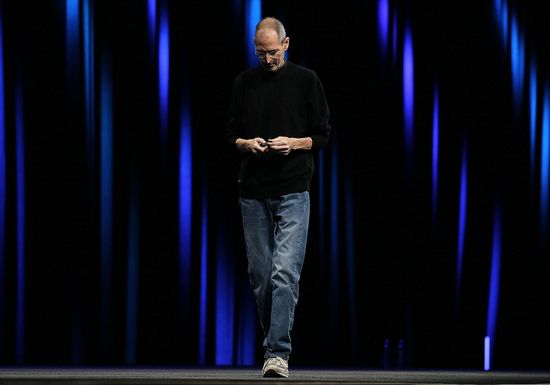
I was at the gym when the news broke, hence the late post. And, of course, the news was juxtaposed by the untimely death of Steve Jobs. Leonard Cohen once said of America that it was "the cradle of the best and the worst". Today, we lost one of the very best in American history, a reticent genius and entrepreneur, an inspiration for countless of us who has changed the very fabric of our lives. And we also saw the end of the road for one of the very worst: a nasty, callow, delusional, vicious know-nothing, brewed in resentment, and whose accomplishments could fit on a postage stamp.
It's a fitting comparison: achievement versus resentment, creativity versus narcissism, hope versus fear. I know which one will get the bigger headlines tomorrow. And there is some comfort in knowing it will pain her.
Four and a half years in the Army, including 16 months as an infantryman in eastern Afghanistan, provided plenty of skills with no legal application in the civilian world. It was, however, wonderful preparation for being homeless.
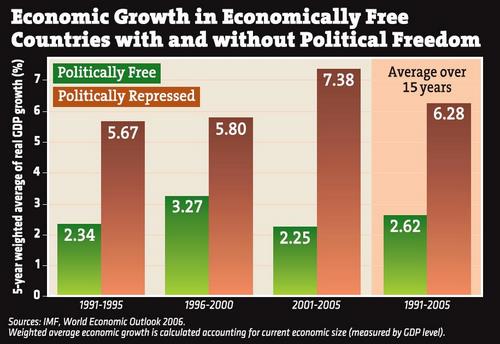
Bill Easterly explores the connection between individual rights and economic growth:
I think when you are doing research, you are confronted with a body of evidence where there are some questions where the honest answer is just, "I don't know." … How does that [uncertainty in top-down plans] point to individual rights? If the experts at the top don't know how to design the policy, you want a system that can handle that. You can handle that with a system in which everyone at the bottom has the right to solve their own problems, with their own knowledge.
People do know a lot about their own problems at their own level. They can give you feedback on how you're doing, if you are trying to solve their problems from the top, from government. In a democracy, you give feedback on how well, or how badly, the government is doing. So individual rights is also a way to mobilize all the knowledge in society that we need to make the economy work. It's the individual that has the particular knowledge so that they know how to run their factory, to employ people, to be a worker themselves, to start new businesses.
 The Dish