George Will unloads on Mitt Romney's congenital inability to stand firm:
Last week in Ohio, Romney straddled the issue of the ballot initiative by which liberals and unions hope to repeal the law that Republican Gov. John Kasich got enacted to limit public employees’ collective bargaining rights. Kasich, like Wisconsin Gov. Scott Walker, is under siege. Romney was asked, at a Republican phone bank rallying support for Kasich’s measure, to oppose repeal of it and to endorse another measure exempting Ohioans from Obamacare’s insurance mandate (a cousin of Romneycare’s Massachusetts mandate). He refused.
His campaign called his refusal principled: “Citizens of states should be able to make decisions . . . on their own.” Got it? People cannot make “their own” decisions if Romney expresses an opinion. His flinch from leadership looks ludicrous after his endorsement three months ago of a right-to-work bill that the New Hampshire legislature was considering. So, the rule in New England expires across the Appalachian Mountains?
A day after refusing to oppose repeal of Kasich’s measure, Romney waffled about his straddle, saying he opposed repeal “110 percent.”
And so one of the leading conservative voices basically issues a vote of no confidence in the probable Republican nominee, while not endorsing anyone else. Despair? Or is there yet another option? A convention challenge? Who knows? Except the GOP is sleepwalking to likely defeat in a year they should have no problems.
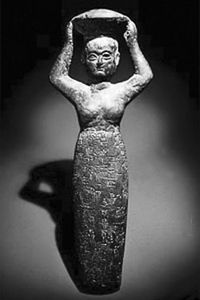 What’s believed to be the world’s oldest written recipe is for beer, and it celebrates a female brewmaster. Four-thousand-year-old Mesopotamian clay tablets describe the brewing process in a hymn to Ninkasi, the Sumerian goddess of beer. From ancient Sumeria through medieval Europe, women ruled the kettles. Beer can be described as liquid bread, so there was nothing unusual about women using their baking ingredients to brew in home kitchens. It wasn’t until entrepreneurial women began to sell their beer that men really moved in, restricting the creation and sale of beer to powerful male-only guilds.
 The Dish