Neocon Wagon-Circling Watch

Jackson Diehl – yet again – defends the Iraq War:

Iraq, however, looks a lot like what Syria, and much of the rest of the Arab Middle East, might hope to be. Its vicious dictator and his family are gone, as is the rule by a sectarian minority that required perpetual repression. The quasi-civil war that raged five years ago is dormant, and Iraq’s multiple sects manage their differences through democratic votes and sometimes excruciating but workable negotiations. Though spectacular attacks still win headlines, fewer people have died violently this year in Iraq than in Mexico — or Syria. Just as significantly, Iraq remains an ally of the United States, an enemy of al-Qaeda and a force for relative good in the Middle East. It is buying $12 billion in U.S. weapons and has requested that an American training force remain in the country next year. It recently helped get two U.S. citizens out of prison in Iran. All of this happened because the United States invaded the country.


The Drone’s Achilles Heel?

Noah Shachtman gets the scoop on a mysterious new threat:

A computer virus has infected the cockpits of America’s Predator and Reaper drones, logging pilots’ every keystroke as they remotely fly missions over Afghanistan and other warzones. …

The virus, first detected nearly two weeks ago by the military’s Host-Based Security System, has not prevented pilots at Creech Air Force Base in Nevada from flying their missions overseas. Nor have there been any confirmed incidents of classified information being lost or sent to an outside source. But the virus has resisted multiple efforts to remove it from Creech’s computers, network security specialists say. And the infection underscores the ongoing security risks in what has become the U.S. military’s most important weapons system.

Marcus J. Ranum tries to draw lessons from the incident.

Gay In Small-Town USA

Largest

New numbers from the Census have accounted for August's reporting errors (many people marked the wrong sex for their spouse). There are now 646,464 self-reported same-sex couples in the US, down from the 901,997:

Provincetown, Massachusetts, still ranks highest, with about 148 same-sex households per 1,000, or 14.8 percent of households. Wilton Manors, Florida, has 125 same-sex households per 1,000, or 12.5 percent, and Palm Springs, California, has 107 same-sex households per 1,000, or 10.7 percent. … Cities with populations under 100,000 tend to have much higher rates than larger cities.

Notice how the Northeast seems the most advanced – and the region most supportive of marriage rights.

The Famous Poster That Never Was

"Keep Calm And Carry On" was one of three similar posters produced in 1939, but the first two were so unpopular that Keep Calm never made it into circulation. Maria Bustillos tells the story of its recent rise to fame: in 2000, Stuart Manley, the owner of Barter Books in Northumberland, found a folded poster at the bottom of a box of books he had purchased at auction:

Mary Manley, Stuart's wife and partner in the shop, took a liking to the poster. It was 6a00d83451c45669e201543607669b970c-550wi framed and displayed behind the till. Right away people started trying to buy it off them: Not For Sale, they were told. But the demand wore the Manleys down, and eventually they ordered 500 reproductions through a local print shop. This was in 2001. … Stuart Manley could quite easily have filed for trademark protection back then, but he didn't. And when other businesses began selling Keep Calm products, mugs and beer mats and mouse pads and whatnot, he didn't go after any of them, though he did ask to be credited for his discovery by the many manufacturers who later made use of it.
The Overlap Between Bankers And Painters

Both sell their wares for exorbitant prices. The artist Gerhard Richter, who has sold works for over $10 million apiece at auction, isn't afraid to point it out:

It’s just as absurd as the banking crisis … It’s impossible to understand and it’s daft.

Felix Salmon elaborates:

One thing that bankers and painters have in common is that their services are Veblen-like: the more expensive they become, the more demand there is for what they do. Someone like Adam Lindemann who would evince no interest in an artwork priced at $500 can suddenly become very eager when it’s $500,000. And the phrase "reassuringly expensive" might have been designed to reflect the pricing strategies of banks looking to provide M&A advice to CEOs.

Yglesias Award Nominee

"In my years as an evangelical conservative lawyer and activist, I have learned (and lived) the painful reality that we evangelicals are all too often no better – and sometimes much worse – than the very people we seek to convert. If God’s strength is truly made perfect in weakness, then we surely give God many occasions to show his power. The gracious gift of knowledge of God and relationship with Him should fill us with humility – not arrogance. In short, self-identification as evangelical should be irrelevant in presidential politics – neither an asset nor a liability. When voting for president, we should judge candidates by their competence, character, and ideas," – David French.

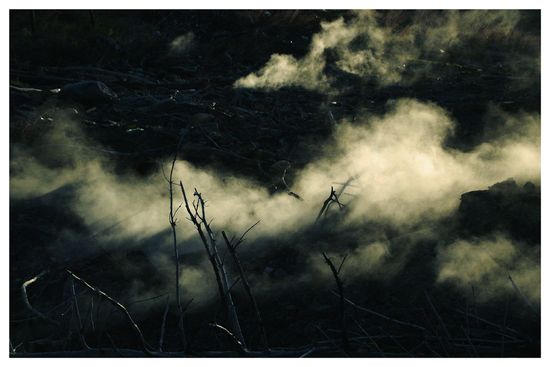
Documenting A Deserted Place

137918667_b16a193f45_o
The town of Centralia, PA has been on fire for almost 50 years:

The mines under the town—a vast network designed to tap the veins of purplish anthracite coal that spread weblike throughout the county—have been burning since 1962. … The town grew so warm that some residents no longer needed to turn on their basement hot-water heaters. Toxic plumes erupted, tree roots turned to ash, vegetables roasted on their stalks.

The earth became unstable, and yawning holes opened into underground pits without warning: in 1981, twelve-year-old Todd Domboski fell into a sulfurous 150-foot-deep maw that appeared suddenly in his grandmother’s backyard, narrowly escaping incineration by grabbing onto a tree root. Efforts to stop the flames—clay seals to cut off oxygen, slurry pumped into the honeycombed caverns—proved useless. In the eighties, the federal government began relocating the town’s remaining population, razing their homes and shutting down a segment of the highway that had erupted. The fire may burn for another 250 years, encompassing 3,700 acres, before it runs out of fuel.

The town has become an apt metaphor for writers and artists across the country. This American Life visited Centralia years ago.

(Photo of "Noxium Fumage" by Flickr user eqqman)

Hitchhiking Reconsidered

Economically, it makes sense:

If you care even a little bit about transportation – about the cost, the growing congestion and the risk of accident, the carbon emissions from all those cars on the road – then consider this very sobering statistic: The average car commuting to and from work in the U.S. today rides around with 80 percent of its passenger capacity empty. If our auto fleet were a bus or train fleet, it’d be considered a massive failure.

Emily Badger last spring reported on what DC is doing to solve the problem.