The Hazardous Moralization Of Climate Change

It can shut down important policy debate:

The moralisation approach undermines itself since it frames climate change narrowly in terms of righteousness. Inevitably deliberation about action gets bogged down in an interminable blame-game about what justice requires – who had their industrial revolution first, etc. Furthermore, the moral duties of different actors do not all point the same way: poor country governments have a clear and over-riding moral duty to help their citizens achieve the high quality of life which the West takes for granted, and which is inevitably energy (carbon) intensive. And then there is the practical economics: the world still has lots of coal, especially in the poor world, that can produce electricity at 3c per kwh (which renewables cannot possibly compete with without radical technological breakthroughs, even with the strongest moral rhetoric). No comprehensive global political solution to greenhouse gases is possible. We need to go back and think again.

As The Doors Close

Danielle Gelfand remembers her father, who committed suicide near Yom Kippur:

In Jewish tradition, each person’s fate is written for the coming year on Rosh Hashana and sealed on Yom Kippur after the “Days of Awe,” the 10-day period of repentance, prayer and requests for a good new year. I had always been spooked by the final Yom Kippur service, Ne’ilah — meaning, in Hebrew, “as the doors close” or “as the gates of heaven close.” I remembered the ark that held the Torah in our synagogue when I was a kid, how it was kept open during the prayer, and how serious it felt when the rabbi warned us that it was time for our final prayers, before the ark closed and sealed our fates for the following year. What happens if you are in a terribly sad place when the gates of heaven close?

The Philosophy Of Doctor Who

Massimo Pigliucci reviews a collection of essays, Doctor Who and Philosophy: Bigger On The Inside. He tackles one essay on the Doctor's regeneration:

If physical continuity, personality, and not even memory are necessary to speak of someone being a particular person, what on earth grounds the very idea of personhood? One possibility, not explored in Hand’s essay (but discussed in several of the others in the same collection) is that personal identity requires spatiotemporal continuity. In this sense, we all are four dimensional “worms” extending in space-time, accounting for the fact that I am the same person I was as a child, even though all the atoms in my body are different, my personality has somewhat changed, and I don’t recall much of that time of my life. That being the case, the Doctor is now in trouble: because he can jump from one space-time coordinate to another, he is not a continuous “worm,” but rather a set of unconnected fragments scattered around space-time. Does that mean that it is not regeneration, but rather time travel, that is logically incoherent?

Have We Reached The End Of Progress?

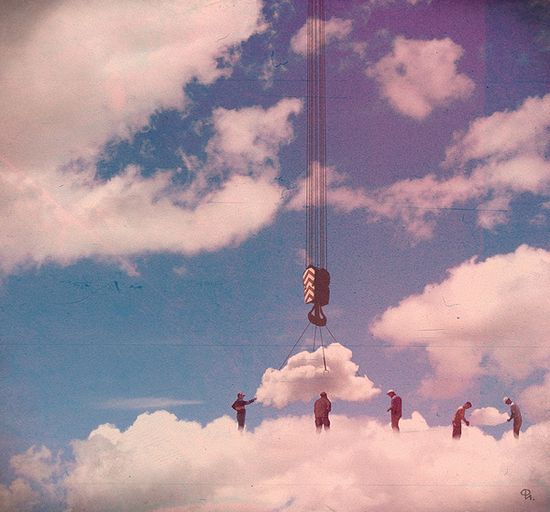
Igumnov-3

Peter Thiel thinks so:

The technology slowdown threatens not just our financial markets, but the entire modern political order, which is predicated on easy and relentless growth. The give-and-take of Western democracies depends on the idea that we can craft political solutions that enable most people to win most of the time. But in a world without growth, we can expect a loser for every winner. Many will suspect that the winners are involved in some sort of racket, so we can expect an increasingly nasty edge to our politics. We may be witnessing the beginnings of such a zero-sum system in politics in the U.S. and Western Europe, as the risks shift from winning less to losing more, and as our leaders desperately cast about for macroeconomic solutions to problems that have not been primarily about economics for a long time.

Declan McCullagh recently interviewed Thiel on a range of topics:

Is improving agriculture a subject that's fit for technology? Is that a technological area? If you were to look at the Middle East issues, you could give an interpretation that's bullish on technology. It's the Arab spring, a happy byproduct of the information age.

Or you could say we have a political green revolution that is the result of the failure of the true green revolution, which is agriculture. As the true green revolution has failed, we have a lot of people in that part of the world, a lot of desperate people who have become more hungry than scared. And that's basically been triggered by food price increases on the order of 30 to 50 percent in the last year. It's really not a story of technological success but technological failure.

(Image: by Philipp Igumnov via Colossal)

How Science Reveals God’s World

Fred Clark explains:

To all the many practical and pleasurable reasons anyone has to explore the sciences and to be excited and enthralled by science, evangelical Christians can add one more: It’s God’s world, God’s cosmos. God made it. God is redeeming it. God loves it. Anyone who loves God ought to love the world as well — and to love learning about the world. We Christians ought to be famous for our love and devotion to the best, deepest, broadest and most ambitious science. We ought to be known for the same half-goofy, starry-eyed wonderment that the late Carl Sagan showed toward science. But that’s not the case. Perversely, the opposite is true.

Alex Knapp concurs:

Understanding [the] distinction between these truths of mythos and logos points the way towards realizing the compatibility of scientific and religious thought. We need them both. They don’t have to be enemies, as they represent different aspects of the human search for truth. You don’t have to believe there’s a God to see wisdom in the Bible, or believe in Brahman to be moved by the poetry of the Vedas. Likewise, you don’t have to give up your belief in God to understand the wonder and complexity of evolution, or delight in the counter-intuitive math of quantum mechanics.

“A Church Of Dissent”

That's Matt Stoller's description of Occupy Wall Street:

What these people are doing is building, for lack of a better word, a church of dissent. It’s not a march, though marches are spinning off of the campground. It’s not even a protest, really. It is a group of people, gathered together, to create a public space seeking meaning in their culture. They are asserting, together, to each other and to themselves, “we matter”.

Janine Giordano Drake nods.

Mapping Human Nature

Kidnap

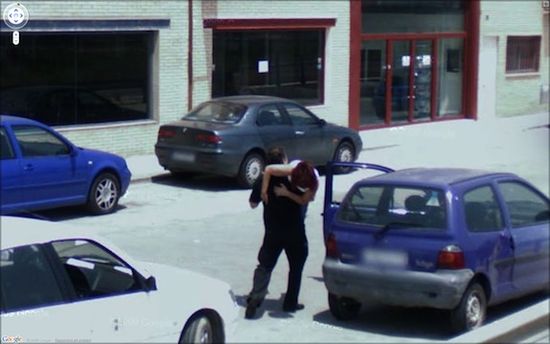
Avi Steinberg compares how Google's mapmaking camera is "implicated in the messy world it charts and, worse, how it implicates us":

A person seeking directions to Starbucks generally does not want to be told to “take a left at the homeless child.” To truly use the country as its own map, it turns out, involves weaving discomfiting images of the country directly into the fabric of the map. The result is not a tidy diagram of the world abstracted onto a blank slab—as nearly all maps since Mesopotamia have been—but rather a patchwork that chronicles, among many other things, the troubling process by which the map was composed.

Why Don’t Gay-Friendly Churches Advertise?

Brian Kirk asks:

How many of our moderate and progressive mainline churches are completely welcoming of GLBT persons and yet offer no hint of this on their website or print material? "We are welcoming of all," I've heard some say, "but does that mean we need to put a rainbow flag on our church sign?" I think for the sake of children like Jamey Rodenmeyer, Tyler Clementi, Seth Walsh, Raymond Chase, and other GLBT teens who have taken their lives in the last year the answer has to be "Yes."

Hemant Mehta isn't holding his breath.

A Saint For Our Times

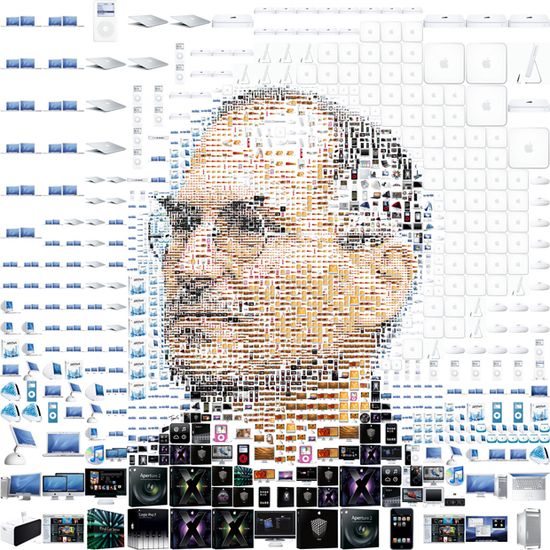
Steve-jobs-rip-mosaic-620

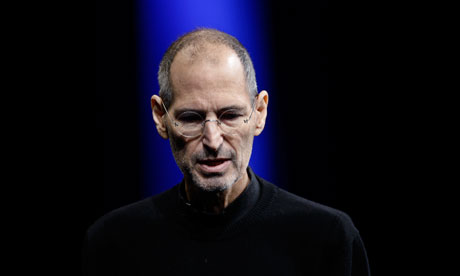
Mark Vernon annoints Steve Jobs:

The media imagery of the late Steve Jobs carries the air of the saint. He's pictured against dark backgrounds, as if from another place or time. He is shown in his characteristic black tops that look monastic, speaking of a piety and commitment to his purpose. Often a ray of light or a halo is framed around his head. He always was thin, like an ascetic. … I wonder whether the high adulation, even sanctification, is at least in part because we live in an age that worships the future, and he was instrumental in achieving what has actually become a relatively rare feat: delivering a vision of the future into our hands.