The Matrix:
Everything Is A Remix: THE MATRIX from robgwilson.com on Vimeo.
The Matrix:
Everything Is A Remix: THE MATRIX from robgwilson.com on Vimeo.
Howard Gleckman thinks the Democrats' Millionaire's Tax is political theater:
Democrats now insist that somebody making $999,000 a year is in the struggling middle-class and needs to be protected from tax increases. It was ridiculous enough when President Obama decided that $200,000 ($250,000 for couples) defined middle class. It was even stranger when GOP presidential hopeful Mitt Romney adopted that number. Median household income in the U.S. is, um, $60,000. Sorry, but if we are going to get serious about the deficit, people making $200,000 (or even $100,000) have got to help out.
A reader makes related points:
First, on the semantics of it, I don't know when, exactly, a "millionaire" went from someone with a net worth of a million dollars to someone with an annual taxable income of a million dollars. The latter suggests a net worth of more like $10-20 million. I don't think anyone believes a "billionaire" is someone whose annual income is a billion dollars, do they?
Secondly, by framing the discussion as a "millionaire's tax" and yet limiting it to these extraordinarily wealthy individuals, I worry that we're setting the (income) bar too high in relation to inevitable upcoming debates on the sun-setting Bush tax cuts. If we were to impose this "millionaire's" tax now, I'm guessing that in that upcoming debate, the "millionaire" definition would suddenly be deflated back to those with a million or so in net worth, and incomes in the, say, $200,000+ range. But then we'd find great resistance to increasing the tax on these impoverished folks, since we "already imposed a millionaire's tax."
On the plus side, however, I think we can reliably count on the GOP members of Congress to block any additional taxation of even those who earn more than a million dollars a year, which will make good fodder for the 2012 campaign.
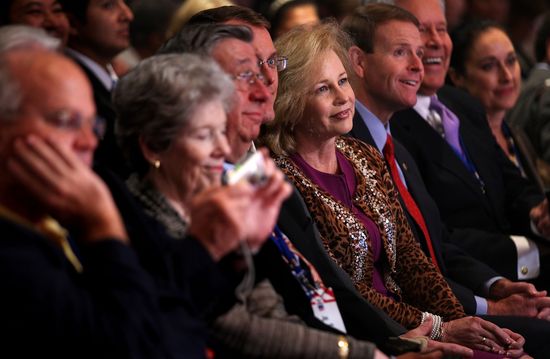
Well it's on now. The pastor, Robert Jeffress, who introduced Rick Perry at the Values Voters Summit, has just opened a can of evangelical whup-ass on Mitt Romney. Here's the money quote:
Jeffress described Romney's Mormon faith as a “cult,” and said evangelicals had only one real option in the 2012 primaries. Continue Reading “That is a mainstream view, that Mormonism is a cult,” Jeffress told reporters here. “Every true, born again follower of Christ ought to embrace a Christian over a non-Christian.” Asked by POLITICO if he believed Romney is a Christian, Jeffress answered: “No.”
And I just heard Tony Perkins on CNN refuse to deny that Mormonism is a cult. I have to say the crudeness of this attack, even if Perry had no idea a surrogate would convey this message, is striking. It appears the Perry camp signed off on Jeffress two weeks ahead of time and Jeffress has said this kind of thing before – which makes this even more gob-smacking.
If you wonder why Romney cannot quite seal the deal, Pastor Jeffress has part of the answer. If you turn a political party into a church, as the GOP essentially now is, sectarianism will eventually emerge. In all its ugly, bigoted, negative manifestations. Perry is showing he can play a card from the bottom of the deck when he's up against it. Which is not a good sign for next year.
(Photo: Anita Thigpen (C) wife of Republican presidential candidate and incumbent Texas Gov. Rick Perry, listens as Perry addresses the Values Voter Summit 2011, hosted by Family Research Council Action (FRC Action), October 7, 2011 in Washington, DC. All of the major Republican presidential candidates are expected to speak in the annual two-day event. By Alex Wong/Getty Images.)

A horse waits in its stable to be inspected by potential buyers at the Tattersalls Bloodstock Auctioneers on October 6, 2011 in Newmarket, England. Tattersalls was founded in 1766 and is the oldest and largest Bloodstock Auctioneers in Europe. The October Yearling Sale, the biggest sale of the year, can produce bids of up to a million pounds for a horse. By Matthew Lloyd/Getty Images.
Steve Jobs advocated never settling for a job you don't love. Robin Hanson poked holes in this mantra. Will Wilkinson sides with Hanson:
As an undergrad I was an art major. Frankly, few of my fellow art majors were talented enough to make a living at it, even after four (or more!) years of training. Sure they loved art, but in the immortal words of Tina Turner, "What's love got to do with it?" "Find what you love and never settle for less" is an excellent recipe for frustration and poverty. "Reconcile yourself to the limits of your talent and temperament and find the most satisfactory compromise between what you love to do and what you need to do feed your children" is rather less stirring, but it's much better advice.
Why he might be:
[Rick Perry is] a career politician who, as far as I can tell, is as wildly ambitious as any of them. He wants to be President of the United States not because he sobered up one day and decided to go into his dad's business, but because as a career pol it's the top of his profession. That's good; he's a lot less likely than Bush was to give up on the job, or not care what voters thing. He — like Romney — appears to have little problem adjusting his positions in order to secure political goals. I like that too; true believers worry me a lot, even if I agree with their policy positions.

Hormones influence it:
According to a study just published in the journal Psychological Science, women are significantly better at judging male sexual orientation as they approach peak fertility. A research team led by University of Toronto psychologist Nicholas Rule also found romantic thoughts heighten women’s ability to discriminate between gay and straight men. Rule’s previous research has found men and women are surprisingly good at judging sexual orientation, particularly when we go with our initial instincts about a person. He also found gay men tend to be more accurate in their judgment than their straight counterparts.
Sanjay Srivastava downplayed gaydar's accuracy awhile back:
The reported accuracy rates in the articles … say that people guess correctly about 65% of the time. Better than chance, but nowhere near perfect. In fact, you can go a step further and get Bayesian on the problem. Let’s assume that the 65% accuracy rate is symmetric — that guessers are just as good at correctly identifying gays/lesbians as they are in identifying straight people. Let’s also assume that 5% of people are actually gay/lesbian. From those numbers, a quick calculation tells us that for a randomly-selected member of the population, if your gaydar says “GAY” there is a 9% chance that you are right. Eerily accurate? Not so much. If you rely too much on your gaydar, you are going to make a lot of dumb mistakes.
Zvika Krieger is troubled by the campaign on the American right to defund the UN if Palestinian statehood goes through:
There is a legitimate debate as to the efficacy of the United Nations. But these critiques — couched in Israel's interest — present opposition to UN engagement as a measure of pro-Israel bono fides. The problem is that Israel itself is against many of these proposals made on its behalf. … Israel continually asks the U.S. to remain engaged at the UN — and often to ramp up its engagement.
… These campaigns in the name of Israel to disengage from the UN follow a disturbing trend: Advocacy for policies by "pro-Israel" actors that actually run counter to Israel's interests. (Another example: recent calls to cut off aid to the Palestinians, when the Israeli government itself released a report calling for the international community to continue aid to the Palestinians.) Being seen as "pro-Israel" in America seems to have increasingly little to do with actually supporting Israel.
English is hard:
A reader writes:
The article doesn't take into consideration the outreach of the Apple product line beyond the jobs he created directly. The comparison to Ford in the early 20th century isn't completely accurate. Back then, you bought a car and that was about it. Apple (and any computer hardware manufacturer) produces a line of iProducts that spawned a whole industry of specialized developers, marketers, designers and manufacturing companies that create things for Apple's products. Software, peripherals, accessories, services. Apple's innovations caused those job markets to skyrocket. Pre-iPhone and iPad, smartphone and tablet app developers were few and far between. Now there are entire companies based solely on building software for their mobile devices.
 The Dish