Stuart Schoffmann gives a primer on the relationship between religion, society, and state:
[S]top any bareheaded Jew on a Tel Aviv beach and ask them if there’s religious coercion in their country, and the knee-jerk response will be yes.
For many Israelis, "religious coercion" doesn’t mean forced synagogue attendance, but the evasion of military duty by tens of thousands of young ultra-Orthodox men; the harassment of Reform rabbis and citizens who drive on Shabbat; the overflowing of public money to yeshivas and to ultra-Orthodox families that don’t pay taxes; the premature ending of Daylight Savings Time before the High Holidays to facilitate penitential ritual; and the hurling of dirty diapers at women wearing prayer shawls at the Western Wall, a spiritual magnet for all Jews that has been turned, with the complicity of governmental authorities, into an ultra-Orthodox synagogue. As for "theocratic tendencies," we have the hegemony of the ultra-Orthodox-dominated, state-funded Chief Rabbinate over marriage, divorce, and conversion, protected by the ultra-Orthodox parliamentarians in the Knesset.
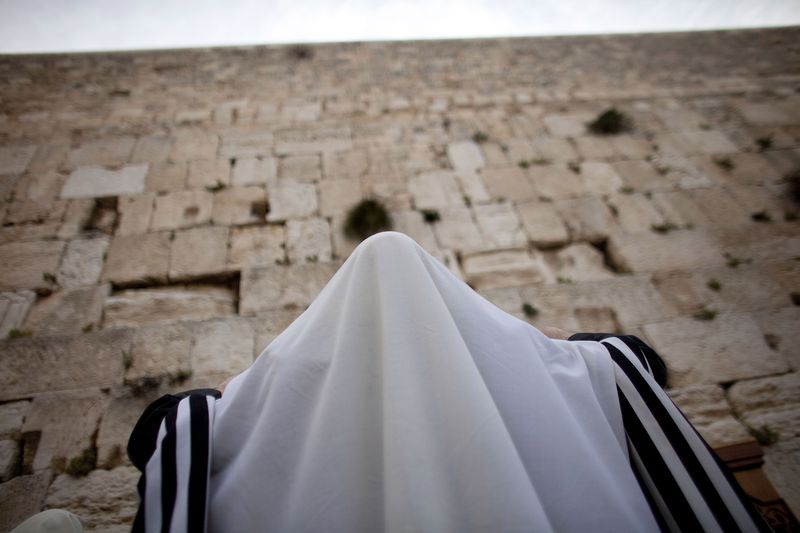
(Photo: A Jewish man wrapped with prayer shawl attends the Annual Cohanim prayer, or Priest's blessing, for the Pesach [Passover] holiday, on April 21, 2011. at the Western Wall in Jerusalem's old city. Thousands of Jews make the pilgrimage to Jerusalem during Pesach, which commemorates the Israelites' exodus from Egypt some 3,500 years ago. By Uriel Sinai/Getty Images.)
 The Dish