Michael Hanna explains why he's so worried about Egypt's haphazard efforts to confront the abuses of the Mubarak regime:
With Egypt’s politics in flux, a return to authoritarianism is among the possibilities for the country. Grappling with the past is as much, in this regard, about preventing the return of dictatorship as it is about ending impunity. While an excessive preoccupation with justice and accountability could distort the focus of transition, without a proper and unimpeachable accounting of repression and authoritarian rule, the process of constructing a democratic culture and respect for the rule of law will be compromised from its inception.
Mohamed Fadel Fahmy interviews the former dictator's lawyer. After reading a document intended to guide the drafting of Egypt's new constitution, Issandr El Amrani fears that the Egyptian army won't give up power:
It's hugely telling of how the military seems to conceive the transfer of power back to civilian rule: they're not going to disband themselves, but are turning themselves into a fourth power alongside, not beneath, the executive branch.
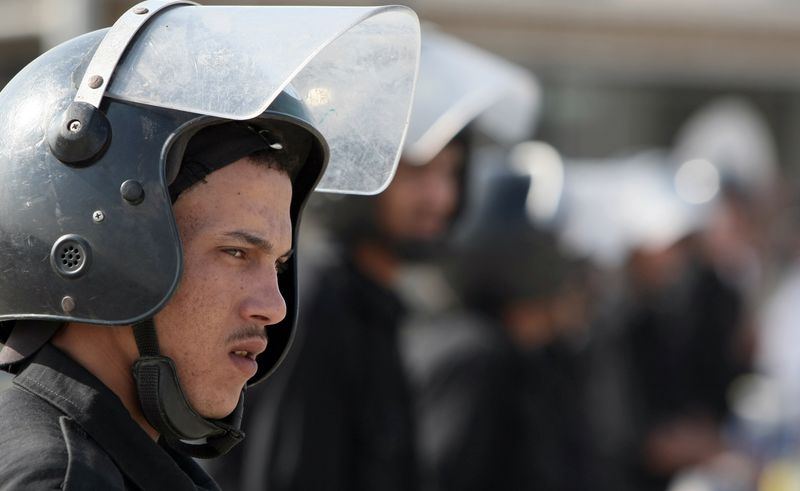
(Photo: Egyptians police stand guard as supporters of former President Hosni Mubarak gather outside the courts set up at the Police Academy on October 30, 2011 where his trial was supposed to resume. The trial of the former President for corruption and murder has been postponed to December 28, pending a decision on a possible replacement of the judge. By Mahmud Hams/AFP/Getty Images.)
 The Dish