John Horgan wonders:
Edward O. Wilson gave it a shot. Wilson suggested that natural selection might have instilled in us a “biophilia,” or reverence for nature, that benefits both us and those creatures with which we enjoy mutually beneficial relationships. But why do we respond to so many things—butterflies, starfish, rainbows, sunsets—from which we extract no tangible, utilitarian benefit?
My thoughts earlier this week here. In a recent BloggingHeads, Horgan talks with David Rothenberg about his theory of "aesthetic evolution." Rothenberg explained the concept back in April:
[H]ow come one bird sings, “Beebooo” and another sings this long complicated song with all these different parts? You can say each species has its own way of doing of things, but there is no real necessity for one bird to sing a twenty-minute song; its life is not different. … That got me thinking that evolution really isn’t survival of the fittest, when it comes to these things, it is more like survival of the interesting, survival of the beautiful, survival of the weird, cool stuff that managed to evolve.
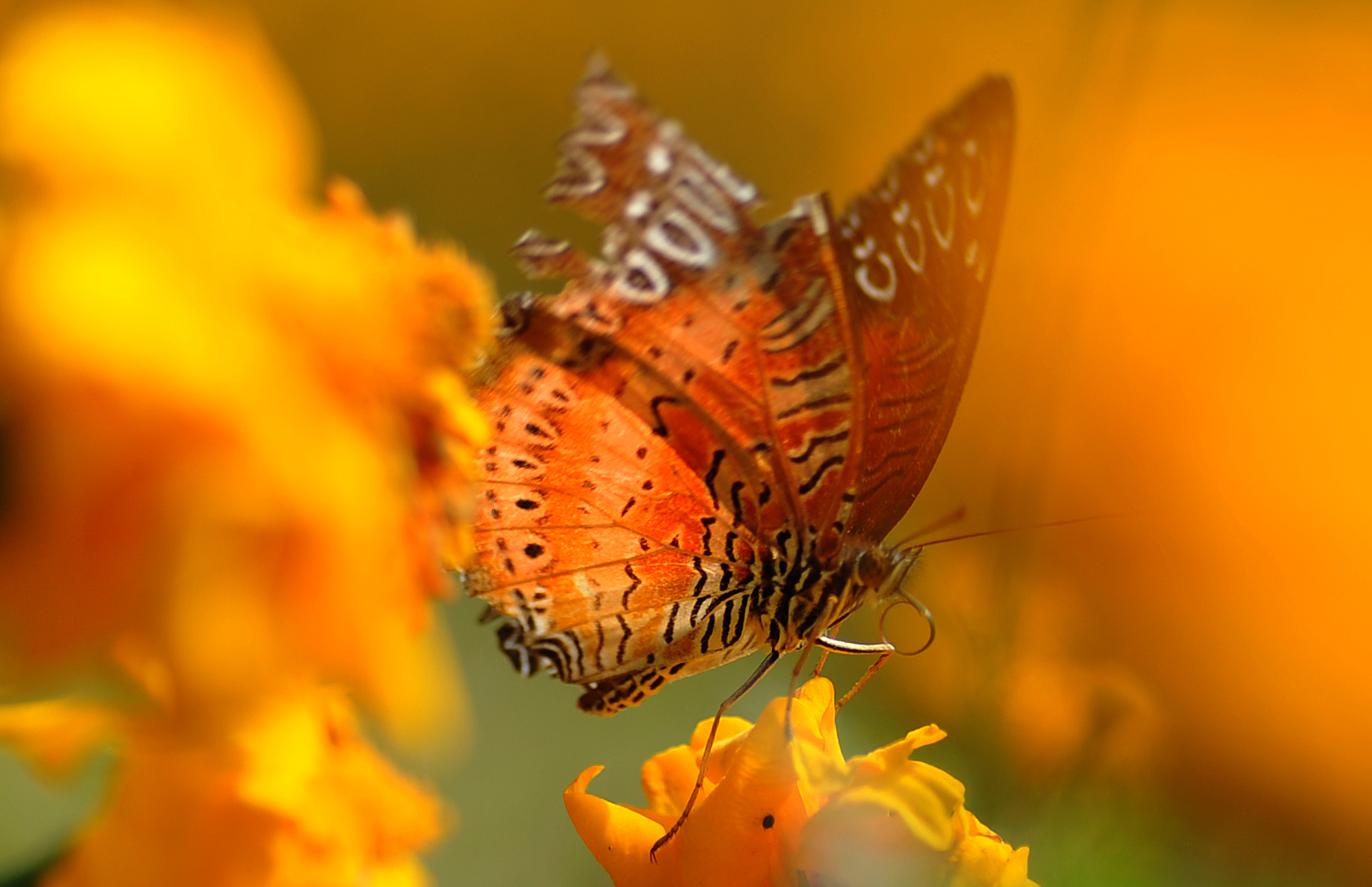
(Photo: A butterfly lands on a marigold flower at the Godavari Botanical garden on the outskirts of Kathmandu on November 15, 2011. By Prakash Mathema/AFP/Getty Images)
 The Dish