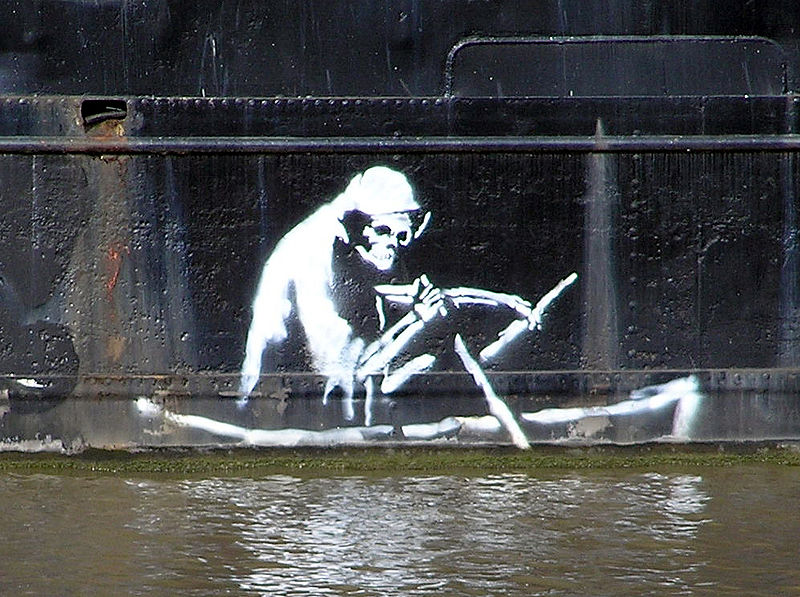
Sally Aldee fell in the Thames and gashed her leg, a prospect that horrified every medical professional she met. She subsequently traced the river's pollution from Victorian times to today:
The river – which by the way was both the source of the city’s drinking water and the repository for all its poop – became choleric and pestilent. In the summer of 1858, the fumes became so bad they got a name. The "Great Stink" forced members of Parliament to write the legislation that gave the all-clear to Joseph Bazalgette, London’s chief engineer of public works, to build the two massive interceptor sewers that catch London’s sewage and run-off before they’re belched into the Thames. To this day, these brick and mortar Victorian artifacts comprise the backbone of London’s sewer system. …
The problem was that Bazalgette wasn’t thinking big enough. His diversion project was created for a city of 2.5 million – and even that number was almost unthinkable at the time. In 2011 , however, London’s population has swelled to 8 million, and the infrastructure is simply no longer up to the task. About 50 times a year, the sewers overflow and send enough sewage into the Thames to fill up a sporting arena once a month.
(Photo of a Banksy work by Adrian Pingstone)
 The Dish