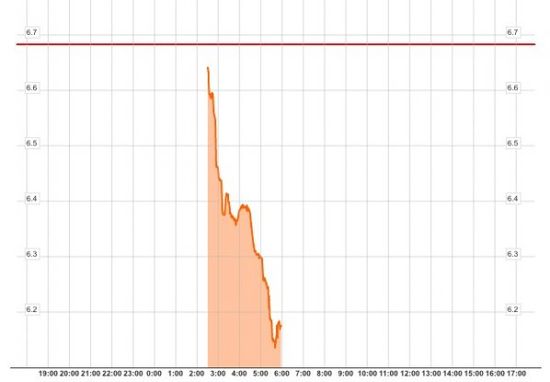
 The chart above is of Italian bond yields, which have fallen sharply after appointed prime minister Mario Monti unveiled $30 billion of spending cuts. Meanwhile, Merkozy has called for a new EU Treaty, which, so far, seems all German discipline and no real leap to fiscal union:
• Automatic sanctions for breaching deficit ceilings of 3pc of GDP. • Introduction of qualified majority – 85pc – for reforms. • Monthly meeting of eurozone leaders until crisis ends. Focus to be on growth in Europe. • Eurozone governments must work towards balanced budgets. • Speed up implementation of European Stability Mechanism to 2012. • ECB’s role to remain unchanged – will not be lender of last resort. • No eurobonds.
It doesn’t sound radical enough so far as I can see. Why? Because the root cause is the imbalance between North and South, and merely disciplining the South doesn’t help that. If anything, it perpetuates it:
Historians can only smile, or weep. Germany is unwittingly doing to Spain exactly what America did to Weimar Germany after flooding the country with cheap capital in the late 1920s. When Wall Street cut off funds and ended the credit boom, Germany collapsed. There was a chorus of self-righteous pedants in Hooverite America who turned this into a question of cultural ethics, reproaching the Germans for lack of discipline and failing to work hard enough. Sound familiar?
And where’s the backstop without eurobonds or the ECB? Evans Pritchard again:
No doubt there will be a “bazooka” of sorts, a mish-mash of big talk on the EFSF bail-out fund, with IMF flanking operations, and accompanying ECB action to keep banks afloat for longer, all cloaked in a fiscal union that isn’t what it seems.
Mandarins will slip the figure €1 trillion somewhere into the communiqué to nourish a hungry media. In other words, we may just have to hunker down yet again and wait for Germany to blink at last, or detonate the fuse.
Michael White in the Guardian:
The issues to be resolved between here and Friday are highly technical and it is clear that the heavyweight policymakers and analysts do not agree on what should best be done. A big enough bailout to get Europe moving again is full of risk – not least that indisciplined countries will become indisciplined again – but the austerity model is beyond risk: it is certain to impoverish most of us, though not the central bankers.
 The Dish