Daniel Serwer thinks it's the rule of law:
Islamists think Sharia should be the basis of law in Muslim countries, as in fact it nominally was even under supposedly secular autocrats. The question is one of degree and interpretation. If Europe and the United States want the 2011 Arab spring to result in democratic regimes that respect human rights and see eye to eye with the West, they are going to need to engage seriously on rule of law issues. This would mean helping the judiciaries of these countries to rid themselves of corruption and enabling them to establish the kind of independence from executive authority and moderate interpretations of Sharia that might lead to legitimacy in the eyes of the people.
James Traub points to the Islamist relationship with current military/monarchical rulers:
The most pressing question is not about their intentions, pious or otherwise, but about whether they will be permitted to rule at all. In Tunisia, where there is no entrenched rival force, the answer is almost certainly yes. In Morocco, King Mohammed VI promulgated a new constitution to give some authority to the feeble parliament, but he has kept virtually all real power for himself. Last week's election aroused nothing like the enthusiasm of Tunisia's or Egypt's, with turnout a relatively modest 45 percent and large numbers of voters turning in intentionally spoiled ballots. In Egypt, of course, the interim military government, known as the Supreme Council of the Armed Forces (SCAF), has said that it plans to rule until a president is elected, apparently in mid-2012; but Egyptians are increasingly worried that the SCAF will not withdraw even then.
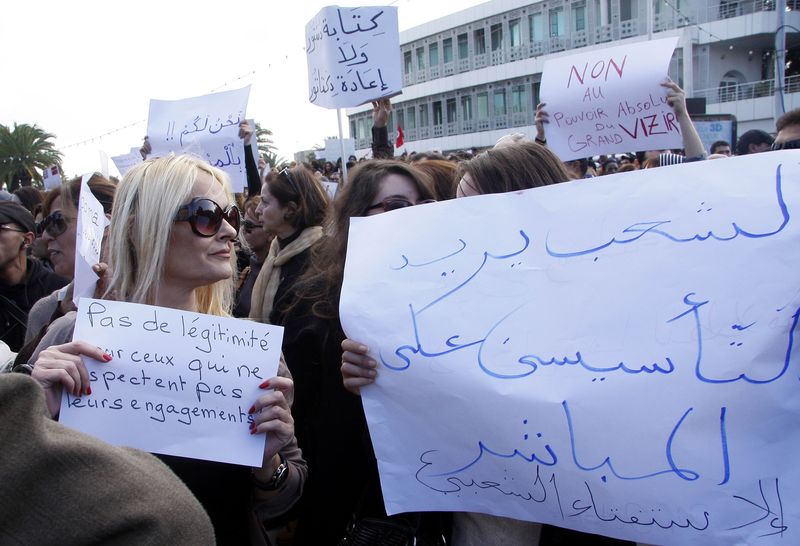
(Photo: People demonstrate outside the Tunisian assembly during the first week of session of the elected constituent assembly in Tunis on November 30, 2011 demanding that Tunisia's Islamist movement Ennahdha respect the rights of women. Tunisia's three main parties formalised a power-sharing agreement following October 23 elections for the constituent assembly with Ennahda party leader Hamadi Jebali as prime minister. Placard on right reads ' Debates should be transmitted live on television(s).' By Salah Habibi/AFP/Getty Images.)
 The Dish