Andrew Exum suspects not:
According to the Correlates of War dataset, roughly 83% of the conflicts fought since the end of the Napoleonic Era have been civil wars or insurgencies. And while scholarship (.pdf) suggets more recent civil wars are less "irregular" than those fought during the Cold War, it's safe to assume irregular wars will continue to be phenomena military organizations will wrestle with.
Phil Arena counters:
The fact that most wars are wars of insurgency tells us little about what US funding priorities should be. It would be more useful to ask whether future US policy makers are going to be more likely to regret having inherited a military that is primarily oriented towards COIN or primarily oriented towards conventional, industrial war. And note that whether policy makers benefit from having a military with a given set of abilities is not entirely a function of what wars are fought, since the ability to win wars influences whether war occurs in the first place as well as the distribution of benefits that is realized through processes other than war.
Which is not to say that Exum's conclusion is unreasonable. But there are tradeoffs here.
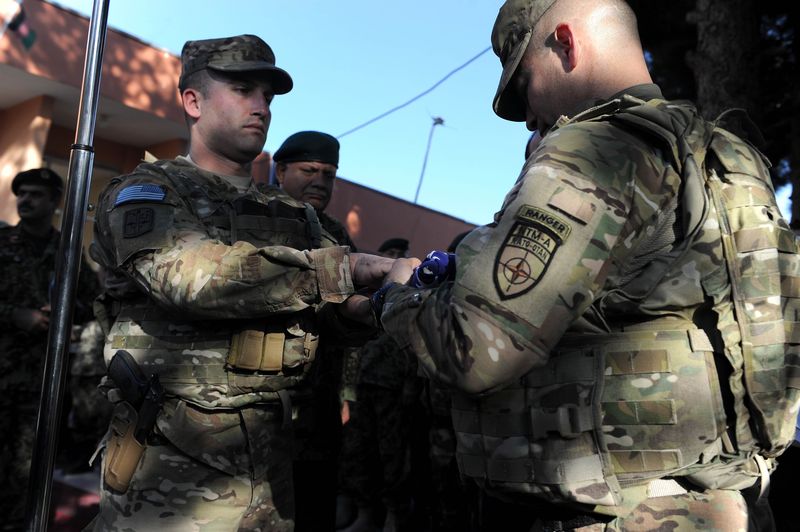
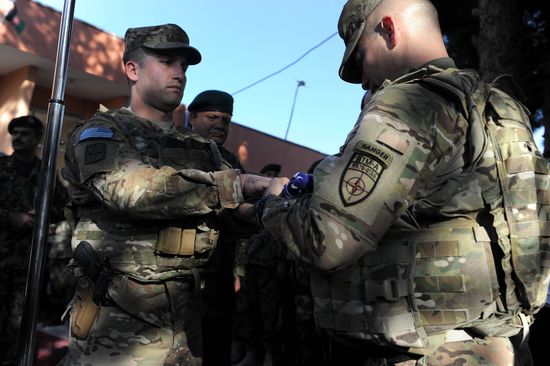
(Photo: US soldiers wrap their flag during a ceremony to hand over security control in the city of Charikar in Parwan province on December 1, 2011. The second wave of Afghanistan's transition from foreign to local control officially started on December 1 as NATO forces handed over most of a peaceful province to Afghan authorities. All bar two districts of Parwan province, north of the capital Kabul, are being handed to Afghan control. By Shah Marai/AFP/Getty Images.)
 The Dish