The National Insitute of Helath, in response to an Institute of Medicine (IOM) report, has suspended [NYT] any new research using the animals, allowing it in the future only "when absolutely indispensable, and when no other alternatives exist." Tom Beauchamp, Hope Ferdowsian, and John Gluck think the new guidelines don't go nearly far enough:
The following is made a necessary condition—or "criterion"—of the use of
chimpanzees in biomedical research [in the IOM report]: "The research in question cannot be performed ethically on human subjects." The problem with this criterion is that it begs the most critical issues that ought to have been addressed in the report. The fact that it is unethical to perform the research on humans does not render it ethical to perform the research on chimpanzees, nor does the unavailability of human subjects contribute to the justification of use of chimpanzees. There is a huge gap that the report does not address.This report inadvertently heightens the importance of this problem. The report repeatedly states how close chimpanzees are to humans in anatomical structure, in cognitive structure, and even in moral capacity to act altruistically. Given that a chimpanzee is as close to a human being as this report correctly indicates a chimpanzee is, it is hard to understand why the same level of protections should not be provided to chimpanzees as are provided to humans. It is disappointing that the report never addresses this central issue.
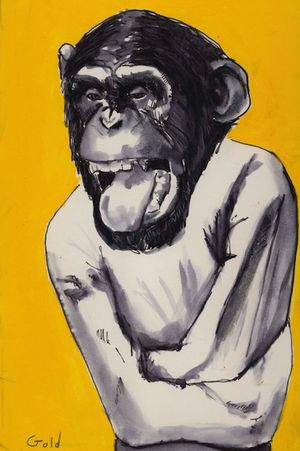
Barbara King, thinking along the same lines, calls for a blanket ban. Hilary Bok counters:
Some have argued that the committee should have considered the ethical issues involved in chimpanzee research in more depth, and in particular, that they should have considered the question whether intrusive research on chimpanzees can be justified at all. But that is not what they were asked to do. The committee was given a fairly limited mandate…Deciding how strictly to construe the term ‘necessary for progress’ requires some judgment about the underlying moral issues: one might describe research on rocks as ‘necessary’ for some line of research if it promised to yield any information, however trivial, that might advance that research; one would not be so quick to describe research on human infants as ‘necessary’ on those grounds. But it does not require answering the question whether intrusive research on chimpanzees can be justified at all. Had the committee tried to answer that question, it would have exceeded its mandate. Nor is there any obvious reason to think that the committee would have done a good job of answering that question had it tried to do so.
Eric Randall thinks critics may be making a mountain out of a molehill given the stringency of the criteria for exceptions.
(Photo: The painting "Straight-Jacketed Chimp" by Nathaniel Gold, via Bora Zivokic.)
 The Dish