Bilal Y. Saab reacts to reports that the group is giving up violence as its primary strategy against Israel:
The implications of such a Hamas decision could be huge. Theoretically, it will create a united Palestinian front. In other words, there would be few divisions within Palestinian society to inhibit progress in negotiations with the Israelis, a major boost for the Palestinian cause.
Two things remain unclear, however: how Hamas’s constituency and Israel would deal with this massive shift. It is not unreasonable to assume that Hamas would not make such a dramatic move without testing the waters and feeling the mood in the Palestinian street. Hamas knows its constituency well enough to realize that the costs it might suffer as a result of such a decision are likely to be tolerable. Furthermore, Hamas’s support base is not necessarily ideological. Many credible polls suggest that those who have voted for Hamas over the past few years have done so out of pragmatic reasons and anger toward Fatah for its governmental failures.
Hussein Ibish is skeptical of Hamas' capacity to chill:
The big question is whether Hamas’ need to adjust to the changing Arab political order will compel the movement to moderate its positions. Probably not if Hamas can help it, for it remains locked in a long-term power struggle with Fatah over leadership of the Palestinian national movement. Yet its ability to remain a viable contender for such leadership cannot be based on Islamist social conservatism alone. If it cannot outbid the PLO when it comes to the struggle with Israel, it’s hard to see what its broad appeal will be.
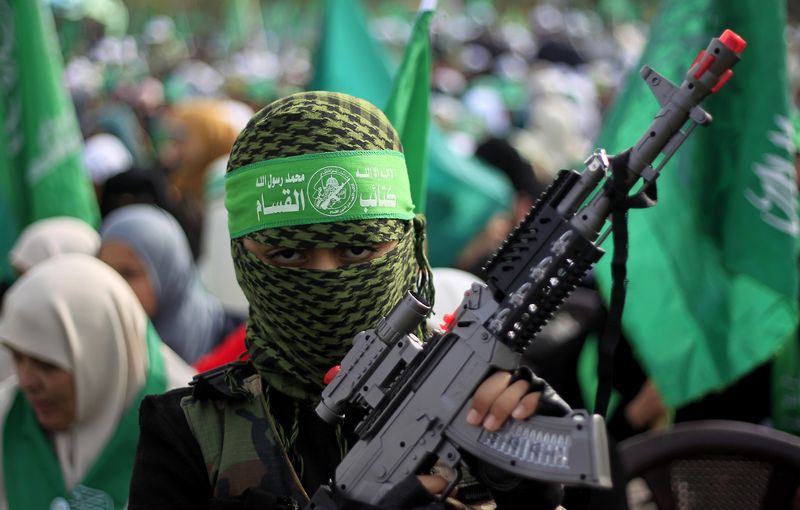
(Photo: A Palestinian boy dressed as a member of the Ezzedine al-Qassam Brigades, the armed wing of Hamas, holds a toy gun as he attends celebrations for the 24th anniversary of its foundation in Gaza City on December 14, 2011. By Mahmud Hams/AFP/Getty Images)
 The Dish